 Intellect Plus
Cards starting with W
29,907 cards. Page 471 of 499.
 Why your calendar might be wrong by a week when January beginsThe ISO week date system, a standard for business and government, often deviates from the Gregorian calendar. By defining years through 52 or 53 full weeks, it ensures that every …
 Why your calendar needs constant adjustment to keep pace with the spinning EarthTimekeeping was once a simple matter of watching the moon, sun, and stars. Today, we define time through the precise oscillations of atoms. Yet, because our natural celestial cycl…
 Why your camera fails to capture the full spectrum of a rainbowEver wondered why a vibrant rainbow looks dull or incomplete in your digital photos? This video explores the fundamental mismatch between how human eyes perceive color and how dig…
 Why your camera is not a tool, but a programmed master of reality.Vilém Flusser argued that photography is not a neutral way to capture the world, but a technical apparatus that dictates how we see. By operating a camera, you are not the master …
 Why your camera lens can never produce a perfectly faithful image of realityOptical systems are inherently flawed. Even perfectly manufactured lenses fail to focus light into a single, sharp point, a phenomenon known as aberration. Because these distortio…
- Why your camera lens sees the world differently than your own eyes doDepth of field defines the zone of clarity in a photograph, yet it is rarely a fixed physical property. By manipulating aperture, focal length, and sensor size, photographers can …
 Why your camera lens struggles to focus every color of light at onceChromatic aberration occurs when a lens fails to focus different wavelengths of light at the same point, creating distracting color fringes. While modern engineering and digital p…
 Why your camera makes wheels spin backward and brick walls look like wavy patterns.Aliasing is the digital ghost in the machine. It happens when sampling a continuous signal—like light or sound—at too low a rate, causing high-frequency data to masquerade as low-…
 Why your camera struggles with shadows and highlights, and how it cheats to fix them.Standard cameras often fail to capture the full range of light our eyes perceive, leaving shadows pitch black or highlights blown out to white. Multi-exposure HDR solves this by m…
 Why your car battery is the wrong choice for backup powerWhen the lights go out, a battery backup can be a lifesa really useful tool. But grabbing a standard automotive battery from your garage might lead to disappointment. To build a r…
 Why your car can't brake and turn at the same timeThis video explores the physics of lateral grip and the concept of the traction circle. You will learn how a tyre's available frictional force dictates the limit of a vehicle's pe…
 Why your car engine's pistons are never actually perfectly roundPistons are the unsung workhorses of engines, transferring explosive force into motion. While they appear cylindrical, they are engineered with subtle, invisible complexities—incl…
 Why Your Car Exhaust System Is A Chemical Reactor Operating Under Extreme HeatEver wondered how hot your car exhaust gets after a cold start? Beyond the roar of the engine, a complex chemical process is unfolding inside your catalytic converter. This compon…
 Why your car insurance is a global patchwork of mandatory legal protectionsVehicle insurance is far more than a simple contract; it is a complex, government-mandated safety net that evolved from the chaos of the early motor age. From mandatory liability …
 Why your car is likely the most expensive asset sitting idle in your drivewayMost drivers fixate on the monthly loan payment, but that is only the beginning of the financial drain. From hidden maintenance fees to the silent erosion of depreciation, owning …
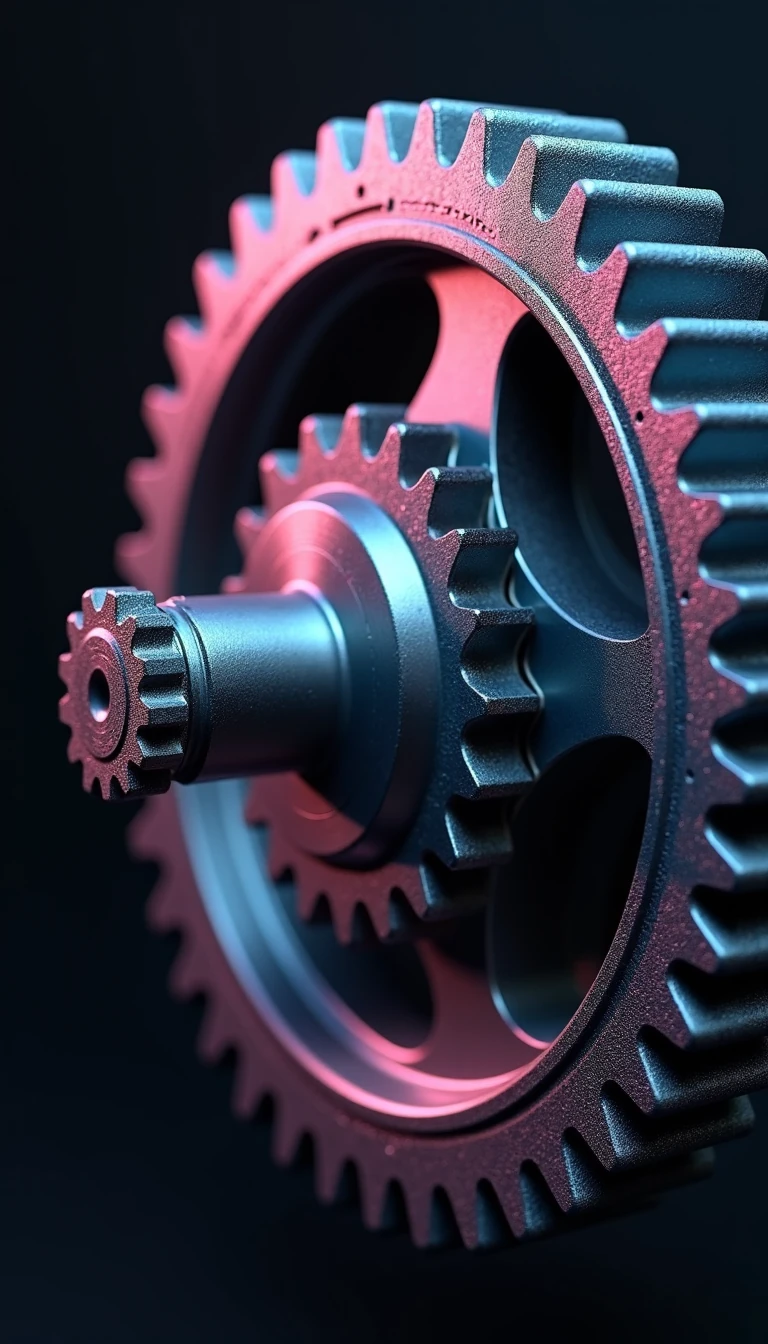 Why your car needs a limited-slip differential to stop spinning its wheelsAn open differential is the standard for most cars, but it has a fatal flaw: it sends all power to the wheel with the least traction. A limited-slip differential solves this by fo…
 Why your car needs a service schedule beyond just fixing what is brokenA vehicle service is not a repair; it is a preventative ritual. By replacing fluids and inspecting components before they fail, you preserve your car's longevity and resale value.…
 Why your car ride feels smooth or jarring depends on the rate of accelerationJerk, or jolt, is the rate at which an object's acceleration changes over time. While we often focus on speed and force, jerk is the hidden variable that dictates comfort in vehic…
 Why your car speedometer might be lying to you about your actual speedIf you have modified your vehicle's final drive gearing, tires, or wheel sizes, your speedometer may no longer reflect reality. A discrepancy between your dashboard display and yo…
 Why your car tires are secretly fighting your engine every time you driveRolling resistance is the hidden force that resists motion when a wheel rolls across a surface. It is primarily caused by hysteresis, where energy is lost as heat during the repea…
 Why your car's air filter is a masterclass in engineering and physicsAir filters are more than just simple screens. From the labyrinthine oil baths of the early 20th century to the precision-pleated paper elements in modern engines, these devices b…
 Why your car's airbag might fail during a complex, multi-impact collisionAirbags are engineered for one-time use, yet real-world accidents often involve multiple impacts. This NOVA crash test reveals how safety systems behave when a single deployment i…
 Why your car's differential choice dictates how it handles a cornerUnderstanding the mechanics of limited-slip differentials (LSD) is key to mastering vehicle dynamics. This video breaks down the engineering differences between 1-way, 2-way, and …
 Why your car's engine power is never actually reaching the wheelsEver wondered why the horsepower rating on a spec sheet differs from what actually hits the pavement? This video explains the critical distinction between engine and wheel horsepo…
 Why your car's exhaust system is a complex balancing act of physics and lawAn exhaust system does more than vent smoke. It is a precision-tuned instrument that manages heat, noise, and toxic emissions while fighting back pressure to boost engine performa…
 Why your car's fuel economy might be lying to youMost drivers measure efficiency by how far they can travel per gallon. However, this metric can mask significant drops in performance. To truly understand a vehicle's energy profi…
 Why your car's horsepower is based on an 18th-century marketing gimmickHorsepower was not a precise scientific discovery, but a clever marketing tool designed by James Watt to sell steam engines to skeptical horse owners. By standardizing the output …
 Why your car's odometer doesn't care about your directionIn calculus, the difference between where you end up and how far you traveled is a matter of absolute values. This video clarifies a common point of confusion for students by dist…
 Why your car's rearview mirror has a mysterious tab at the bottomThat small tab on your rearview mirror is more than a decorative feature. It is a simple mechanical switch that changes how the mirror reflects light, helping you manage glare whi…
 Why your car's size changes depending on which country you drive it inVehicle classification is not a universal standard but a patchwork of regional rules. While North American regulators prioritize interior volume and weight, Japanese law enforces …
 Why your car's skeleton determines its soulChoosing between unibody and body-on-frame construction isn't just about manufacturing; it's a fundamental engineering trade-off between weight efficiency and modular durability. …
 Why your car's suspension upgrade might be a waste of moneyUpgrading your car's suspension with coilovers or lowering springs is a popular modification, but does it actually improve your daily drive? This video breaks down the trade-offs …
- Why your car's wheels don't fight each other during a turnThis video explains the Ackerman principle, a fundamental engineering concept that allows your vehicle to navigate corners smoothly without forcing your tires to slip.
 Why your casual texting habits are actually a sophisticated form of digital communication.Digital communication has evolved its own complex set of rules. This video explains why seemingly informal typing styles, such as omitting punctuation or using repetition, serve s…
 Why your cat can squeeze through any gap that fits its headA cat’s skeleton is a marvel of evolutionary engineering, designed for extreme agility and fluid movement. Unlike humans, whose limbs are anchored by rigid joints, cats possess a …
- Why your cat is a master of the dark and a connoisseur of tunaCats are precision-engineered predators, evolved to hunt at dawn and dusk. Their sensory suite includes a reflective layer for low-light vision, ears that pinpoint sounds within c…
 Why your cat's grooming habits might be the reason for your sneezing fitsDomestic cats trigger human allergies primarily through their own grooming habits. This video explains the biological mechanisms behind why cats cause reactions and how specific p…
 Why your cat's tongue feels like sandpaper and how it helps them surviveA cat's tongue is not just for tasting. It is a sophisticated grooming tool covered in tiny, claw-like spines called papillae. These structures are made of keratin, the same mater…
 Why your ceiling light might be a hidden fire hazardReplacing a light fixture seems simple, but the real danger lies hidden inside your walls. Before you reach for a screwdriver, you must understand how the temperature rating of yo…
 Why your ceiling should ideally disappear into the roomMost people view ceiling painting as a chore, but it is actually a study in physics and visual perception. The goal isn't just to cover a surface; it is to eliminate reflections a…
 Why your celery thrives in the mud but dies in the sunCelery is a botanical paradox: a crunchy salad staple that behaves like a marsh plant. To grow it successfully, you must replicate its wild origins by mastering moisture retention…
 Why your cells are constantly fighting a war against misfolded proteinsProteins are the molecular machinery of life, but they are fragile. If they fail to fold into their correct three-dimensional shapes, they can trigger a cascade of cellular dysfun…
 Why your cells are not just blobs: the essential architecture of biological asymmetryCell polarity is the asymmetric organization of cellular components, a fundamental trait conserved from simple bacteria to complex humans. It dictates how cells divide, migrate, a…
 Why your cells are wrapped in a double layer of fatCells are mostly water, yet they must keep their contents from washing away. The solution is a thin, flexible membrane made of lipids. By arranging themselves into a double-layere…
 Why your cells build DNA one piece at a time versus all at onceCells synthesize purines and pyrimidines through fundamentally different strategies. While pyrimidines are constructed as complete bases before attaching to a sugar, purines are a…
 Why your cells don't need to spend energy to stay alivePassive transport is the biological equivalent of rolling a ball downhill. By harnessing the second law of thermodynamics, cells move substances across membranes without burning A…
 Why your cells have a built-in expiration date and stop dividing after sixty cyclesFor decades, science believed human cells were immortal. Leonard Hayflick shattered this dogma in 1965, proving that normal cells possess an internal counter. After forty to sixty…
 Why your cells hide a silent, condensed chromosome to keep you healthyIn most human females, one of the two X chromosomes in every cell is intentionally silenced and packed away. This dense structure, known as a Barr body, ensures that gene expressi…
 Why your cells must build DNA in tiny, fragmented, and discontinuous piecesDNA replication is a high-speed feat, but it hits a structural wall. Because enzymes only work in one direction, one strand of your DNA is built continuously, while the other is f…
 Why your cells need specialized protein gates to move essential molecules across membranesYour cells are wrapped in a hydrophobic barrier that blocks most vital nutrients from entering. To survive, they employ facilitated diffusion, a clever, energy-free transport syst…
 Why your chair stays put: the engineering principles behind static equilibriumEngineering statics is the study of objects at rest. This video explores the fundamental principles that keep objects stable, using the relatable scenario of leaning back in a cha…
 Why your character traits may matter more for financial success than your IQ score.Nobel laureate James Heckman has spent his career decoding the origins of human inequality. By blending economics with psychology and neuroscience, he discovered that cognitive ab…
 Why your charming wood fireplace might be the most inefficient feature in your homeTraditional wood fireplaces offer undeniable charm, but they often function as massive energy drains. When not in use, an open damper allows precious warm air to escape through th…
 Why your cheese's name might be legally protected by the European UnionCan a name like Roquefort be owned? In the EU, certain food names are strictly guarded to prevent imitation. Through complex legal schemes, the Union protects regional reputations…
 Why your chemical calculations fail: the hidden factor of non-ideal behaviorIn a perfect world, chemical concentrations would tell the whole story. In reality, molecules interact in complex ways that defy simple math. The activity coefficient is the essen…
 Why your chemical calculations might be wrong: the hidden truth of thermodynamic activityIn chemistry, concentration is often a lie. While we measure how much of a substance is present, thermodynamic activity reveals how much of it actually behaves as expected. When m…
 Why your chest pain might feel better when you lean forwardPericarditis is the inflammation of the protective, fluid-filled sac surrounding your heart. While its symptoms often mimic a heart attack, the condition has a distinct tell: shar…
 Why your child's anxiety is a survival mechanism, not a sign of failureAnxiety is a natural, albeit uncomfortable, human response to perceived danger. While it can feel overwhelming, it is essentially a protective mechanism designed for survival. By …
 Why your child's modeling career is a business, not a hobbyParents often view their children's entry into modeling as a personal journey of stardom. However, industry scouts emphasize that it is a complex professional business requiring s…
 Why your child’s ear infection is often a plumbing problem, not just a germAn ear infection is rarely just about bacteria. It is a mechanical failure of the eustachian tubes, which struggle to drain fluid from the middle ear. Because these tubes are narr…