A Greek statue was designed as a lesson in the ideal human body
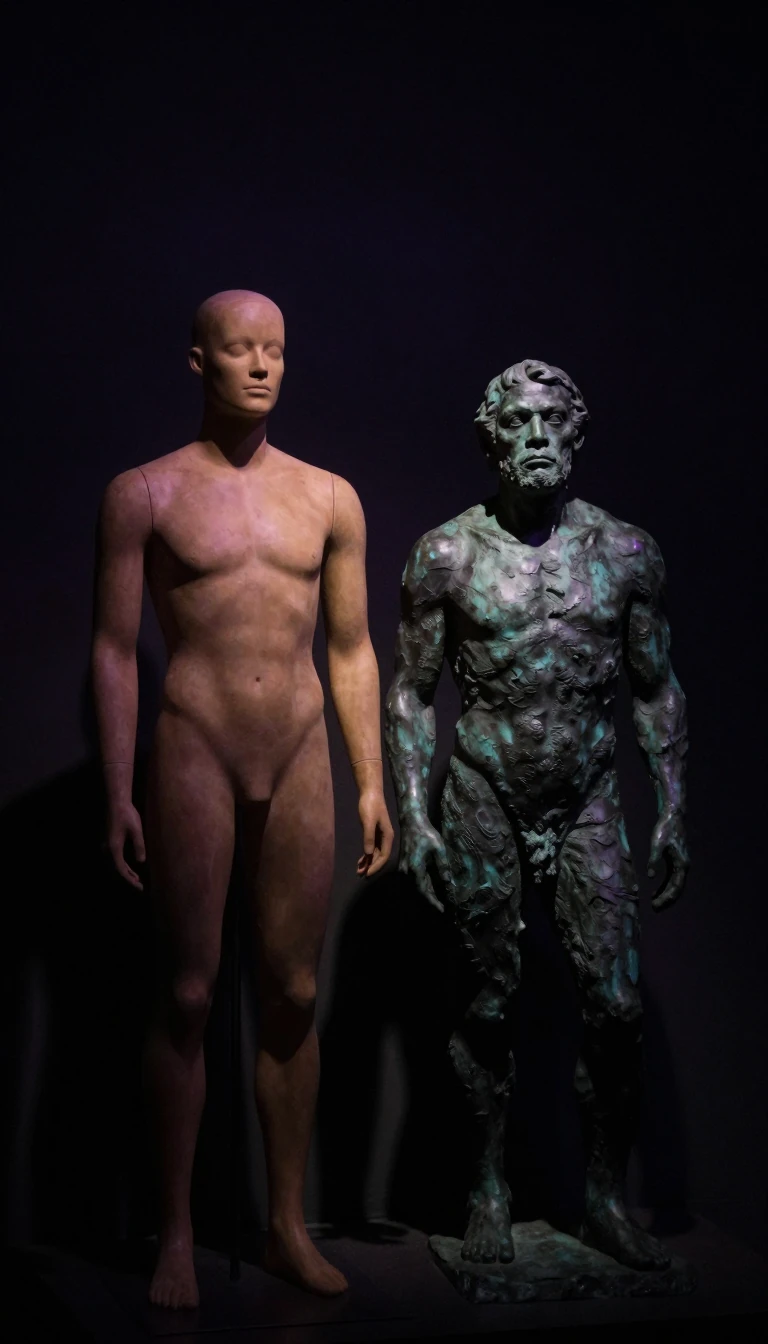
In short: Around 440 BC the sculptor Polykleitos cast a bronze warrior he called the Doryphoros, meaning spear-bearer. The original is lost, but Roman marble copies survive. He built the figure to demonstrate a written system of perfect bodily proportions, and the statue became one of the most influential images in ancient art.
Polykleitos wrote a treatise he called the Canon, meaning measure or rule, setting out what he believed were the ideal proportions of the human body. The Doryphoros was his demonstration of those ideas in sculpted form. Later, the Greek medical writer Galen described the view that beauty lies in the commensurability of the parts, such as finger to finger and forearm to upper arm, and noted that Polykleitos had supported his treatise with a statue made to its rules. Scholars generally agree that he worked from a single module, perhaps the end section of the little finger, to set the measurements of each body part.
The figure stands in a relaxed pose called contrapposto. The right leg bears the weight, the right hip rises, and the left hip drops, while the spear once rested on the tensed left shoulder. The right arm hangs free at the side, which may be the earliest surviving example of a free-hanging arm in a statue. The sculptor also used a head-to-body ratio of one to seven, and the figure seems poised at the instant of stepping forward.
The original bronze has not survived, and neither has the treatise. What we know comes mainly from marble copies made in the Roman period. Those copies add a tree stump behind one leg and a strut under the right arm to support the stone, supports the metal original would not have needed. Several copies have been found, including one in Pompeii now in Naples and another in Spain, and one in Minneapolis whose origin is disputed by the Italian government.
The statue shaped later art. Its muscular torso and balanced stance influenced Roman portraits such as the Augustus of Prima Porta, and Michelangelo's David shows echoes of its contrapposto and idealised youthful nudity. Scholars debate whether Michelangelo copied the Doryphoros directly or followed the wider style it helped spread. Its exact meaning is also uncertain, since some have read the figure as a mortal athlete and others as a hero such as Achilles.
theme
x
Opens the Intellect+ feed with this card first. Swipe up for the next one.
Sources
- Summary by Intellect · source: Doryphoros
- Also: Doryphoros | Museum of Classical Archaeology Databases
To cite this card, link to https://intellectplus.co.uk/app/art-doryphoros.
How we source, check and correct cards: Editorial standards.
General information, not professional advice. Spotted an error? Flag the card or see corrections and complaints.
Intellect Plus is a visual educational discovery platform for exploring fascinating facts and ideas. Brain Food, Not Brain Rot. What is Intellect Plus?
Related
More in Arts: General · More in Art · Latest · A–Z · All topics
