Is the world's largest mud-brick structure a masterpiece of African design or colonial influence?
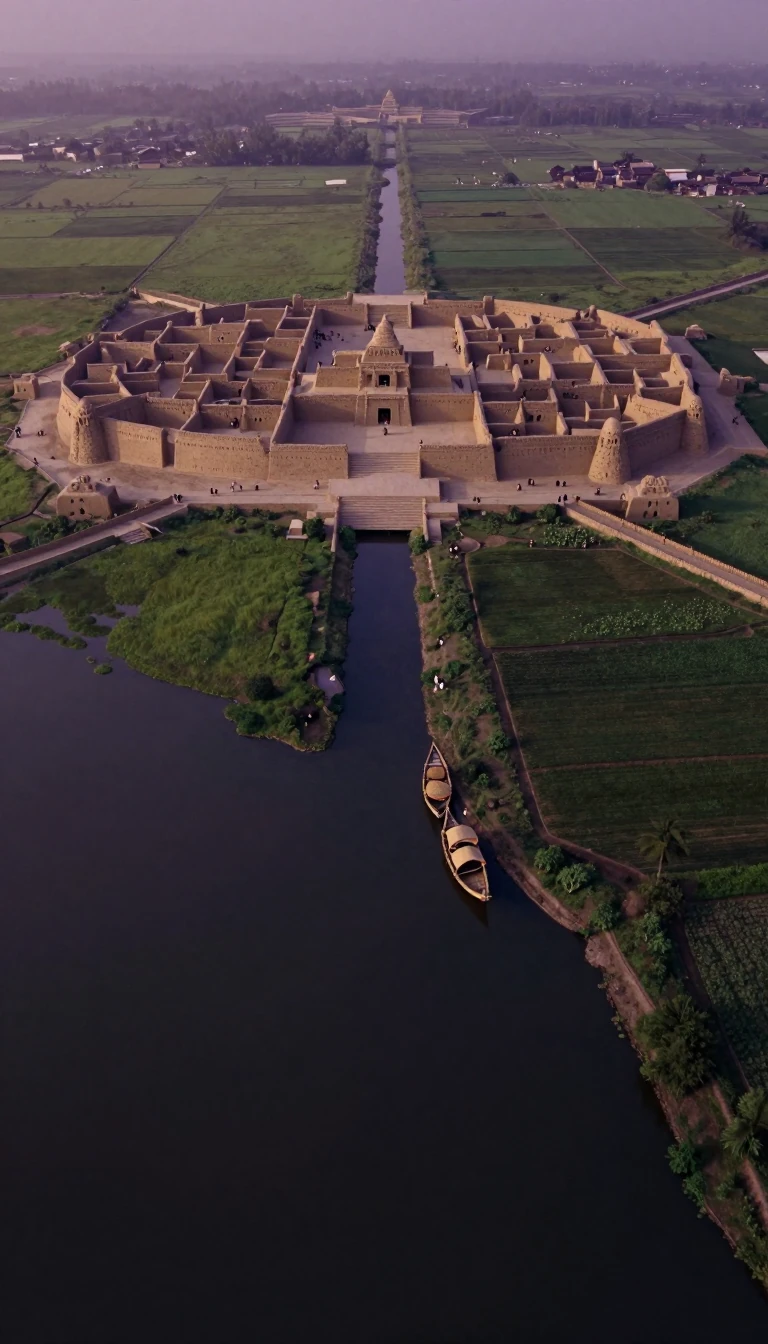
In short: The Great Mosque of Djenné is an architectural marvel, standing as the largest adobe building on Earth. While its towering, buttressed silhouette is synonymous with the Sudano-Sahelian style, its current form—rebuilt in 1907—has sparked a century of debate regarding whether its striking aesthetic is purely local or shaped by French intervention.
The town of Djenné, located in modern-day Mali, has been a hub of trade and Islamic scholarship since the 15th century. Its architecture is defined by the intensive use of earth, a tradition maintained by the Barey Corporation, a guild of masons who have passed their specialized construction techniques down through generations. The mosque serves as the spiritual heart of this 'pious town,' representing a unique synthesis of religious devotion and local building practices.
The history of the mosque is layered with destruction and renewal. Early accounts suggest a structure existed as far back as the 13th century, but it fell into ruin by the 19th century. When the town decided to reconstruct the site in 1906, the project was led by Ismaila Traoré, the head of the local masons' guild. The resulting 1907 structure introduced a distinct, symmetrical layout featuring three prominent towers along the qibla wall, a design choice that remains a focal point of scholarly disagreement.
Critics like the journalist Félix Dubois famously disparaged the reconstruction, suggesting the French colonial administration had imposed foreign design elements. However, architectural historians like Jean-Louis Bourgeois have countered that the influence of French engineers was likely minimal, if present at all. They argue the building remains fundamentally African in character, reflecting the deep-rooted expertise of local artisans rather than colonial imposition. Today, the mosque faces modern challenges, including the encroachment of cement and fired bricks, which threaten the authenticity of its traditional earthen construction.
Opens the Intellect+ feed with this card first. Swipe up for the next one.
Sources
- Summary by Intellect · source: Old Towns of Djenné;
- Also: Great Mosque of Djenné
To cite this card, link to https://intellectplus.co.uk/app/design-great-mosque-of-djenn.
How we source, check and correct cards: Editorial standards.
General information, not professional advice. Spotted an error? Flag the card or see corrections and complaints.
Intellect Plus is a visual educational discovery platform for exploring fascinating facts and ideas. Brain Food, Not Brain Rot. What is Intellect Plus?
Related
More in Architecture · More in Design · Latest · A–Z · All topics
