The ancient, leafless plants that paved the way for all modern vascular life
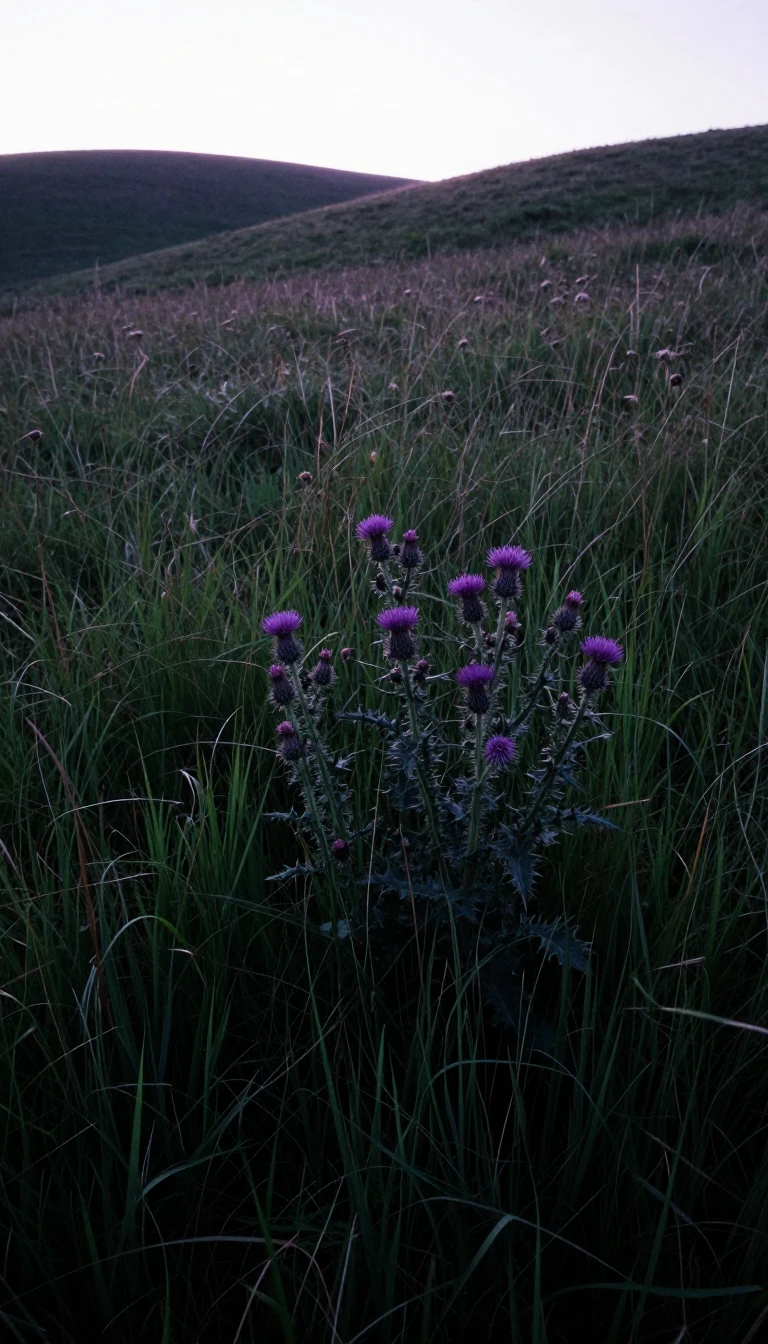
In short: Long before forests covered the Earth, simple, branching stalks thrived in the Early Devonian. These extinct organisms, known as rhyniophytes, lacked leaves and roots, yet they represent a critical evolutionary bridge. By mastering basic vascular tissue, they set the stage for the complex plant life we recognize today.
Rhyniophytes are a group of extinct, early land plants dating back to the Early Devonian, roughly 420 to 393 million years ago. These diminutive organisms were defined by their naked, dichotomously branched axes—stems that split into two equal parts—which terminated in spore-bearing structures called sporangia. Because they lacked true leaves or roots, their survival relied on simple internal vascular systems, marking them as essential stem group tracheophytes.
The classification of these plants remains a subject of intense scientific debate. Harlan Parker Banks first proposed the subdivision Rhyniophytina in 1968, but the group has since dissolved into a heterogeneous collection as researchers struggle to define its boundaries. Some scholars, such as Hao and Xue in 2013, categorize them into three distinct subgroups: rhynialeans, which possess vascular tissue; cooksonioids, which lack clear evidence of such tissue; and renalioids, which feature bilaterally symmetrical sporangia.
The confusion stems from the fact that many plants once grouped as rhyniophytes, such as Aglaophyton and Horneophyton, are now known to lack true tracheids, the specialized cells that conduct water in vascular plants. This has led to the use of terms like 'rhyniophytoids' for plants that resemble the group but cannot be definitively classified due to poor anatomical preservation. Some researchers have even proposed the term 'paratracheophytes' to distinguish these transitional forms from true vascular plants.
These fossils are most famously associated with the Rhynie chert, a rich deposit in Aberdeenshire, Scotland. While they are often studied as a formal taxon, they are sometimes treated merely as a floristic assemblage of related early land plants. Whether they represent a single evolutionary branch or a broader, messy collection of early experiments in terrestrial life, rhyniophytes remain the primary window into the origins of the vascular plants that eventually conquered the planet.
Opens the Intellect+ feed with this card first. Swipe up for the next one.
Sources
- Summary by Intellect · source: Rhyniophyte
To cite this card, link to https://intellectplus.co.uk/app/gardening-rhyniophyte.
How we source, check and correct cards: Editorial standards.
General information, not professional advice. Spotted an error? Flag the card or see corrections and complaints.
Intellect Plus is a visual educational discovery platform for exploring fascinating facts and ideas. Brain Food, Not Brain Rot. What is Intellect Plus?
Related
More in Plants · More in Gardening · Latest · A–Z · All topics
