Is your mind the software of your brain?
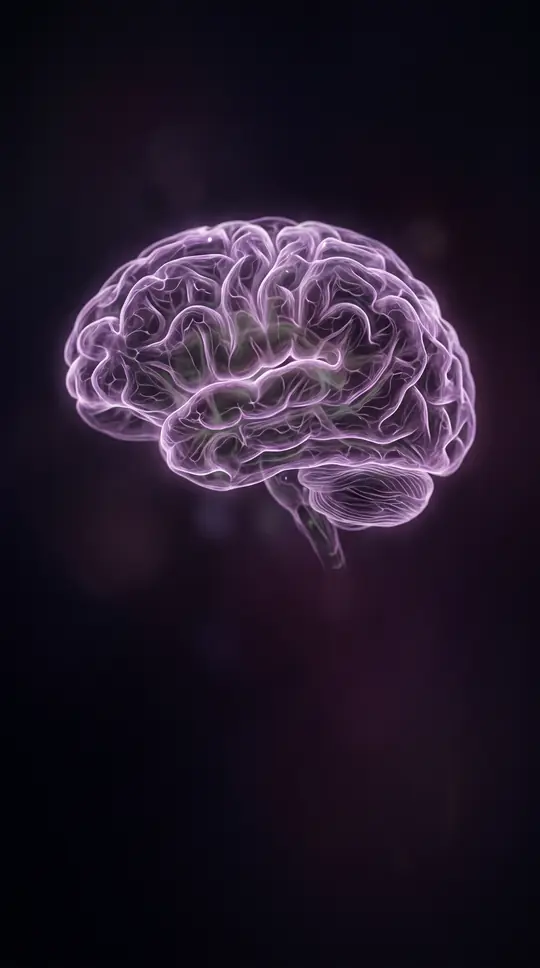
In short: The Computational Theory of Mind suggests your thoughts are not just biological impulses, but complex algorithms. This influential framework views cognition as a system of information processing, potentially reducing the mystery of thought to the mechanics of computation.
The Computational Theory of Mind (CTM) posits that the mind is fundamentally a computing system. Far from being a recent digital-era concept, this notion originated in the 1600s, as Thomas Hobbes proposed that thought might be broken down into basic tasks executed by a physical device. The theory gained formal mathematical weight in 1936 through Alan Turing’s work on computability, and later, in 1943, when Warren McCulloch and Walter Pitts hypothesized that neural networks in the brain implement these very computations.
Today, CTM exists as a cluster of competing perspectives rather than a single unified doctrine. The 'classical' version, championed by figures like Jerry Fodor in the 1970s, focuses on a 'language of thought.' It suggests the mind manipulates discrete, symbolic representations according to logical rules, much like a Turing machine. Conversely, 'connectionism' offers a more biologically plausible model, viewing the mind as a network of simple units—analogous to neurons and synapses—that learn through patterns of activation and distributed processing.
Despite its dominance in cognitive science, CTM remains highly contentious. Critics argue the theory is 'explanatorily empty' or fails to account for essential human experiences like creativity, common sense, and consciousness. There is also a 'triviality challenge': if any physical system can be described as computing, then even a bucket of water could be said to possess a mind. Modern debates now focus on whether computation requires 'semantic' meaning or if it can be explained purely through the 'mechanistic' manipulation of physical properties, such as the timing of neural action potentials.
Opens the Intellect+ feed with this card first. Swipe up for the next one.
Sources
- Summary by Intellect · source: Computational Theory of Mind — OECS
- Also: Computational theory of mind
To cite this card, link to https://intellectplus.co.uk/app/health-computational-theory-of-mind.
How we source, check and correct cards: Editorial standards.
General information, not professional advice. Spotted an error? Flag the card or see corrections and complaints.
Intellect Plus is a visual educational discovery platform for exploring fascinating facts and ideas. Brain Food, Not Brain Rot. What is Intellect Plus?
Related
More in Brain · More in Health · Latest · A–Z · All topics
