The brain is not a machine, but a self-organizing dance
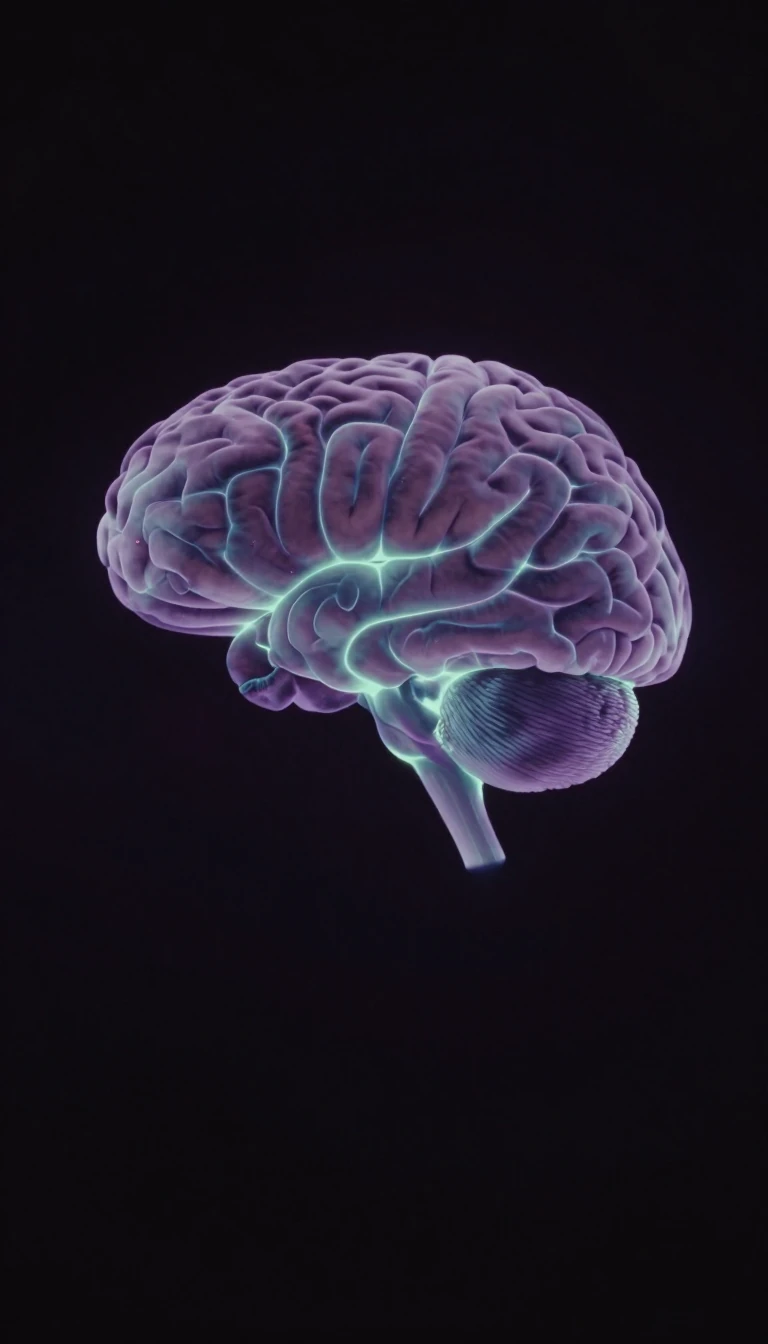
In short: Your brain doesn't follow a simple blueprint; it behaves like a bustling city or a shifting ecosystem. It is a complex adaptive system where the whole is greater than its parts. Understanding this shift from linear mechanics to emergent behavior reveals how our minds actually learn, adapt, and survive.
A complex adaptive system (CAS) is defined by a dynamic network of interactions where the behavior of the entire ensemble cannot be predicted simply by looking at individual components. Unlike basic machines, CAS are 'complex macroscopic collections' of similar but partially connected micro-structures. They self-organize to adapt to environmental changes and increase their overall survivability. This means that while an individual neuron or cell might follow specific rules, the collective behavior—such as consciousness or immune response—emerges from these interactions in ways that are often non-linear.
Key characteristics of these systems include 'recurrency,' where interactions feed back onto themselves, and 'non-linearity,' where tiny inputs can trigger massive, disproportionate outputs. Because these systems operate under far-from-equilibrium conditions, they require a constant flow of energy to maintain their organization. They are also 'path dependent,' meaning their future behavior is dictated by their specific history and initial starting points. This explains why two identical brains might react differently to the same stimulus: their unique histories have shaped their internal feedback loops.
In practical terms, viewing the brain as a CAS moves us away from reductionism—the idea that we can solve every problem by isolating one variable. Instead, it highlights 'emergence,' where system-level properties arise from local interactions. Agents within these systems (like cells or social groups) may be completely ignorant of the system's global behavior, responding only to local stimuli. By recognizing the brain as a self-similar collectivity that operates between order and chaos, we can better understand how it achieves resilience in the face of constant perturbation.
This framework is now being applied across diverse fields beyond biology. Researchers use CAS models to analyze everything from high-intensity exercise performance—viewed as an emergent property of neuromuscular and metabolic systems—to the operational dynamics of intensive care units, where system-level failures can occur even when individual clinical care is competent.
Opens the Intellect+ feed with this card first. Swipe up for the next one.
Sources
- Summary by Intellect · source: Complex adaptive system
- Also: Cureus — Reimagining the Intensive Care Unit as a Complex Adaptive System: A Systems Thinking Perspective. · CC BY
- Also: Muscles (Basel, Switzerland) — High-Intensity Exercise Performance as a Complex Adaptive System: An Integrative Review. · CC BY
To cite this card, link to https://intellectplus.co.uk/app/health-complex-adaptive-system.
How we source, check and correct cards: Editorial standards.
General information, not professional advice. Spotted an error? Flag the card or see corrections and complaints.
Intellect Plus is a visual educational discovery platform for exploring fascinating facts and ideas. Brain Food, Not Brain Rot. What is Intellect Plus?
Related
More in Brain · More in Health · Latest · A–Z · All topics
