Berlin is a city built on glacial sand and the rubble of total war.
In short: Berlin sits at the heart of the North German Plain, a city defined by its geography and its turbulent history. From its origins as a medieval trading post to its role as a Cold War symbol, Berlin has been repeatedly destroyed, rebuilt, and transformed into a modern European capital.
Berlin’s physical foundation is as distinct as its political one. Situated in a glacial valley along the Spree River, the city rests on sandy soil, surrounded by a landscape of pine forests and lakes. This geography has been physically altered by human conflict; the Teufelsberg, or Devil’s Mountain, is a 380-foot hill constructed entirely from the rubble of World War II bombing. The city’s climate marks a transition point where the influence of the Atlantic Ocean fades into the continental conditions of the eastern plains.
The city’s history is a complex layering of settlements and power. While folk etymology often links the city’s name and its bear emblem to Albert the Bear, the first Margrave of Brandenburg, scholars suggest the name likely derives from a Slavic root meaning swamp or bog. The city emerged in the 12th century as two distinct settlements, Berlin and Cölln, which eventually merged. By 1451, Berlin had become the royal residence for the Hohenzollern dynasty, a status that stripped the city of its earlier Hanseatic League independence and shifted its economy toward luxury production for the court.
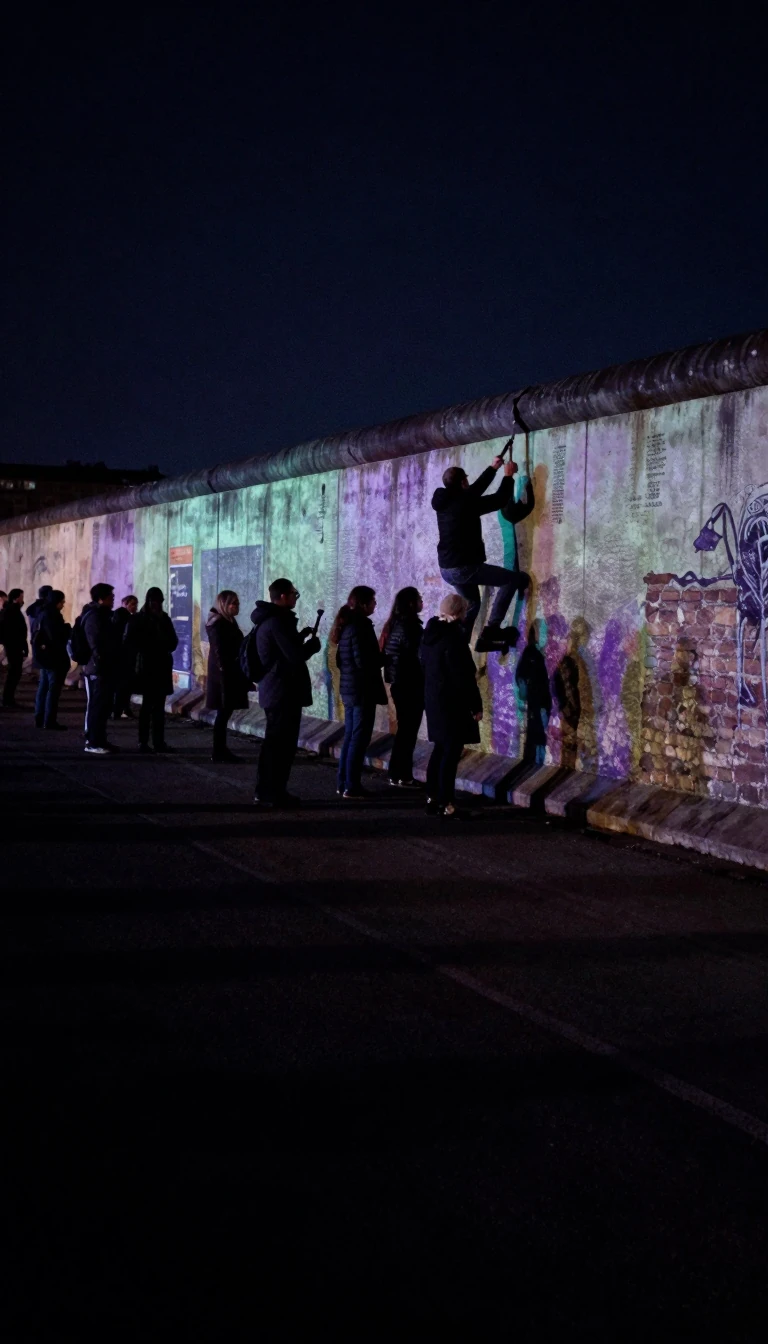
In the 20th century, Berlin became the epicenter of global ideological conflict. Following the devastation of World War II, the city was partitioned, with West Berlin serving as an isolated enclave within the German Democratic Republic. The 1961 construction of the Berlin Wall solidified this division, turning the city into a 45-year focal point of Cold War tension. The wall’s fall in 1989 paved the way for German reunification in 1990, restoring Berlin to its role as the capital of a unified nation and a central hub of European commerce and culture.
Opens the Intellect+ feed with this card first. Swipe up for the next one.
Sources
- Summary by Intellect · source: Berlin | History, Map, Population, Attractions, & Facts | Britannica
- Also: History of Berlin
To cite this card, link to https://intellectplus.co.uk/app/history-history-of-berlin.
How we source, check and correct cards: Editorial standards.
General information, not professional advice. Spotted an error? Flag the card or see corrections and complaints.
Intellect Plus is a visual educational discovery platform for exploring fascinating facts and ideas. Brain Food, Not Brain Rot. What is Intellect Plus?
Related
More in History by country, small region and city · More in History · Latest · A–Z · All topics
