The spider superfamily that makes up a quarter of all known species
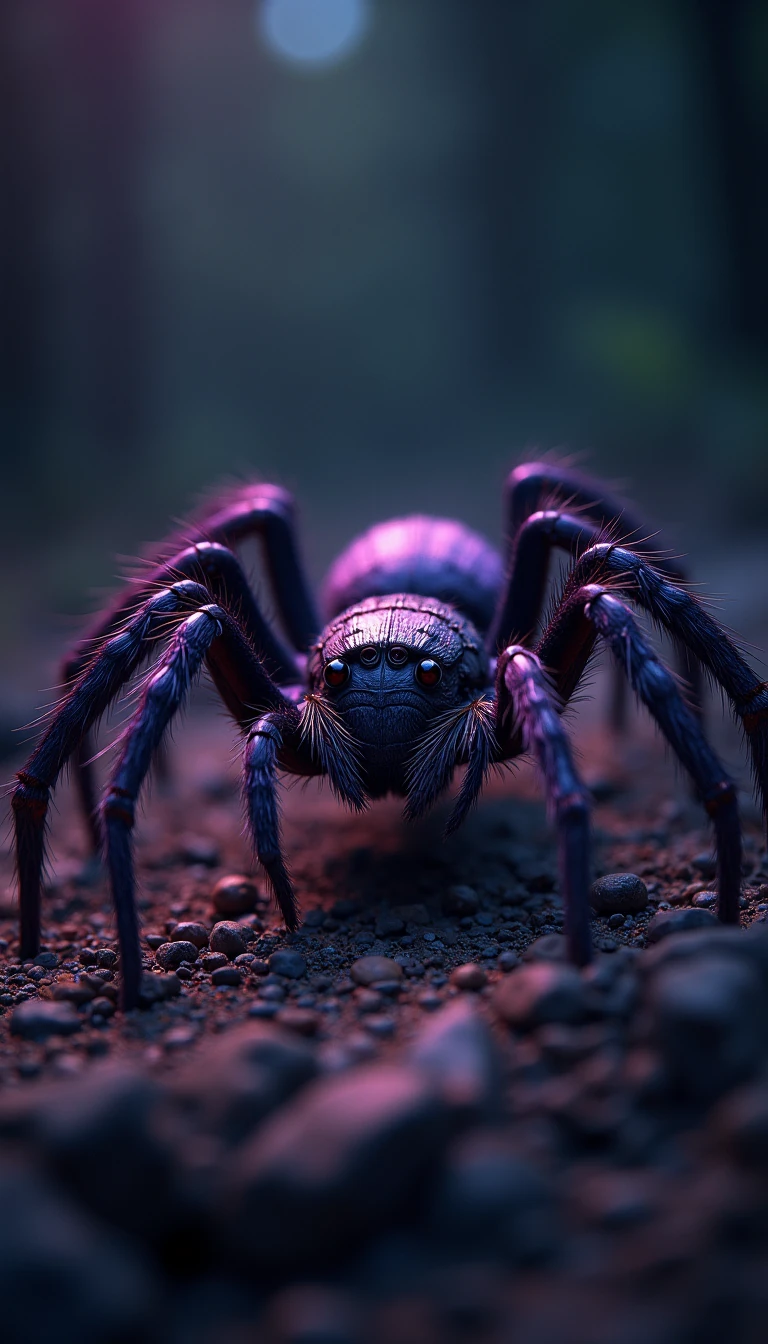
In short: While most people think of spiders as solitary hunters, the Araneoidea superfamily represents a massive, diverse lineage of araneomorphs. Despite their staggering numbers, the evolutionary map of these spiders remains one of the most complex puzzles in modern arachnology, with many family relationships still shrouded in uncertainty.
Araneoidea, commonly known as araneoids, is a massive superfamily of spiders that accounts for approximately 26% of all known spider species. Because of this immense diversity, the exact boundaries of the group have shifted over time. For instance, a 2014 taxonomic treatment identified 18 families within the group, while a 2016 update refined this to 17 families. These shifts often involve moving families back and forth between Araneoidea and the distantly related Palpimanoidea.
A significant point of contention in the mid-1980s involved a proposal by Raymond R. Forster and Norman I. Platnick. They suggested that four specific families—Holarchaeidae, Micropholcommatidae, Mimetidae, and Pararchaeidae—should be moved out of Araneoidea and into Palpimanoidea. However, subsequent phylogenetic research has largely rejected this move, firmly placing those four families back within the araneoid lineage.
Even with modern technology, the internal family tree of Araneoidea is far from settled. In 2014, researchers Hormiga and Griswold attempted to summarize the group's phylogeny by synthesizing nine comprehensive studies, but many of their results were presented as polytomies—branches where the specific order of evolution is unknown due to conflicting data. While some groups are well-supported, such as the clade containing Mimetidae, Arkyidae, and Tetragnathidae, many deeper relationships remain unresolved.
The current scientific consensus is that the sister taxon to Araneoidea is the Nicodamidae (or Nicodamoidea). Despite these findings, experts like Dimitrov et al. (2016) caution that the available molecular and morphological data are currently insufficient to robustly resolve the deeper family relationships. As new data emerges, the map of this spider superfamily will likely continue to shift and reshape.
Opens the Intellect+ feed with this card first. Swipe up for the next one.
Sources
- Summary by Intellect · source: Araneoidea
To cite this card, link to https://intellectplus.co.uk/app/nature-araneoidea.
How we source, check and correct cards: Editorial standards.
General information, not professional advice. Spotted an error? Flag the card or see corrections and complaints.
Intellect Plus is a visual educational discovery platform for exploring fascinating facts and ideas. Brain Food, Not Brain Rot. What is Intellect Plus?
Related
More in Spiders & arachnids · More in Nature · Latest · A–Z · All topics
