Spiders have been perfecting the art of the web for over 130 million years
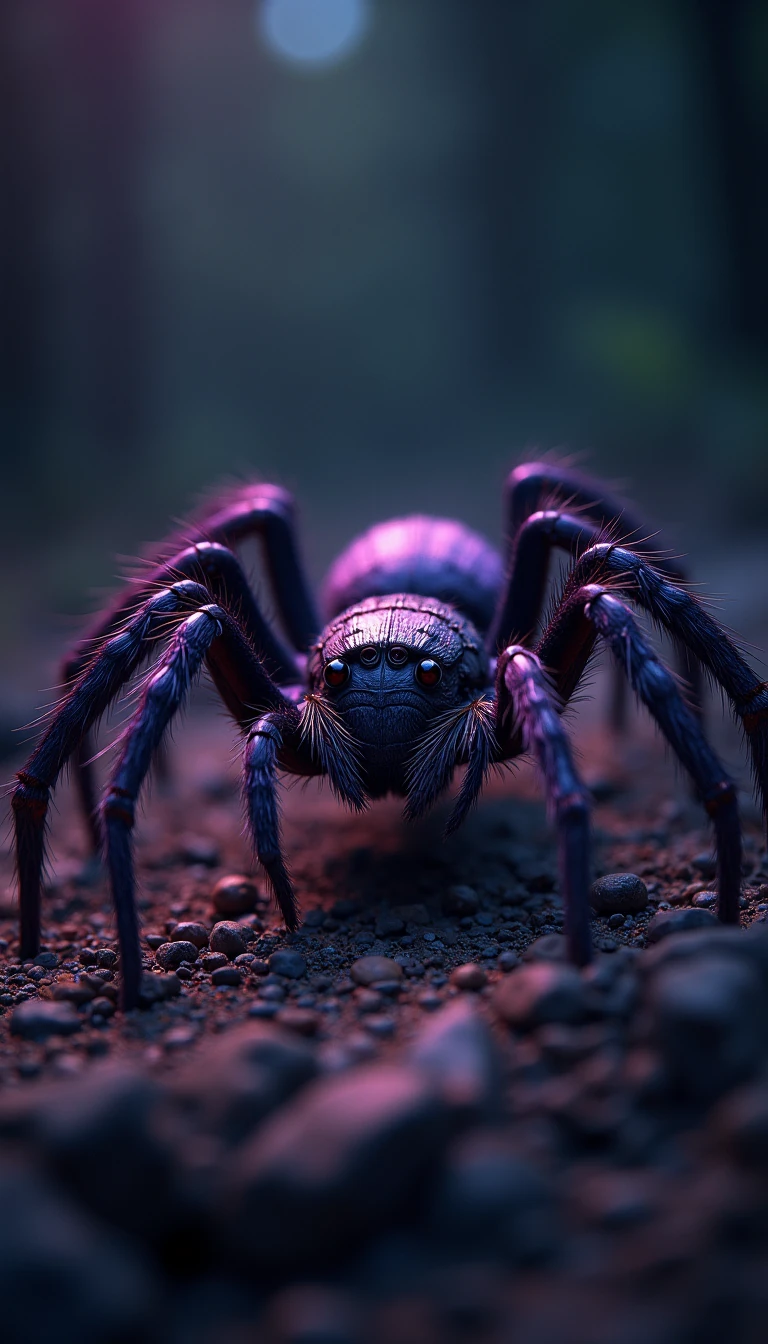
In short: Spiders are ancient masters of survival, with a lineage stretching back 380 million years. While they share the world with 45,000 known species today, their evolutionary journey involved complex transitions, from ground-dwelling predators in ancient forests to the sophisticated architects of the perfect orb webs we recognize in our gardens.
The story of spiders begins long before they were true spiders. Early arachnids, such as the extinct Trigonotarbids, walked on eight legs and breathed through book lungs but lacked the ability to produce silk. True spiders emerged from aquatic chelicerate ancestors, with molecular clock data suggesting a divergence between 375 and 328 million years ago. Early forms, likely belonging to the Mesothelae, lived in Palaeozoic forests and used silk primarily for egg protection or simple retreats rather than complex hunting.
The evolution of spinnerets was a pivotal development, allowing for the diversification of silk use. By 250 million years ago, groups like Mygalomorphae and Araneomorphae appeared, introducing safety draglines and elaborate maze webs. The transition to aerial hunting was highly successful; by the Jurassic period, orb-weaving was already well-established. Genetic evidence indicates that the complex behavior required for spinning these circular webs was in an advanced state as early as 136 million years ago, long before the 110-million-year-old amber-preserved webs captured the earliest known insect prey.
Evolutionary history is often messy, marked by extinct orders like Uraraneida—which could produce silk but lacked true spinnerets—and the discovery of unique fossils like Chimerarachne, which possessed both spinnerets and a whip-like telson. Modern spider diversity is dominated by the RTA clade, which likely began its major diversification during the Late Cretaceous. This period saw a significant faunal turnover, shifting from the dominance of groups like the lagonomegopids to the araneoid spiders that define our modern ecosystems.
It is a common misconception that every large spider fossil is a giant predator. For years, Megarachne servinei was celebrated as the largest spider to ever live, with a body length of 54 cm. Subsequent expert analysis revealed it was actually a sea scorpion. Today, the largest known fossil spider is Mongolarachne jurassica, dating to approximately 165 million years ago, reminding us that the true history of these arachnids is often more nuanced than the myths surrounding them.
Opens the Intellect+ feed with this card first. Swipe up for the next one.
Sources
- Summary by Intellect · source: Evolution of spiders
To cite this card, link to https://intellectplus.co.uk/app/nature-evolution-of-spiders.
How we source, check and correct cards: Editorial standards.
General information, not professional advice. Spotted an error? Flag the card or see corrections and complaints.
Intellect Plus is a visual educational discovery platform for exploring fascinating facts and ideas. Brain Food, Not Brain Rot. What is Intellect Plus?
Related
More in Arthropods · More in Nature · Latest · A–Z · All topics
