The Earth's mantle is not just solid rock; it flows like a slow-moving liquid.
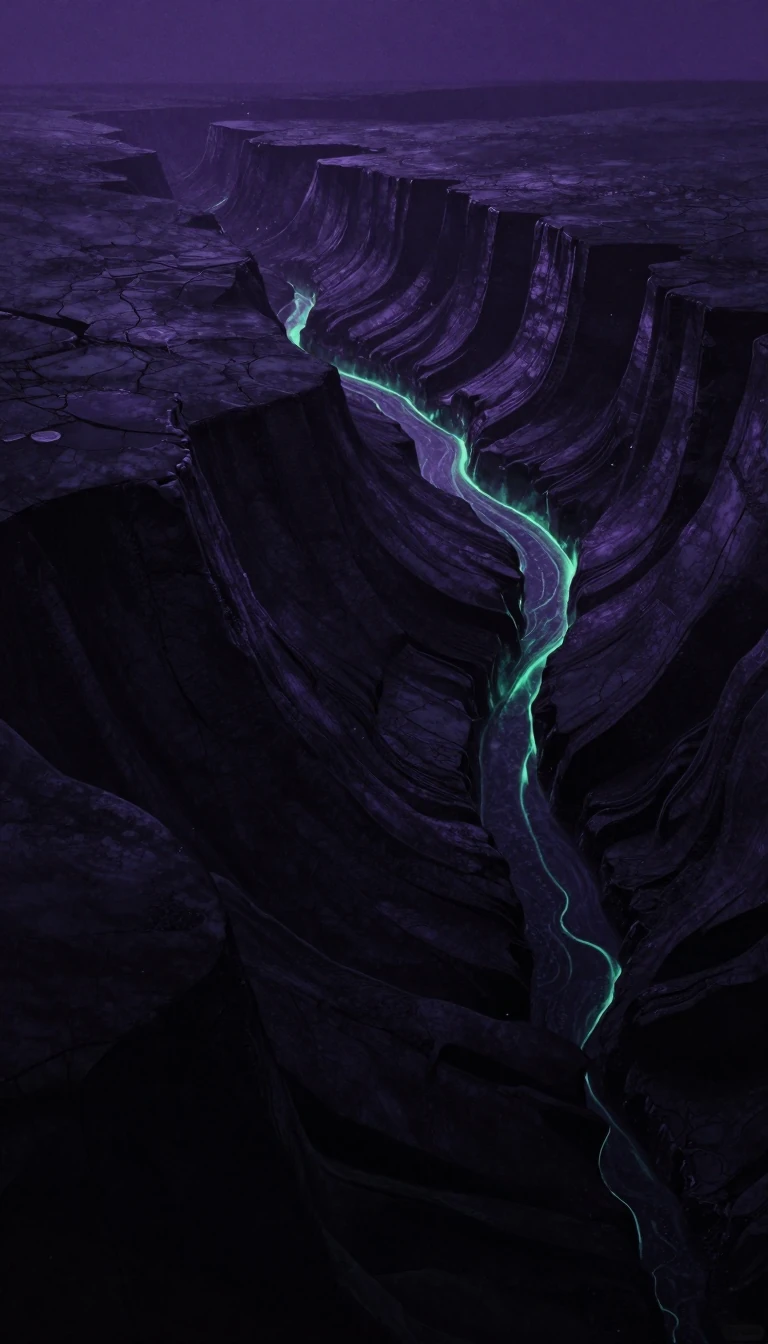
In short: Beneath the rigid outer shell of our planet lies the asthenosphere, a ductile layer that acts as a conveyor belt for tectonic plates. While it remains mostly solid, its unique ability to deform under pressure allows continents to drift and magma to rise, shaping the very surface we walk upon.
The asthenosphere, named from the Greek for 'without strength,' is a mechanically weak, ductile region of the upper mantle. Situated beneath the lithosphere, it begins at depths between 80 and 200 kilometers and extends down to approximately 700 kilometers. This layer is primarily composed of peridotite, a rock rich in olivine and pyroxene. Because it sits at temperatures where mantle rock nears its melting point—conventionally marked by the 1,300 °C isotherm—the material behaves plastically, allowing it to flow in convection currents that drive plate tectonics.
Seismologists first identified this region as the 'low-velocity zone' because seismic waves travel through it more slowly than through the rigid lithosphere above. This velocity drop, which can be as sharp as 5 to 10 percent in oceanic regions, is accompanied by high seismic attenuation. While early theories suggested this weakness was caused by partial melting, current research indicates that less than 0.1 percent of the rock is molten. This amount is likely insufficient to explain the layer's behavior, leading scientists to investigate other mechanisms like grain boundary sliding and strain-rate weakening.
The asthenosphere is the primary engine for Earth's volcanic activity. As rock wells upward, decompression melting occurs, generating the magma that forms mid-ocean ridge basalt. This process is critical for maintaining isostatic equilibrium, as the rigid lithospheric plates effectively 'float' on the slowly deforming asthenosphere. The transition between these two layers—the lithosphere-asthenosphere boundary—is defined by changes in rheology, temperature, and chemical composition, marking the shift from brittle, elastic behavior to the ductile flow that defines the deep interior of our planet.
Understanding this layer remains a complex challenge. The lower boundary, near the 670-kilometer discontinuity, is not well-defined and marks a transition in mineral structure from ringwoodite to bridgmanite and periclase. Whether through the lubrication of volatiles like water and carbon dioxide or the influence of non-linear dislocation creep, the asthenosphere remains the essential, hidden mechanism that dictates the movement of the Earth's crust.
Opens the Intellect+ feed with this card first. Swipe up for the next one.
Sources
- Summary by Intellect · source: Asthenosphere
To cite this card, link to https://intellectplus.co.uk/app/nature-asthenosphere.
How we source, check and correct cards: Editorial standards.
General information, not professional advice. Spotted an error? Flag the card or see corrections and complaints.
Intellect Plus is a visual educational discovery platform for exploring fascinating facts and ideas. Brain Food, Not Brain Rot. What is Intellect Plus?
Related
More in Physical geography · More in Nature · Latest · A–Z · All topics
