These ancient, crocodile-like reptiles survived the asteroid that killed the dinosaurs.
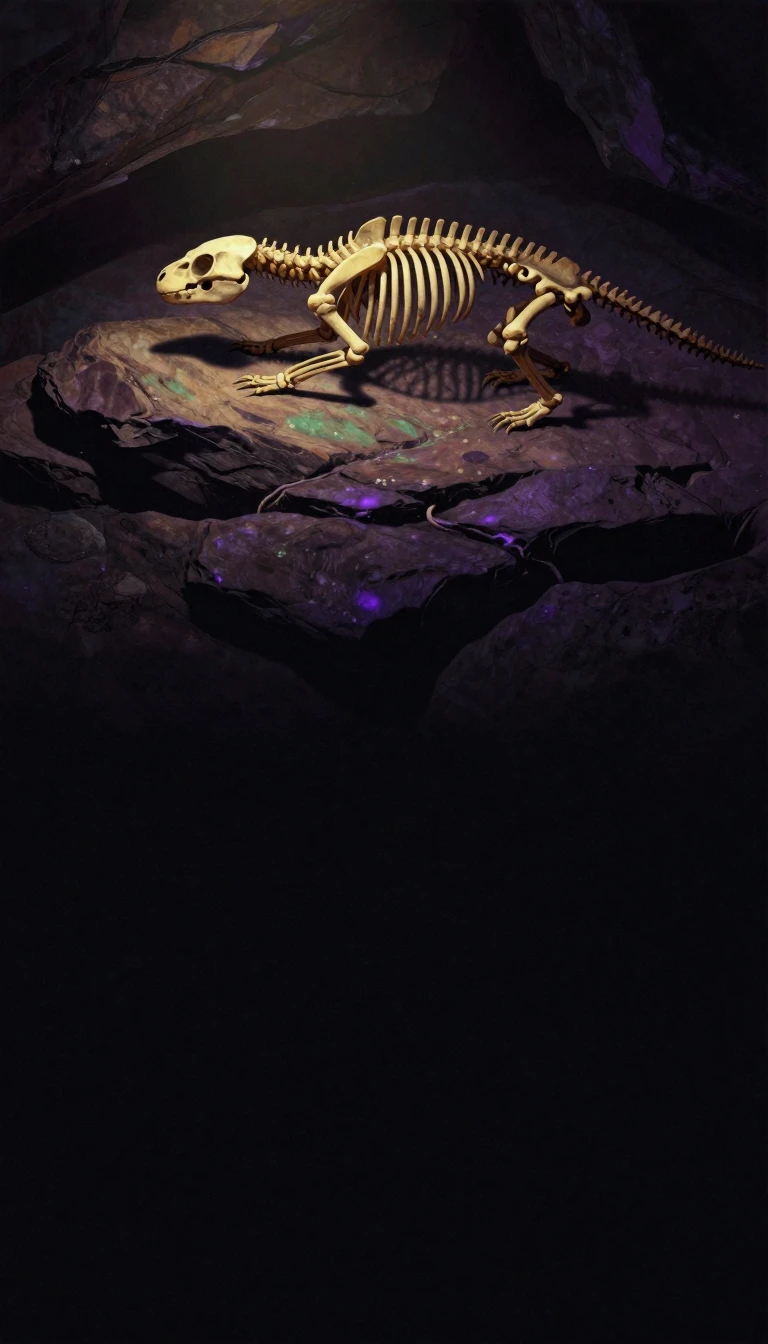
In short: Choristoderes were a diverse group of semiaquatic reptiles that thrived for over 150 million years. While they resembled modern gharials or lizards, they possessed a unique, mysterious skull bone found in no other reptile. Remarkably, some lineages persisted long after the K-Pg extinction, vanishing only in the Miocene.
Choristoderes, an order of semiaquatic diapsids, first appeared in the Middle Jurassic, around 168 million years ago. These animals were morphologically diverse, ranging from small, 30-centimeter lizard-like creatures to the massive, 5-meter Kosmodraco dakotensis. Their defining anatomical feature is a 'neomorphic bone' in the skull, a structure absent in all other known reptiles. They also possessed specialized palatal teeth, which were extensively developed to manipulate food, a trait rarely seen in other diapsid groups.
The group is divided into two primary forms: the crocodile-like neochoristoderes, such as the well-known Champsosaurus, and the 'non-neochoristoderes.' The latter includes lizard-like forms and long-necked species like Hyphalosaurus. Neochoristoderes were likely piscivorous, using their long, thin snouts to catch fish. Their internal anatomy, particularly in Champsosaurus, suggests they had a strong sense of smell but only average vision, with an inner ear structure adapted for detecting low-frequency vibrations in water.
Their evolutionary history is marked by a major radiation in Early Cretaceous Asia. While many species went extinct during the K-Pg event, some neochoristoderes survived into the Paleocene. Their eventual disappearance in the early Eocene coincided with the Paleocene–Eocene Thermal Maximum. However, the genus Lazarussuchus, a small, lizard-like survivor, persisted in Europe until the Miocene, roughly 11.6 million years ago. Their exact placement within the reptile family tree remains debated, as they exhibit a complex mix of primitive and derived traits that have confounded paleontologists for over a century.
Opens the Intellect+ feed with this card first. Swipe up for the next one.
Sources
- Summary by Intellect · source: Choristodera
To cite this card, link to https://intellectplus.co.uk/app/nature-choristodera.
How we source, check and correct cards: Editorial standards.
General information, not professional advice. Spotted an error? Flag the card or see corrections and complaints.
Intellect Plus is a visual educational discovery platform for exploring fascinating facts and ideas. Brain Food, Not Brain Rot. What is Intellect Plus?
Related
More in Vertebrates · More in Nature · Latest · A–Z · All topics
