These bizarre Triassic reptiles had bird-like beaks, chameleon limbs, and mysterious, shifting evolutionary histories.
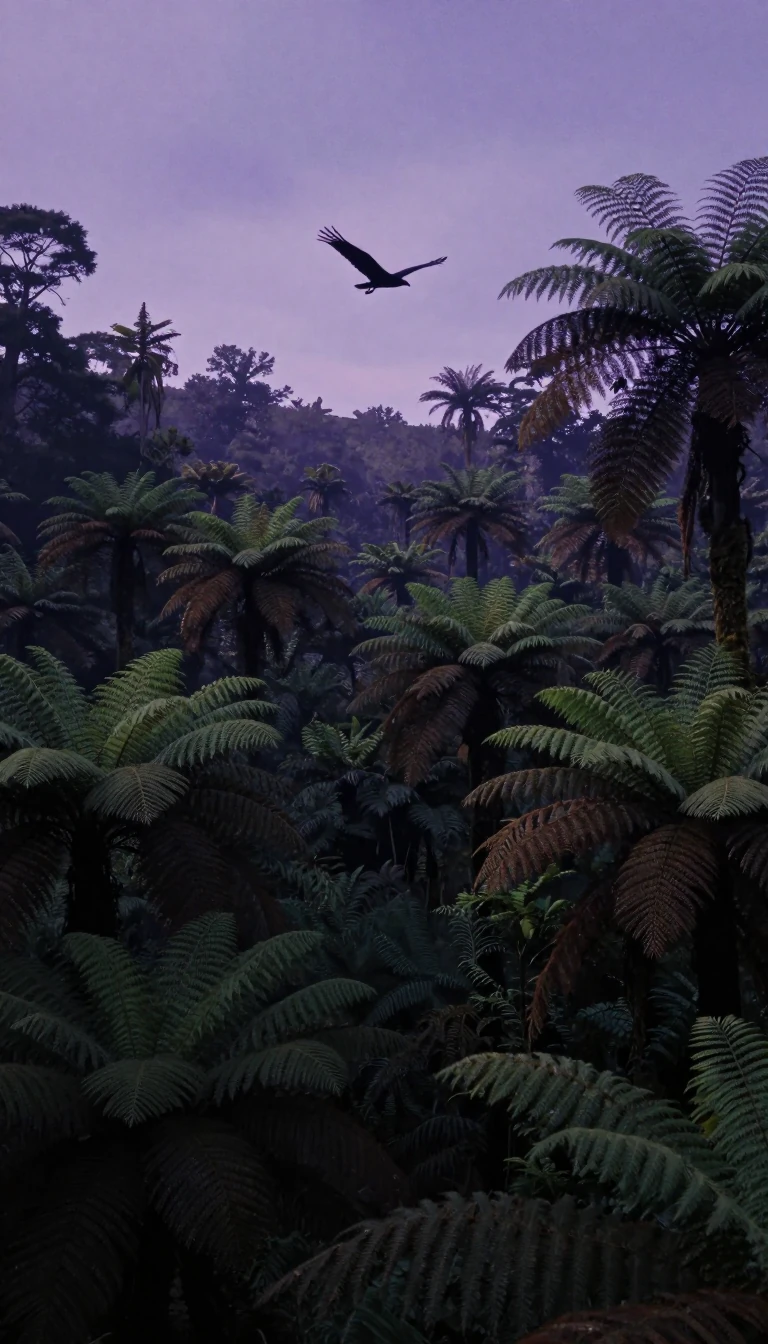
In short: Drepanosauromorpha were strange, tree-dwelling reptiles that thrived 230 to 210 million years ago. With barrel-shaped bodies, prehensile tails, and specialized grasping hands, they looked like a cross between chameleons and birds. Yet, their true place on the tree of life remains one of paleontology's most debated and shifting puzzles.
The drepanosaurs were defined by a suite of anatomical oddities that have long confounded researchers. Most featured triangular, bird-like skulls, and some, such as Avicranium, possessed toothless beaks. Their skeletons were equally peculiar: a fused vertebral hump above the shoulders likely supported powerful neck muscles for rapid, insect-snatching strikes. Many species sported hands with two opposed fingers for gripping branches, while others had primate-like opposable toes, possibly for mating stability.
Their lifestyle remains a subject of active investigation. While generally considered arboreal insectivores, their tall, flat tails—resembling those of newts—prompted some to argue they were aquatic. Others have identified digging adaptations in genera like Drepanosaurus and Skybalonyx, suggesting a fossorial existence. Aerial locomotion has also been proposed for genera like Hypuronector, though such claims have faced significant skepticism as researchers re-evaluate the clunky, chameleon-like anatomy of these animals.
The phylogenetic position of the clade is notoriously unstable. Early discoveries in the 1980s and 1990s led scientists to classify them as early lepidosaurs or archosauriforms. Later, the group Avicephala was proposed to unite them with gliding reptiles, but this was eventually abandoned as polyphyletic. Recent studies have placed them everywhere from basal neodiapsids to allokotosaurian archosauromorphs. A 2017 analysis even suggested that while they are known from the late Triassic, the lineage might have originated as early as the Permian, roughly 260 million years ago.
Why does this matter? The confusion stems from the fact that many shared features—such as those found in Longisquama—may be convergent adaptations to similar behaviors rather than evidence of close ancestry. As researchers like Renesto, Senter, and Spiekman continue to refine their matrices, the drepanosaurs serve as a masterclass in the difficulty of reconstructing the deep history of life from fragmented, highly derived fossil remains.
Opens the Intellect+ feed with this card first. Swipe up for the next one.
Sources
- Summary by Intellect · source: Drepanosauromorpha
To cite this card, link to https://intellectplus.co.uk/app/nature-drepanosauromorpha.
How we source, check and correct cards: Editorial standards.
General information, not professional advice. Spotted an error? Flag the card or see corrections and complaints.
Intellect Plus is a visual educational discovery platform for exploring fascinating facts and ideas. Brain Food, Not Brain Rot. What is Intellect Plus?
Related
More in Vertebrates · More in Nature · Latest · A–Z · All topics
