Deep beneath polar ice sheets lies a frozen library of Earth's ancient climate history.
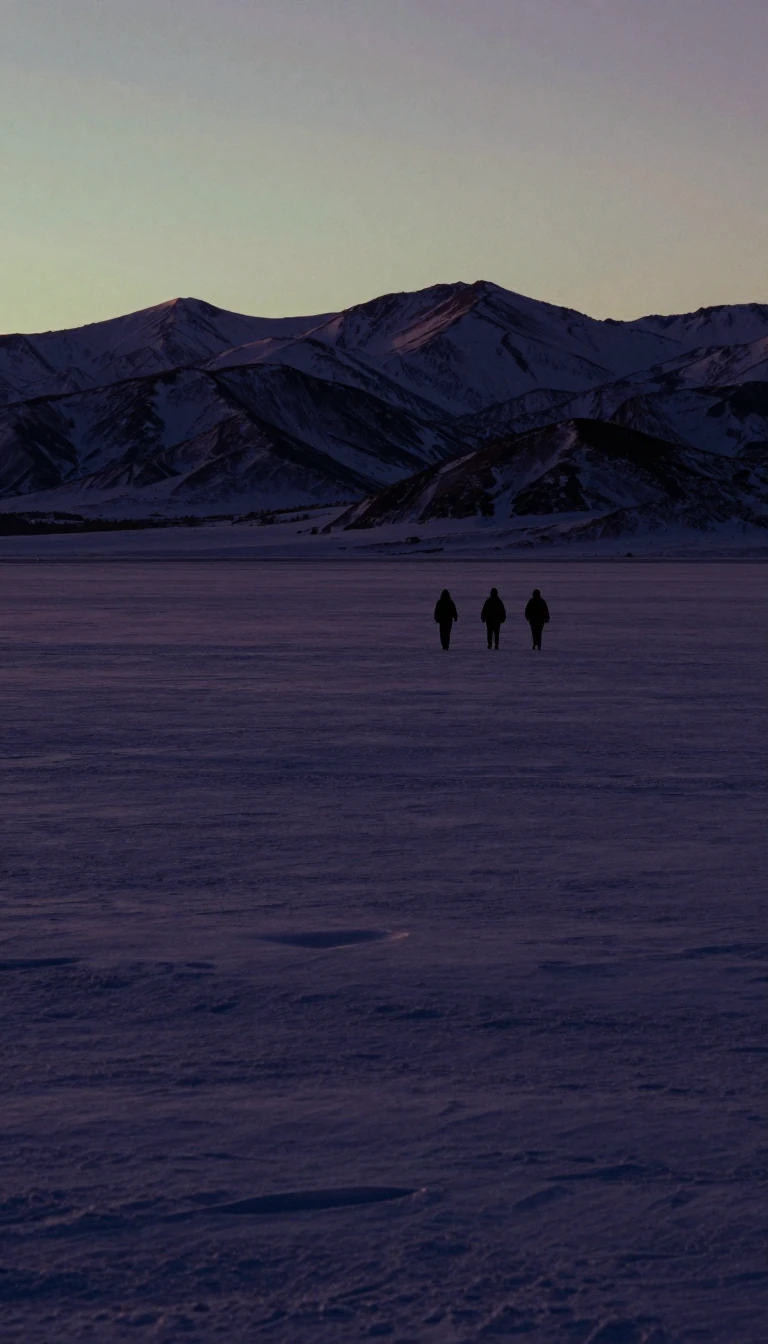
In short: By drilling miles into glaciers, scientists recover ice cores that function as time capsules. These cylinders of frozen history trap ancient air bubbles and atmospheric particles, allowing researchers to reconstruct global temperatures and greenhouse gas levels from hundreds of thousands of years ago, providing essential data for predicting our future climate.
Ice sheets in Greenland and Antarctica are formed by centuries of accumulating snowfall. As each new layer settles, its weight compresses the snow beneath it, eventually transforming it into dense glacial ice. This process traps tiny bubbles of the atmosphere, effectively creating fossils of the air as it existed when that specific layer of snow fell. By analyzing these trapped gases, such as methane and carbon dioxide, scientists can directly measure the atmospheric composition of the distant past.
Beyond gas bubbles, the ice acts as a geological archive for physical particles. Aerosols like volcanic ash, dust, pollen, and sea salts are preserved within the layers, offering clear evidence of major global events. Because the properties of snowfall change with the seasons, researchers can often count annual layers similarly to tree rings to determine the age of the ice. For the deepest, most compressed layers where annual counting becomes difficult, scientists rely on chemical composition, electrical conductivity, and computer modeling to establish a precise timeline.
The oldest records currently available, extracted from East Antarctica, span 800,000 years. These samples are stored in a specialized facility in Colorado, which serves as a global repository for researchers. By combining this physical evidence with satellite data and ground-penetrating radar, paleoclimatologists can validate complex computer models. These models are crucial for understanding how Earth’s climate has shifted historically and for simulating how it might respond to the environmental conditions of the next century, which are expected to exceed the stability observed over the last 160 years.
This research is inherently collaborative and logistically demanding. Selecting a drilling site requires balancing scientific interest with the need for accessibility and support. Once a core is extracted, it is carefully logged and transported through a chain of custody involving boats, planes, and trucks. This rigorous process ensures that the integrity of the climate record remains intact, allowing scientists to continue decoding the planet's history long after the initial field work is complete.
Opens the Intellect+ feed with this card first. Swipe up for the next one.
Sources
- Summary by Intellect · source: Core questions: An introduction to ice cores - NASA Science
- Also: Ice core
To cite this card, link to https://intellectplus.co.uk/app/nature-ice-core.
How we source, check and correct cards: Editorial standards.
General information, not professional advice. Spotted an error? Flag the card or see corrections and complaints.
Intellect Plus is a visual educational discovery platform for exploring fascinating facts and ideas. Brain Food, Not Brain Rot. What is Intellect Plus?
Related
More in Geology · More in Nature · Latest · A–Z · All topics
