Why these ground-up tornadoes often go undetected by even the most advanced weather radar
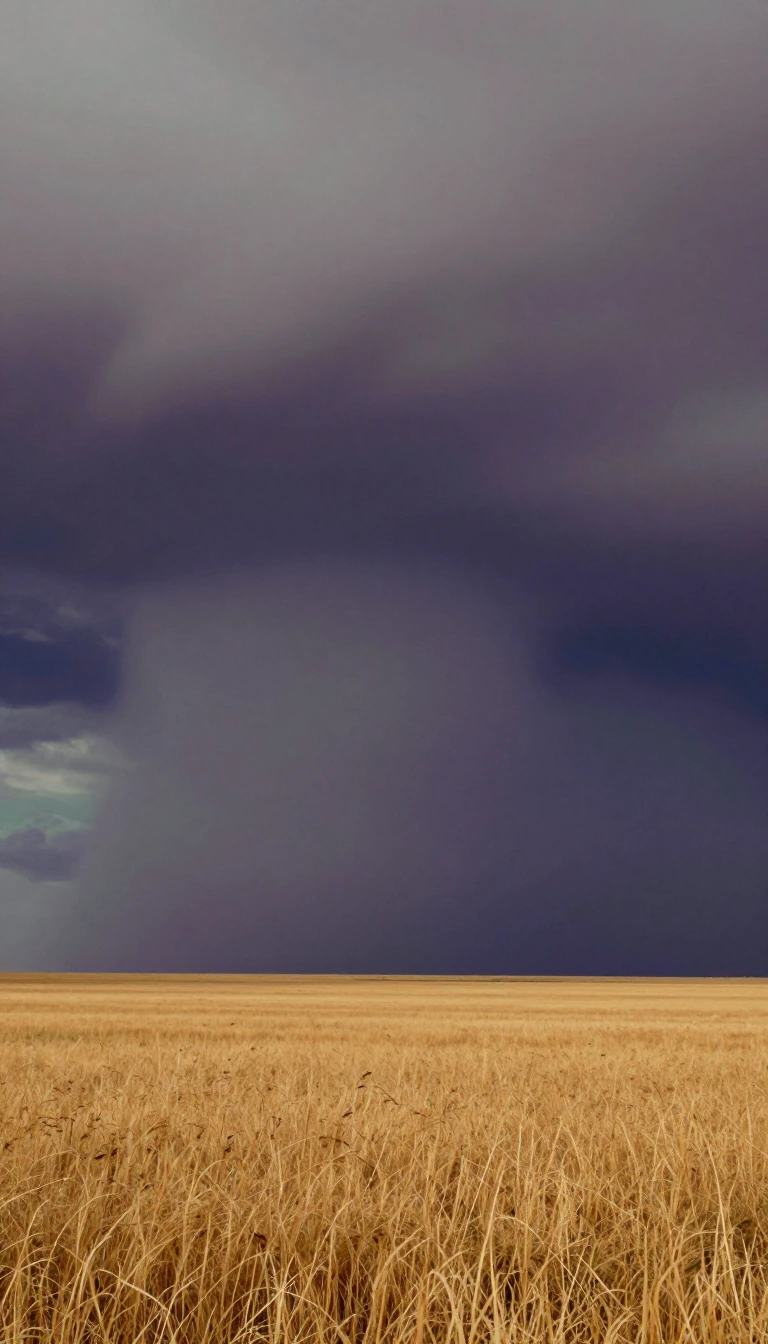
In short: Unlike classic supercell tornadoes that descend from rotating clouds, landspouts build from the ground up. These small, short-lived vortices form when surface winds collide and are stretched upward by developing clouds. Because they lack the mid-level rotation of traditional storms, they often hide beneath the reach of Doppler radar.
The term landspout was introduced in the 1980s to describe a specific type of vortex that lacks a strong mid-level mesocyclone—a rotating feature 2 to 10 kilometers in diameter found in powerful convective storms. While traditional tornadoes draw energy from the jet stream and rotate at the cloud level, landspouts originate in the boundary layer. They form when colliding surface winds create a vortex that is subsequently pulled upward and tightened by the updraft of a developing cumuliform cloud.
Because landspouts are physically smaller and do not extend deep into the atmosphere, they are frequently invisible to Doppler radar, which typically scans at higher altitudes. They are often short-lived, usually lasting less than 15 minutes, and follow a brief track. Despite their reputation for being weaker than their supercell counterparts, they are technically classified as tornadoes because they maintain contact with both the ground and a parent cloud. They can appear as translucent, laminar helical tubes, though sometimes they are only identified by the debris swirling at the surface before condensation makes the funnel visible.
While most landspouts remain relatively weak, typically not exceeding EF0 intensity, they can occasionally reach significant strength. Rare instances have seen them intensify to EF2 or EF3 levels, such as the 1988 Denver event where four landspouts struck, including one rated F3. In extreme cases, a landspout can even transition into a mesocyclonic tornado if it merges with a stronger system, as seen during the 1997 Central Texas outbreak where a landspout intensified into a catastrophic F5 tornado. Decay generally occurs when a nearby downdraft or rain-cooled outflow cuts off the surface vortex from its low-pressure source, severing the connection to the parent cloud's updraft.
Geography plays a significant role in their formation, with areas like the Denver Convergence Vorticity Zone showing a high propensity for these events. Whether occurring individually or in clusters, landspouts serve as a reminder that severe weather can emerge from the ground up, bypassing the traditional warning signs meteorologists look for in the sky.
Opens the Intellect+ feed with this card first. Swipe up for the next one.
Sources
- Summary by Intellect · source: What is a landspout?
- Also: Landspout
To cite this card, link to https://intellectplus.co.uk/app/nature-landspout.
How we source, check and correct cards: Editorial standards.
General information, not professional advice. Spotted an error? Flag the card or see corrections and complaints.
Intellect Plus is a visual educational discovery platform for exploring fascinating facts and ideas. Brain Food, Not Brain Rot. What is Intellect Plus?
Related
More in Air · More in Nature · Latest · A–Z · All topics
