Why the deepest parts of our planet are actually its youngest geological features
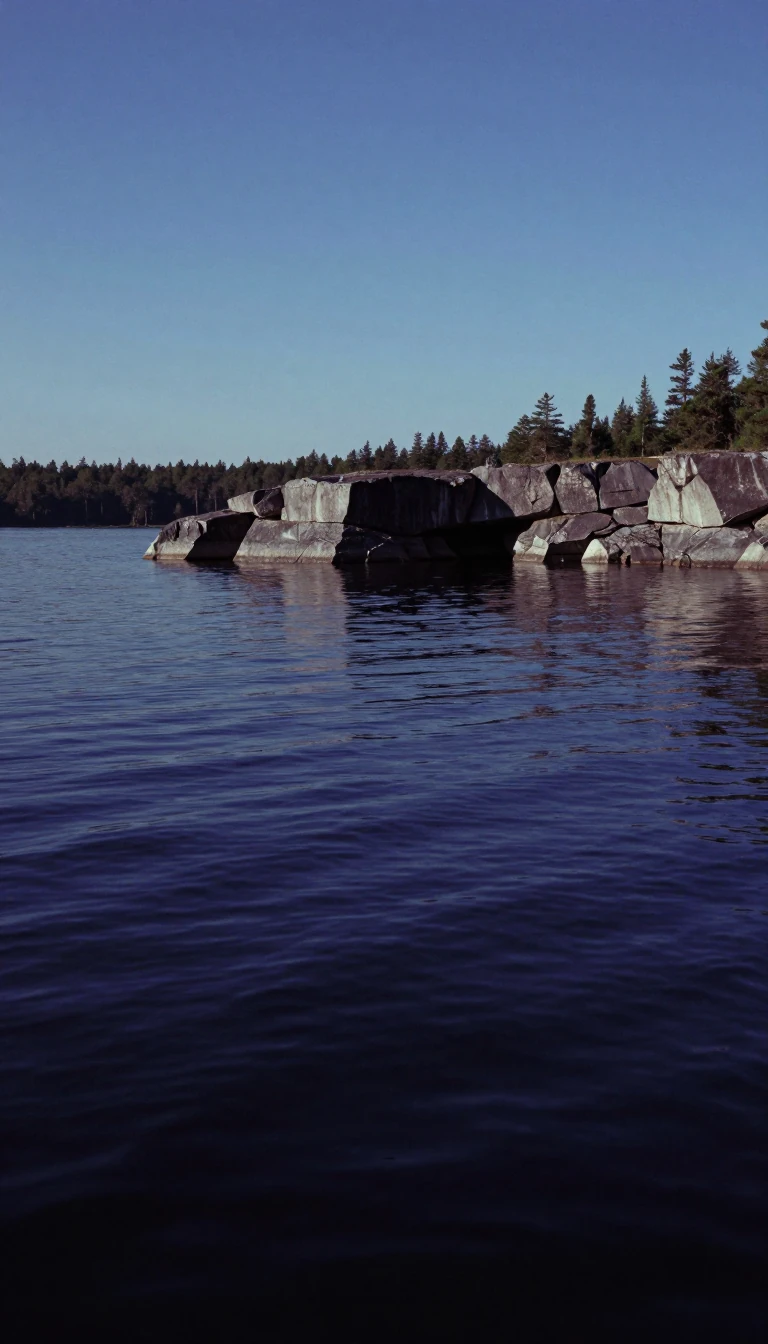
In short: Ocean basins span most of the Earth, yet they are transient landscapes constantly being recycled. While the planet is billions of years old, the seafloor is remarkably youthful. Driven by plate tectonics, these vast submarine regions are perpetually born at volcanic ridges and destroyed in deep-sea subduction zones.
Ocean basins occupy nearly 75 percent of the Earth's surface and hold the vast majority of its water. These regions sit at an average depth of roughly 4 kilometers, significantly lower than the continents. This elevation difference exists because continental crust is thick and buoyant, while oceanic crust is thin and dense, behaving much like wood floating in water compared to thicker styrofoam.
The seafloor is a dynamic environment shaped by plate tectonics. At oceanic ridges, tectonic plates diverge, allowing molten mantle material to rise and solidify into new crust. This process occurs at a rate of several centimeters annually. Conversely, at deep-sea trenches, older crust is forced back into the mantle and melted. Because of this continuous cycle of creation and destruction, the oldest sections of the ocean floor, located in the western Pacific, are only about 200 million years old—a mere fraction of the Earth's estimated 4.6 billion-year history.
Mapping these basins has historically been a monumental challenge due to the ocean's opacity to light and the difficulty of navigating its depths. Early efforts like the 1872–1876 Challenger Expedition relied on wire-line soundings, but the development of sonar in the 20th century revolutionized our understanding. By measuring the time taken for acoustic pulses to echo off the seafloor, researchers can now map complex features like abyssal hills, seamounts, and fracture zones. Modern systems, including multibeam echo sounders and near-bottom instruments like the Deep Tow, provide precise data on the topography and sedimentary layers that blanket the basin floor.
Opens the Intellect+ feed with this card first. Swipe up for the next one.
Sources
- Summary by Intellect · source: Ocean basin | Submarine Region, Exploration, Sediments & Evolution | Britannica
- Also: Oceanic basin
To cite this card, link to https://intellectplus.co.uk/app/nature-oceanic-basin.
How we source, check and correct cards: Editorial standards.
General information, not professional advice. Spotted an error? Flag the card or see corrections and complaints.
Intellect Plus is a visual educational discovery platform for exploring fascinating facts and ideas. Brain Food, Not Brain Rot. What is Intellect Plus?
Related
More in Geomorphology · More in Nature · Latest · A–Z · All topics
