The desert-dwelling sand cat possesses hearing abilities far superior to the domestic house cat
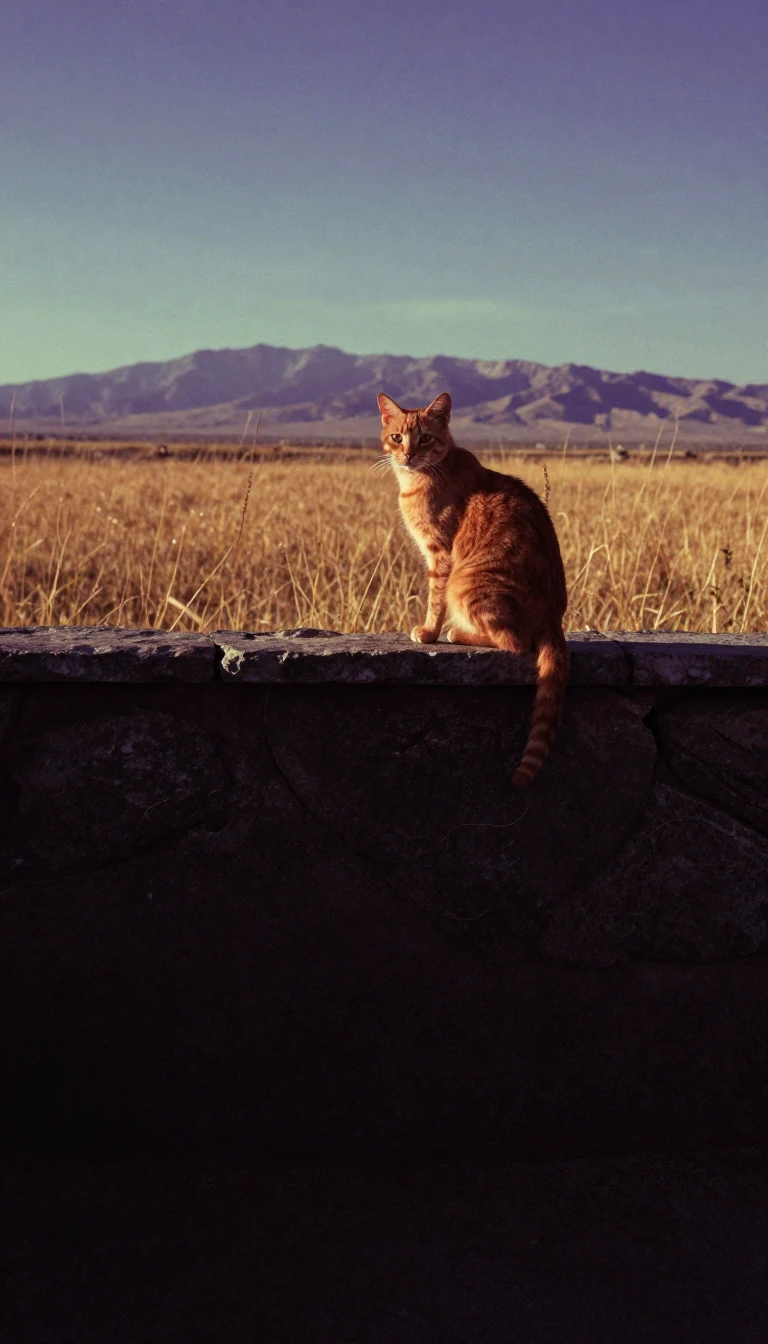
In short: Equipped with specialized fur-covered paws that insulate against scorching sands, the sand cat is a master of arid environments. Its anatomy is uniquely tuned for survival, featuring an enlarged ear canal that grants it exceptional acoustic sensitivity, allowing it to detect the subtle movements of prey hidden deep underground.
The sand cat, scientifically known as Felis margarita, is a small feline adapted to the harsh conditions of sandy and stony deserts. First described by Victor Loche in 1858 from a specimen found in the Algerian Sahara, these cats inhabit a vast, discontinuous range spanning North Africa, the Middle East, and Central Asia. Despite their wide distribution, they remain elusive, typically resting in underground dens during the day and hunting at night. Their physical build, including a flat, wide head and short legs, is complemented by a thick coat that varies in color and marking density depending on the region.
A defining feature of the species is its extraordinary auditory system. The sand cat possesses an ear canal about twice the size of a domestic cat's, which significantly enhances its hearing sensitivity. Research indicates that its acoustic input-admittance is roughly five times greater than that of a house cat, and its hearing is about 8 decibels more sensitive. This specialized anatomy allows the cat to thrive in environments where it must track small rodents and birds, and even hunt venomous snakes, often by listening for sounds beneath the desert surface.
Genetic studies have provided insight into the evolutionary history of the sand cat, which is part of a lineage that diverged from the common ancestor of Felis species millions of years ago. While earlier classifications proposed several subspecies based on regional specimens, a 2017 review by the Cat Classification Task Force recognized only two: the Saharan sand cat in North Africa and the Turkestan sand cat in Asia. Mitochondrial DNA analysis suggests that the Sinai Peninsula may have acted as a barrier to gene flow between these populations, though the genetic differentiation remains low.
The species is currently listed as Least Concern by the IUCN, owing to its large population and broad range. However, ecological requirements for the sand cat are still not fully understood, as few in-depth studies of wild populations exist. Observations continue to be recorded across its range, from the Rub' al Khali desert to the mountains of Algeria, providing ongoing data on how these animals navigate their shifting, extreme habitats.
Opens the Intellect+ feed with this card first. Swipe up for the next one.
Sources
- Summary by Intellect · source: Sand cat
- Also: iNaturalist — Sand Cat's-tail (Phleum arenarium) · CC BY-SA 4.0 (Wikipedia summary)
To cite this card, link to https://intellectplus.co.uk/app/nature-sand-cat.
How we source, check and correct cards: Editorial standards.
General information, not professional advice. Spotted an error? Flag the card or see corrections and complaints.
Intellect Plus is a visual educational discovery platform for exploring fascinating facts and ideas. Brain Food, Not Brain Rot. What is Intellect Plus?
Related
More in Organisms · More in Nature · Latest · A–Z · All topics
