The Altai Republic: A Siberian Mountain Kingdom Where Ancient Folklore Meets Modern Isolation
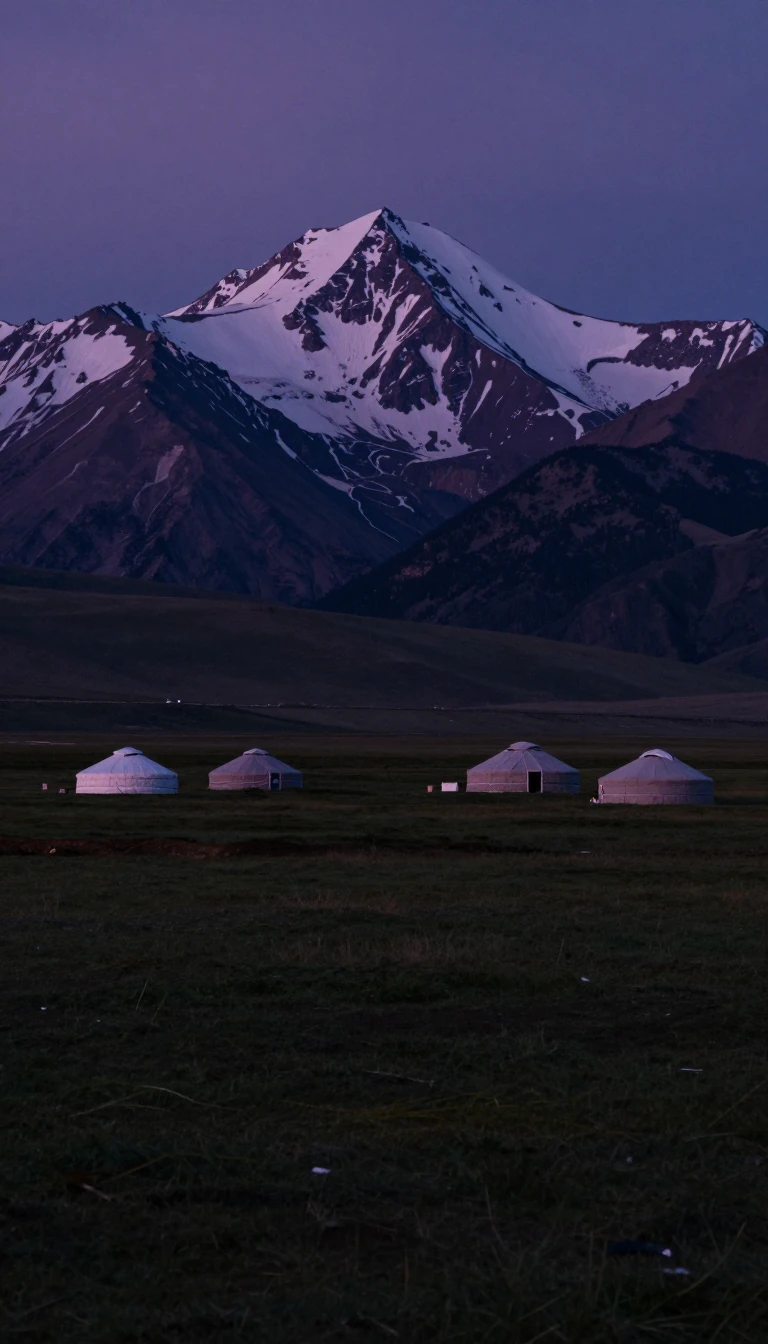
In short: Tucked into the heart of Asia, the Altai Republic is a rugged, landlocked expanse of glaciers and high-altitude lakes. As Russia's least-populous federal subject, it remains a place where horses are still a common mode of transport and the landscape is considered a gateway to the mythical kingdom of Shambhala.
Situated at the junction of the Siberian taiga, Mongolian steppes, and Kazakh semi-deserts, the Altai Republic is defined by its extreme topography. Its highest peak, Mount Belukha, reaches 4,506 meters, serving as both the highest point in Siberia and a site of deep spiritual significance. The region is a massive water reservoir, containing over 7,000 lakes and 20,000 tributaries. Lake Teletskoye, the largest, holds more than 40 cubic kilometers of exceptionally clear water, while the republic's glaciers contain a total ice volume of 57 cubic kilometers, exceeding the annual flow of all local rivers combined.
The region’s history is a complex tapestry of shifting empires. It was governed by the Xiongnu Empire as early as 209 BC and later fell under the influence of the Mongol Empire, the Zunghar Khanate, and the Qing Empire. By the mid-19th century, the territory was incorporated into the Russian Empire. Following the turbulence of the Russian Civil War and the short-lived Confederated Republic of Altai, the area eventually gained autonomy in 1922. Today, it functions as an ethnic republic where the indigenous Altai people, who became culturally and linguistically Turkicized centuries ago, live alongside a majority Russian population.
Modern Altai is characterized by its isolation and agricultural focus. It remains one of the few Russian regions without rail access, relying on the Chuysky Tract as its primary artery. While the economy historically centered on mineral extraction—including gold and lithium—tourism has surged since the Soviet dissolution. Visitors are drawn to the region's therapeutic mineral springs and remote wilderness, though infrastructure remains concentrated in the warmer, more accessible northern districts. Despite its ruggedness, the republic is increasingly connected to the outside world, with the Gorno-Altaysk Airport expanding its capacity in 2012 to accommodate direct flights from Moscow.
Opens the Intellect+ feed with this card first. Swipe up for the next one.
Sources
- Summary by Intellect · source: Altai Republic
- Also: Wikidata — Altai Republic · CC0
To cite this card, link to https://intellectplus.co.uk/app/places-altai-republic.
How we source, check and correct cards: Editorial standards.
General information, not professional advice. Spotted an error? Flag the card or see corrections and complaints.
Intellect Plus is a visual educational discovery platform for exploring fascinating facts and ideas. Brain Food, Not Brain Rot. What is Intellect Plus?
Related
More in Countries and other regions · More in Countries & Cities · Latest · A–Z · All topics
