Why a quiet fishing village became a synonym for a chaotic, cluttered mess.
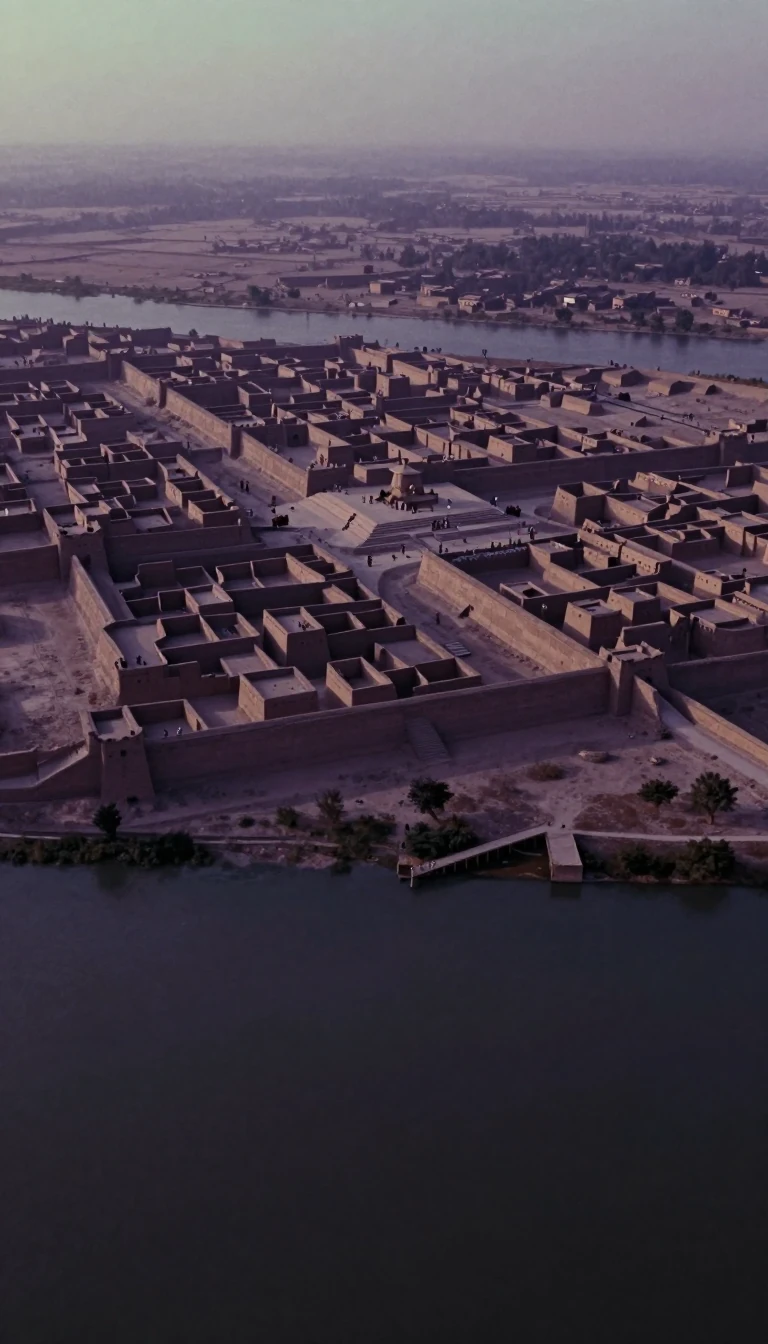
In short: Capernaum was a modest 1st-century fishing village on the Sea of Galilee, yet its name evolved into the English word capharnaum, meaning a disorderly accumulation of objects. Beyond this linguistic curiosity, the site holds deep archaeological significance, revealing the evolution of early religious spaces and the daily life of antiquity.
Established during the Hasmonean period in the 2nd century BC, Capernaum was a non-defensive village of about 1,500 people. Its residents lived in modest basalt-walled compounds called insulae, centered around communal courtyards. Life was defined by fishing and agriculture, evidenced by the discovery of grain mills, oil presses, and fishing gear. The town remained inhabited until its abandonment in the 11th century.
The site is most famous for its religious history. According to the Gospels, it served as the center of Jesus' public ministry in Galilee. Archaeological excavations have uncovered two significant structures: a 4th or 5th-century synagogue built of white limestone, which sits atop an earlier basalt foundation, and a residential compound known as the sacra insula. This compound underwent a transformation in the 4th century, shifting from a private home to a space interpreted by many as a house church, or domus ecclesiae.
The interpretation of the sacra insula remains a subject of academic debate. While some excavators identified the site as the home of Saint Peter—leading to the construction of an octagonal Byzantine church over the remains in the 5th century—critics argue that the evidence for this specific identification is thin. Some scholars suggest the space may have simply been a courtyard, noting that the graffiti and structural details cited as proof of veneration are often ambiguous or illegible.
Today, the site is a complex layering of history. The modern memorial church, dedicated in 1990, stands on stilts to preserve the view of the ancient ruins beneath. From the ornate white stones of the synagogue to the simple basalt dwellings of the common people, Capernaum offers a rare, tangible window into the social and religious landscape of the 1st-century Levant.
Opens the Intellect+ feed with this card first. Swipe up for the next one.
Sources
- Summary by Intellect · source: Capernaum
- Also: Wikidata — Capernaum · CC0
- Also: Wikidata — Capernaum · CC0
To cite this card, link to https://intellectplus.co.uk/app/places-capernaum.
How we source, check and correct cards: Editorial standards.
General information, not professional advice. Spotted an error? Flag the card or see corrections and complaints.
Intellect Plus is a visual educational discovery platform for exploring fascinating facts and ideas. Brain Food, Not Brain Rot. What is Intellect Plus?
Related
More in World Heritage Sites · More in Countries & Cities · Latest · A–Z · All topics
