South America is a geological bowl, ringed by mountains and defined by vast rivers.
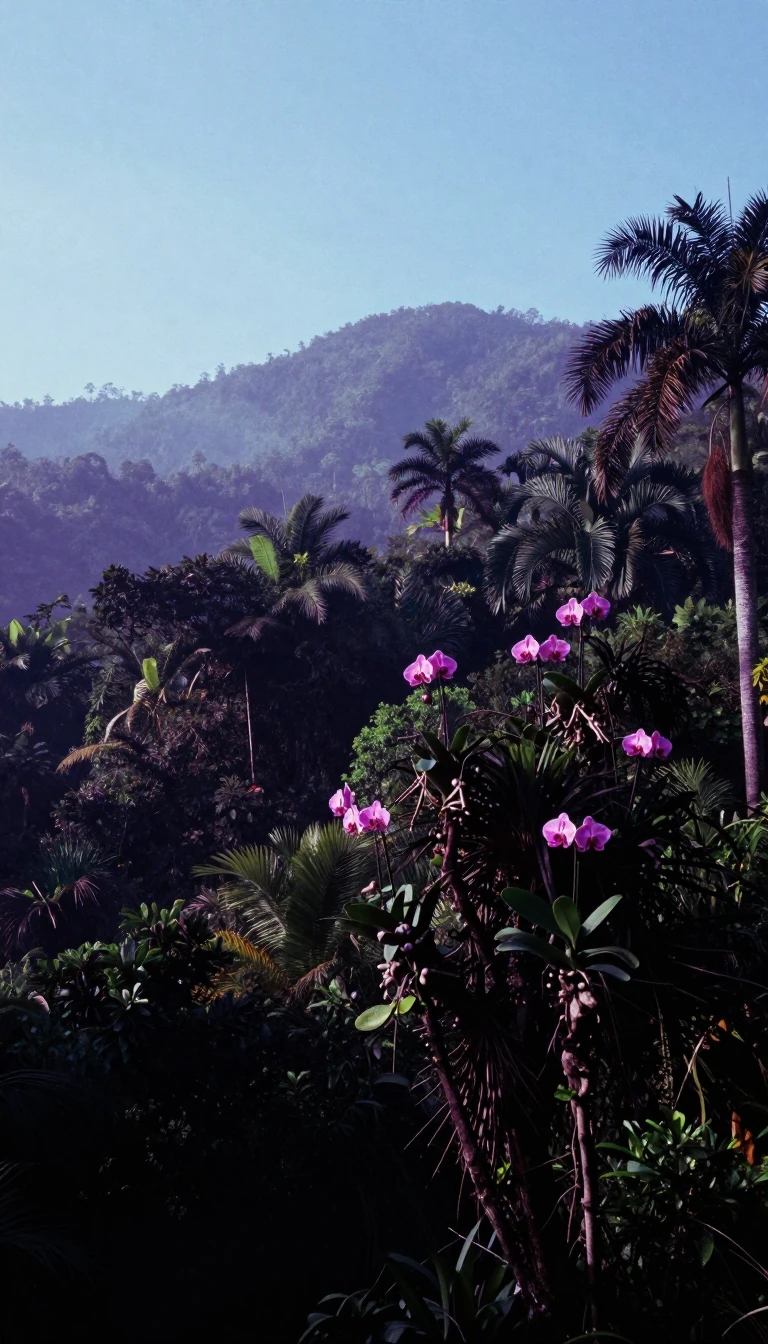
In short: South America is far more than a tropical rainforest. It is a continent-sized basin, shaped by the young, restless Andes and ancient eastern highlands. From the arid Atacama Desert to the fertile pampas, its climate is a complex dance of monsoon systems, mountain barriers, and shifting atmospheric currents.
Geographically, South America is the southern portion of the Americas, separated from the north by the Isthmus of Panama, which formed roughly 3 million years ago. Its topography is often described as a massive bowl; a flat interior is largely encircled by towering mountain ranges. The Andes, a Cenozoic range still actively forming, dominate the western edge, while the older, pre-Cambrian Brazilian and Guiana Highlands define the east. Between these lie vast central lowlands, drained by the world's largest river systems, including the Amazon and the Paraná.
The continent's climate is governed by the South American monsoon system (SAMS), an intricate framework influenced by topography, sea surface temperatures, and atmospheric circulation. The Andes act as a critical orographic barrier, channeling moisture and forcing wind patterns that dictate rainfall across the continent. For instance, the Gran Chaco thermal low and the South Atlantic Convergence Zone (SACZ) interact to regulate moisture flux, creating distinct wet and dry regions. This system is further complicated by the Madden–Julian oscillation and the influence of the Intertropical Convergence Zone (ITCZ) over the Atlantic.
Human activity has long adapted to these diverse landscapes. The fertile soils created by Andean erosion supported pre-Columbian civilizations like the Inca, and today, the region remains a global agricultural powerhouse, producing wheat and beef in the pampas. Meanwhile, the Altiplano is rich in minerals like copper and tin, and the northern lowlands have become centers for petroleum production. Despite this, the continent remains a study in contrasts: while São Paulo serves as an industrial heart, other areas like the arid sertão or the high-altitude Altiplano require specialized adaptation to survive.
The continent's geography is not static. The Andes continue to rise, and the climate is subject to constant shifts, from polar outbreaks that cool the subtropics to the seasonal migration of the monsoon. Understanding South America requires looking beyond its borders to the global atmospheric and oceanic forces that shape its unique, rugged, and often extreme environment.
Opens the Intellect+ feed with this card first. Swipe up for the next one.
Sources
- Summary by Intellect · source: Geography of South America
- Also: Wikidata — geography of South America · CC0
To cite this card, link to https://intellectplus.co.uk/app/places-geography-of-south-america.
How we source, check and correct cards: Editorial standards.
General information, not professional advice. Spotted an error? Flag the card or see corrections and complaints.
Intellect Plus is a visual educational discovery platform for exploring fascinating facts and ideas. Brain Food, Not Brain Rot. What is Intellect Plus?
Related
More in Basics · More in Countries & Cities · Latest · A–Z · All topics
