The Lurgrotte cave is a treacherous, three-level karst labyrinth in the Austrian Alps
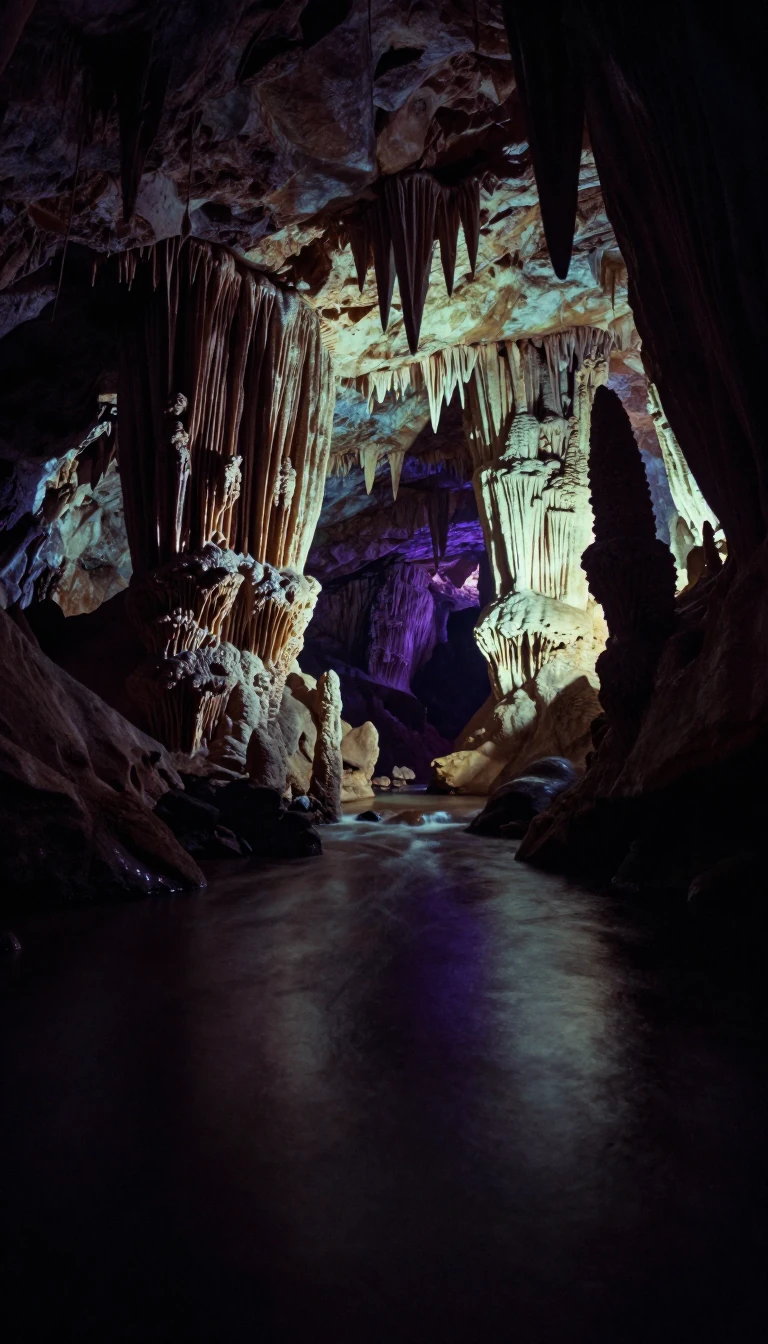
In short: Beneath the Tannenben karst region lies the Lurgrotte, the largest cave in Styria. Once a site of Paleolithic habitation, it has evolved from a dangerous, flood-prone mystery into a fragmented show cave. Its complex, shifting hydrology remains a puzzle that continues to defy complete exploration by modern science.
Located 16 km north of Graz, the Lurgrotte serves as a massive drainage system for the Tannenben karst area. The cave is defined by its two primary entrances: the Semriach side, where the Lurbach River sinks underground, and the Peggau side, where the Schmelz River emerges. While the cave has been known to locals for generations, scientific exploration began in earnest on April 1, 1894, when Italian explorer Max Brunello discovered its lower reaches. This discovery quickly turned perilous; later that same month, seven cavers were trapped for ten days by a flash flood, necessitating a massive rescue effort sanctioned by Emperor Franz Joseph I.
The early 20th century saw ambitious attempts to master the cave. In 1924, explosives were used to clear a route between the two entrances, with a full crossing finally achieved in 1935. This era also saw tragedy, notably the 1926 death of pioneering caver Leopoldine Fuhrich, who fell 20 meters. By the 1960s, the Lurgrotte had been developed into a show cave with extensive infrastructure. However, a powerful storm in 1975 destroyed much of these walkways and bridges. Because the cave is subject to recurring annual flooding, the full infrastructure was never restored, rendering a complete transit of the 5 km system impossible for visitors today.
The hydrology of the Lurgrotte remains poorly understood due to the complexity of its underground channels. While it is confirmed that high-water connections exist between the Lur and Schmelz systems, the exact location and extent of these links remain unknown. Dye-tracing experiments have further complicated the picture, suggesting that the water emerging from the two sides originates from entirely different sources. Today, visitors can explore shortened sections at either end, including the massive Big Dome, or Bear Grotto, which houses ancient cave bear bones and stands as one of Central Europe's largest underground chambers.
Opens the Intellect+ feed with this card first. Swipe up for the next one.
Sources
- Summary by Intellect · source: Lurgrotte
- Also: Wikidata — Lurgrotte · CC0
To cite this card, link to https://intellectplus.co.uk/app/places-lurgrotte.
How we source, check and correct cards: Editorial standards.
General information, not professional advice. Spotted an error? Flag the card or see corrections and complaints.
Intellect Plus is a visual educational discovery platform for exploring fascinating facts and ideas. Brain Food, Not Brain Rot. What is Intellect Plus?
Related
More in Other terrestrial features · More in Countries & Cities · Latest · A–Z · All topics
