Built from scratch, Malaysia’s administrative capital is a deliberate experiment in modern governance.
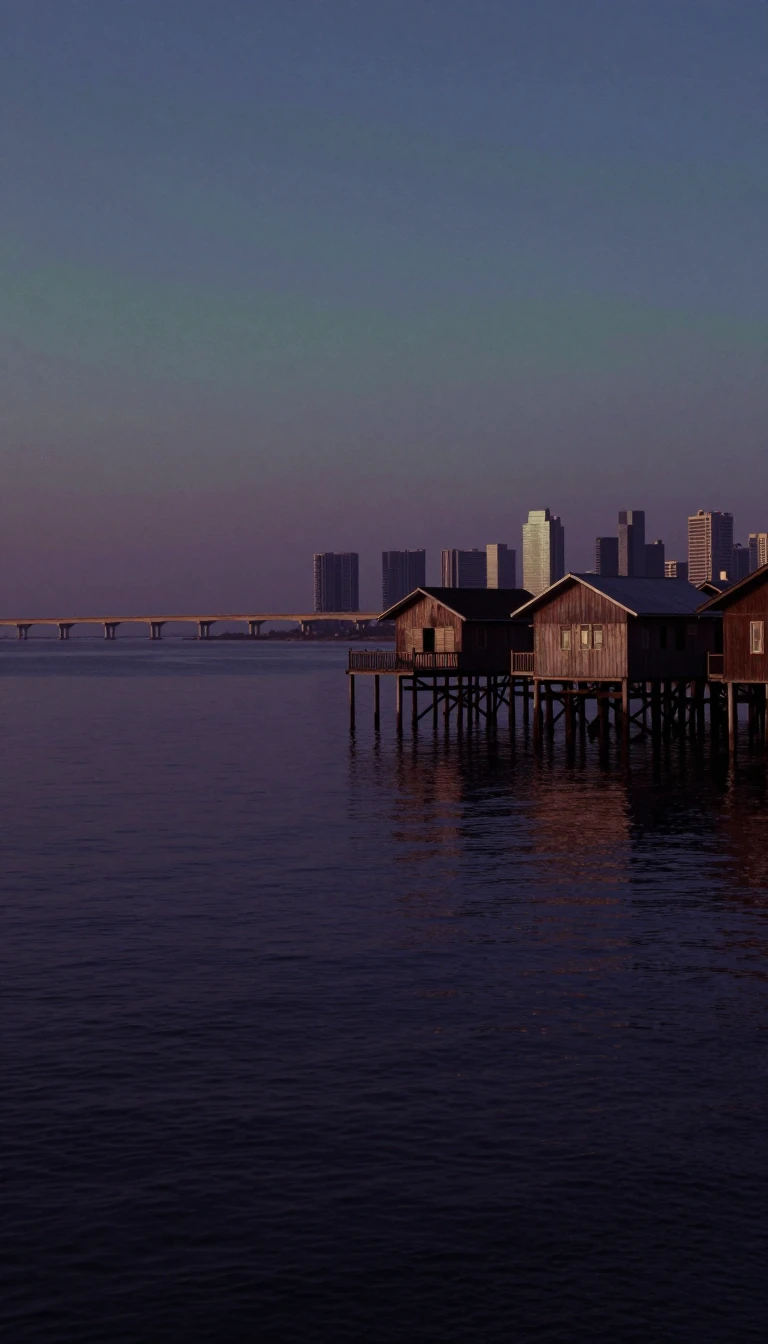
In short: Conceived in the 1990s to relieve the congestion of Kuala Lumpur, Putrajaya was designed as an intelligent garden city. This purpose-built administrative hub, constructed at a cost of US$8.1 billion, reflects a pan-Islamic architectural identity and serves as the seat of Malaysia's government, judiciary, and federal administration.
The vision for Putrajaya emerged during the tenure of Prime Minister Mahathir bin Mohamad in the late 1980s. Seeking to move government offices away from the overcrowded capital of Kuala Lumpur, planners selected the site of Prang Besar—a former rubber plantation founded in 1921—to become a laboratory for electronic government. Construction began in August 1995, utilizing primarily local materials and labor, and the city was formally declared Malaysia's third federal territory on February 1, 2001.
Architecturally, the city stands in contrast to the neo-Mughal styles found in Kuala Lumpur. Designers incorporated Islamic elements inspired by Baghdad and Damascus to project a cosmopolitan identity. The city is defined by its expansive green spaces, which account for 38% of its total area, and wide boulevards. Notably, it features the world's largest roundabout, spanning a diameter of 3.5 kilometers, and a massive lake that was originally intended to be crossed by a monorail system. That project was suspended due to high costs, leaving behind an iconic, unused suspension bridge that is slated to become a pedestrian walkway by 2026.
While Putrajaya functions as the administrative and judicial center, it does not replace Kuala Lumpur entirely. The latter remains the constitutional capital, housing the national legislature, the head of state, and most foreign embassies. Putrajaya’s population has grown steadily from approximately 30,000 in 2007 to an estimated 119,700 by early 2024. Despite its status as a federal territory, the city lacks its own territorial legislature, relying instead on the Putrajaya Corporation for local governance. It remains a unique case study in urban planning, where a government sought to engineer efficiency and identity through a completely new, purpose-built landscape.
Opens the Intellect+ feed with this card first. Swipe up for the next one.
Sources
- Summary by Intellect · source: Putrajaya
- Also: Wikidata — Putrajaya · CC0
- Also: Wikidata — Putrajaya · CC0
To cite this card, link to https://intellectplus.co.uk/app/places-putrajaya.
How we source, check and correct cards: Editorial standards.
General information, not professional advice. Spotted an error? Flag the card or see corrections and complaints.
Intellect Plus is a visual educational discovery platform for exploring fascinating facts and ideas. Brain Food, Not Brain Rot. What is Intellect Plus?
Related
More in Regions and country subdivisions · More in Countries & Cities · Latest · A–Z · All topics
