The Scythian universe was a flaming hearth born from a primordial fire goddess
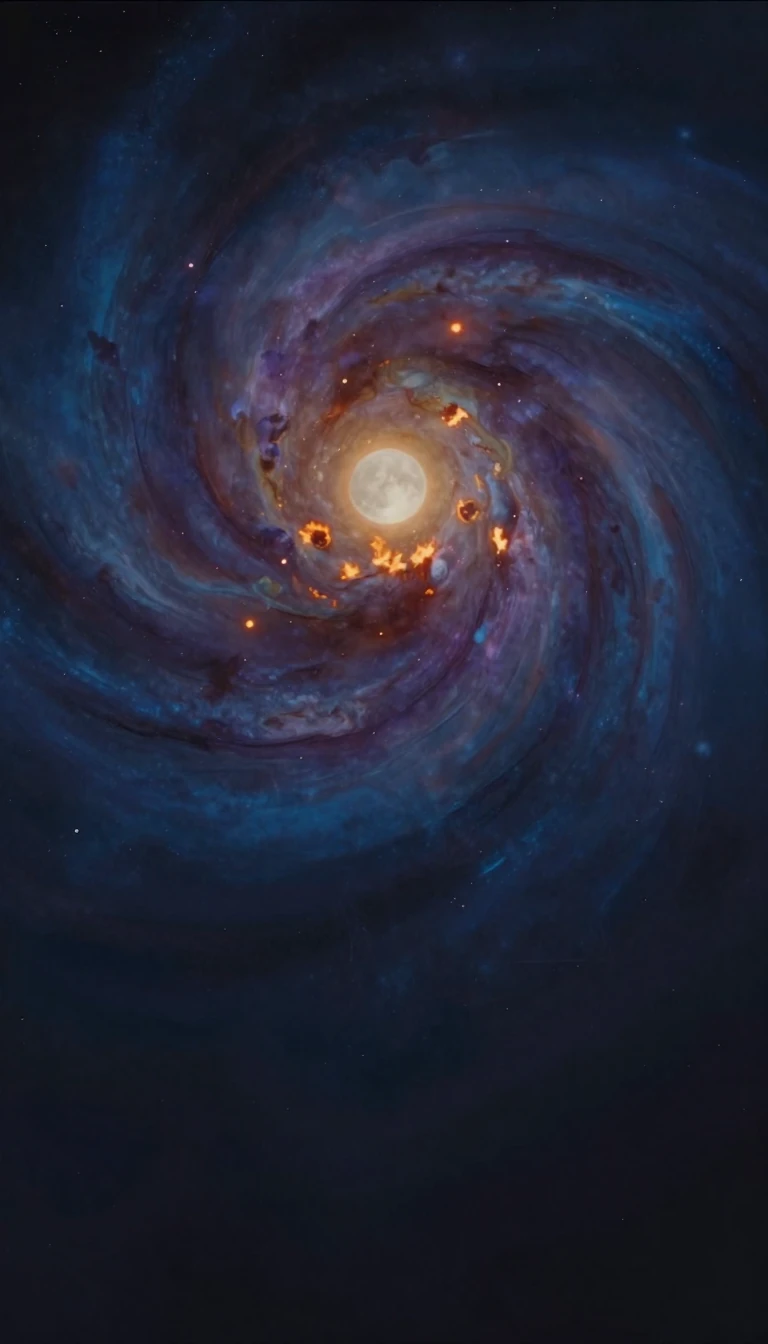
In short: Scythian cosmology was not merely a collection of myths, but a structured reflection of the universe itself. At its center burned Tabiti, a fire goddess who predated creation. From her union with the sky and earth, the Scythians derived a rigid, three-tiered cosmic order that governed everything from kingship to war.
The Scythian pantheon, as recorded by Herodotus, was a sophisticated heptad of seven deities, a structure deeply rooted in Indo-Iranic traditions. At the apex stood Tabiti, the 'Flaming One.' Unlike other gods, she was not depicted in art; instead, she was represented by the hearth, the sacred center of every home and tribe. As the primordial fire, she was considered the source of all existence, protecting the king and the state as a symbol of supreme authority. Her importance was such that the king served as the trustee of the 'hearths'—flaming objects believed to have fallen from the sky.
Below this celestial fire lay the union of Papaeus, the Sky-Father, and Api, the Earth-Mother. Their marriage, which mirrored the coupling of Ahura Mazdā and the earth goddess Armaiti in Avestan tradition, was the foundational act of cosmogenesis. This union produced the 'middle world,' the air space where humanity resides. The cosmology was strictly tripartite: a cosmic realm above, the middle world of humans, and a chthonic realm below. The middle world was conceptualized as a square plane, with four guardian deities representing its four sides, similar to the Lokapāla in Indic mythology.
The Scythian war god, often equated by the Greeks with Ares, occupied a unique position. Represented by an iron sword planted atop a brushwood altar, this deity embodied a dual nature: the sword of death and the wind of life. This duality was physically reflected in the akīnakēs sword, which was shaped like a phallus. The practice of sacrificing prisoners and throwing their right arms into the sky suggests this god was linked to celestial wind deities. This complex religious framework, influenced by Thracian, Mesopotamian, and Canaanite cultures, provided the Scythians with a coherent map of their place within an ordered, three-tiered universe.
Opens the Intellect+ feed with this card first. Swipe up for the next one.
Sources
- Summary by Intellect · source: Scythian religion
- Also: Wikidata — Scythian religion · CC0
To cite this card, link to https://intellectplus.co.uk/app/places-scythian-religion.
How we source, check and correct cards: Editorial standards.
General information, not professional advice. Spotted an error? Flag the card or see corrections and complaints.
Intellect Plus is a visual educational discovery platform for exploring fascinating facts and ideas. Brain Food, Not Brain Rot. What is Intellect Plus?
Related
More in Cities · More in Countries & Cities · Latest · A–Z · All topics
