Ethiopia's Sof Omar Caves: A Labyrinth Carved by the Relentless Web River
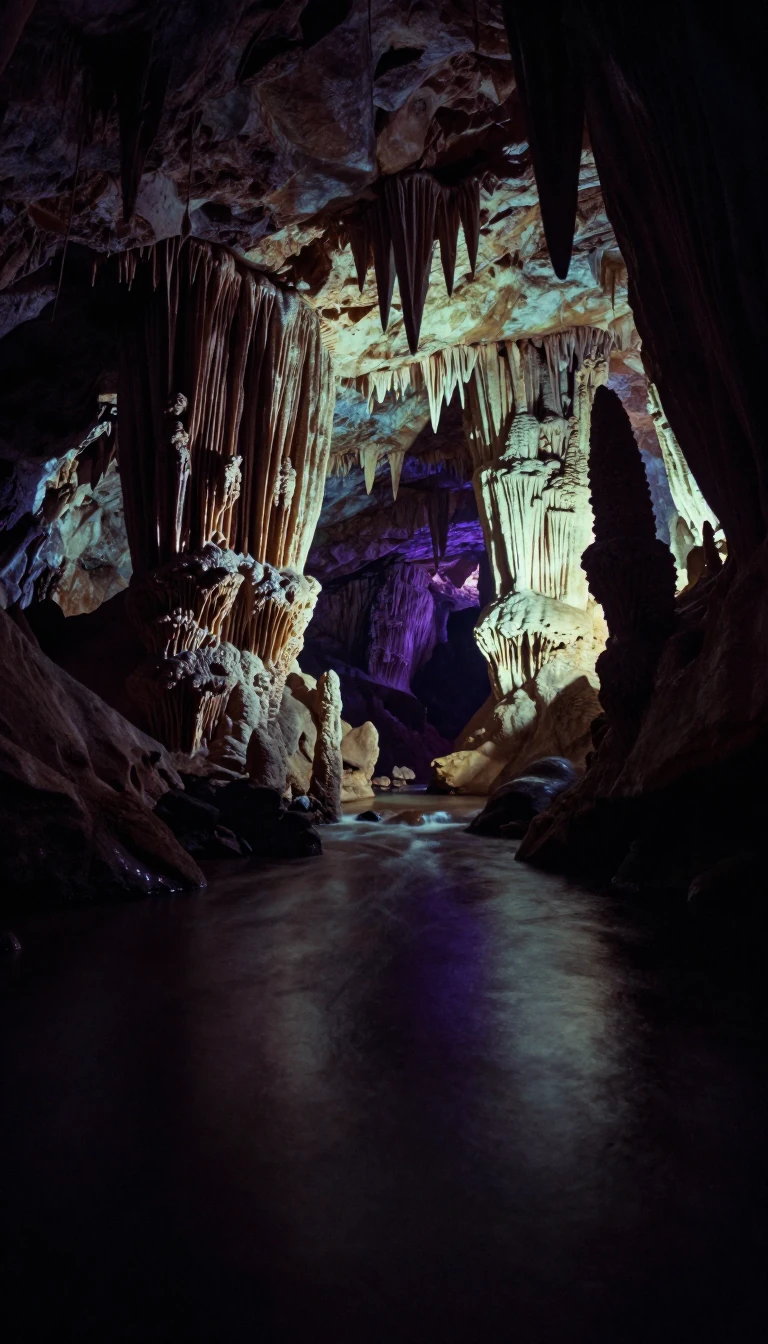
In short: Beneath the Ethiopian scrubland lies a subterranean network of limestone passages, formed when an ancient river abandoned its meander to carve through solid rock. Known for its dense pillars and vast chambers, this 15.1-kilometre cave system serves as both a geological marvel and a sacred site for local communities.
Located in the East Bale Zone of Ethiopia, the Sof Omar Caves represent a complex hydrological history. The Web River, originating in the 4,300-metre-high Bale Mountains, once followed a surface meander before dissolving the underlying Anatole limestone. This process created phreatic passages that eventually captured the river's entire flow, leaving behind a dry valley that stretches between the Ayiew Maco sink and the Holuca resurgence.
The cave system is defined by a rigid grid of joints running north-to-south and east-to-west, resulting in a distinct zig-zag pattern of passages. Among its most notable features is the Chamber of Columns, where a cluster of thick, densely packed pillars stands in the center of a wide passage. Further exploration reveals the Astrodome, a large chamber housing a significant bat colony, and the Mudwall Passage, which contains mud deposits formed in thin laminations.
Scientific interest in the site grew throughout the 20th century. While early explorers like Arthur Donaldson Smith visited in 1894, systematic mapping did not occur until 1967. A 1972 British expedition, featuring cavers from various university clubs, conducted a comprehensive survey that established the cave's current mapped length of 15.1 kilometres. This survey also identified the Wembley Fault, a geological feature that likely triggered the collapse of a 100-metre-wide shakehole on the plateau above.
Beyond its geology, Sof Omar holds deep cultural significance. Named after a Muslim holy man, the cave has long functioned as a religious center, sacred to both Islam and the traditional Oromo religion. Visitors entering through the village entrances pass a local shrine before descending into the labyrinth. As of 2011, the site has been placed on the UNESCO tentative list, marking its importance as a unique natural and cultural heritage site.
Opens the Intellect+ feed with this card first. Swipe up for the next one.
Sources
- Summary by Intellect · source: Sof Omar Caves
- Also: Wikidata — Sof Omar Caves · CC0
To cite this card, link to https://intellectplus.co.uk/app/places-sof-omar-caves.
How we source, check and correct cards: Editorial standards.
General information, not professional advice. Spotted an error? Flag the card or see corrections and complaints.
Intellect Plus is a visual educational discovery platform for exploring fascinating facts and ideas. Brain Food, Not Brain Rot. What is Intellect Plus?
Related
More in Other terrestrial features · More in Countries & Cities · Latest · A–Z · All topics
