Why the Sistine Chapel of Mudéjar art was hidden behind a false ceiling for centuries.
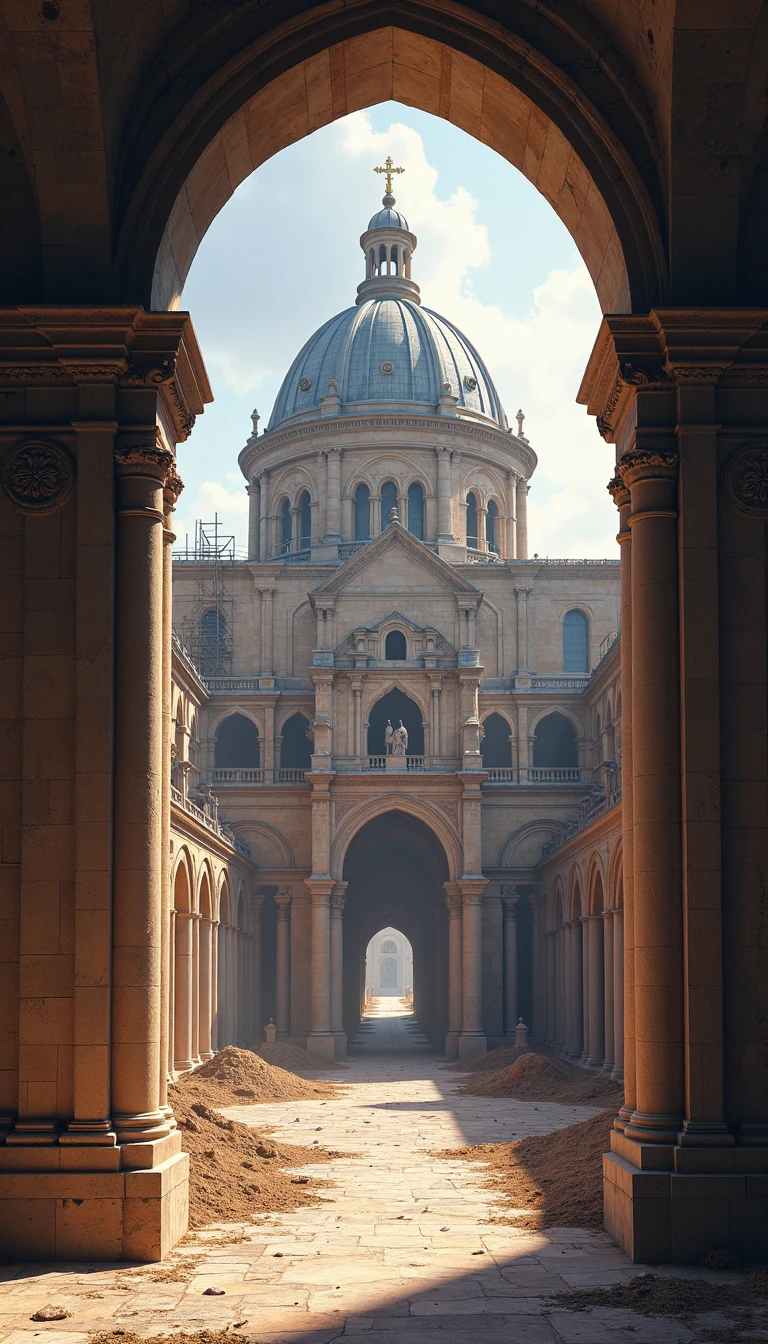
In short: Teruel Cathedral is a masterpiece of Mudéjar architecture, a unique blend of Islamic tradition and European Gothic styles. Its most prized feature, a 14th-century coffered ceiling, was saved from decay by a stroke of historical irony: it was covered by a false ceiling in the 18th century, preserving its vibrant paintings.
The Cathedral of Teruel, or Catedral de Santa María de Mediavilla, stands as a testament to the complex cultural landscape of post-Reconquista Spain. Its architectural evolution began in 1171 with a Romanesque church, but it is defined by the Mudéjar style—a refined, inventive use of brick and glazed tiles that flourished in Aragon until the early 17th century. The site was designated a UNESCO World Heritage Site in 1986, recognizing the tower, roofing, and lantern tower as part of a monumental ensemble.
The building’s interior underwent radical transformations over centuries. In the 13th century, the Moorish master Juzaff restructured the Romanesque core, raising the naves and introducing Mudéjar apses. By 1335, further renovations led by Yuçaf de Huzmel saw the construction of new apses and a crossing, creating a more spacious, luminous environment. The crowning achievement is the 32-meter-long coffered ceiling, often called the Sistine Chapel of Mudéjar art. Its intricate paintings of historical figures and fantastic creatures survived because they were concealed by a Neoclassical false ceiling in the 18th century, shielding the original work from the elements.
The cathedral’s exterior reflects its layered history. The Mudéjar tower, begun in 1257, features a barrel vault at its base and is decorated with ceramic glaze. Later additions include a 1538 lantern tower designed by Juan Lucas 'Botero' and built by Martín de Montalbán, which illuminated a Renaissance altarpiece by Gabriel Yoly. The final major structural change occurred in 1909, when architect Pau Monguió added a Neo-Mudéjar facade. Today, the cathedral remains a rare site where the distinct artistic traditions of medieval Spain are preserved in a single, evolving structure.
Opens the Intellect+ feed with this card first. Swipe up for the next one.
Sources
- Summary by Intellect · source: Teruel Cathedral
- Also: Wikidata — Teruel Cathedral · CC0
To cite this card, link to https://intellectplus.co.uk/app/places-teruel-cathedral.
How we source, check and correct cards: Editorial standards.
General information, not professional advice. Spotted an error? Flag the card or see corrections and complaints.
Intellect Plus is a visual educational discovery platform for exploring fascinating facts and ideas. Brain Food, Not Brain Rot. What is Intellect Plus?
Related
More in World Heritage Sites · More in Countries & Cities · Latest · A–Z · All topics
