Your brain is a vast, interconnected web of billions of neurons and trillions of synapses.
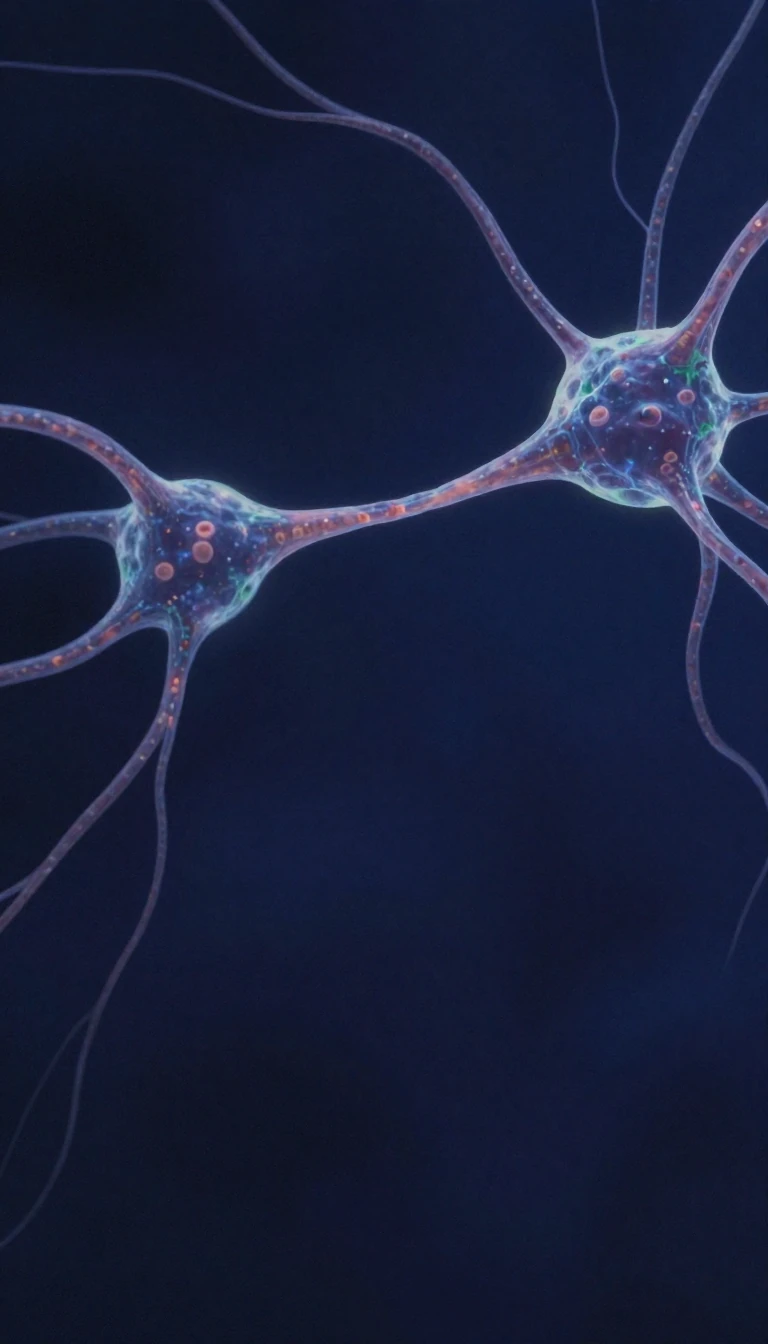
In short: Biological neural networks form the foundation of human thought, memory, and survival. While artificial intelligence models are loosely inspired by these complex systems, the true architecture of the brain remains a profound mystery. Discover how electrical pulses and chemical signals create the language that defines your entire existence.
A biological neural network is an intricate population of neurons, each specialized to translate electrical signals into chemical messages. A single neuron consists of a cell body, dendrites that receive incoming signals, and a long axon that transmits action potentials to neighboring cells. When an electrical pulse reaches an axon terminal, it triggers the release of neurotransmitters, which bridge the gap—the synapse—to the next neuron. This process is governed by voltage-gated ion channels and maintained by sodium-potassium pumps, creating a sophisticated electrochemical language that drives everything from basic survival to complex memory formation.
The human brain is staggering in scale, housing roughly 10¹¹ neurons linked by about 10¹⁵ synaptic connections. This complexity was not always understood. Early theorists like Alexander Bain and William James proposed in the late 19th century that mental activity resulted from neural interactions. While Bain correctly intuited that repetition strengthens connections—a precursor to our understanding of memory—skeptics initially doubted the brain could support such an immense number of connections. We now know the brain is remarkably efficient, with the same wiring capable of handling diverse inputs and multiple problems simultaneously.
Today, the study of these networks has split into two paths: biological neuroscience and artificial intelligence. While AI models like those used in speech recognition and robotics are inspired by biological systems, the extent to which they mirror actual brain function remains a subject of intense debate. Modern researchers are now using computational tools to map these circuits, even inferring connectivity from spike train data. This cross-pollination is yielding real-world breakthroughs, such as brain-computer interfaces that allow paralyzed patients to regain motor function by translating neural intent into digital commands.
Beyond simple electrical signaling, recent research emphasizes the critical role of neuromodulators like dopamine and serotonin in shaping behavior and learning. By modeling these systems at various levels of abstraction—from individual neuron dynamics to large-scale modular interactions—scientists hope to unlock treatments for pathologies like Alzheimer's and PTSD. As we refine our ability to simulate these non-linear transformations, we move closer to understanding the biological architecture that makes human consciousness possible.
Opens the Intellect+ feed with this card first. Swipe up for the next one.
Sources
- Summary by Intellect · source: Neural network (biology)
To cite this card, link to https://intellectplus.co.uk/app/science-neural-network-biology.
How we source, check and correct cards: Editorial standards.
General information, not professional advice. Spotted an error? Flag the card or see corrections and complaints.
Intellect Plus is a visual educational discovery platform for exploring fascinating facts and ideas. Brain Food, Not Brain Rot. What is Intellect Plus?
Related
More in Biology basics · More in Science · Latest · A–Z · All topics
