How steam distillation extracts delicate oils without destroying them with high heat
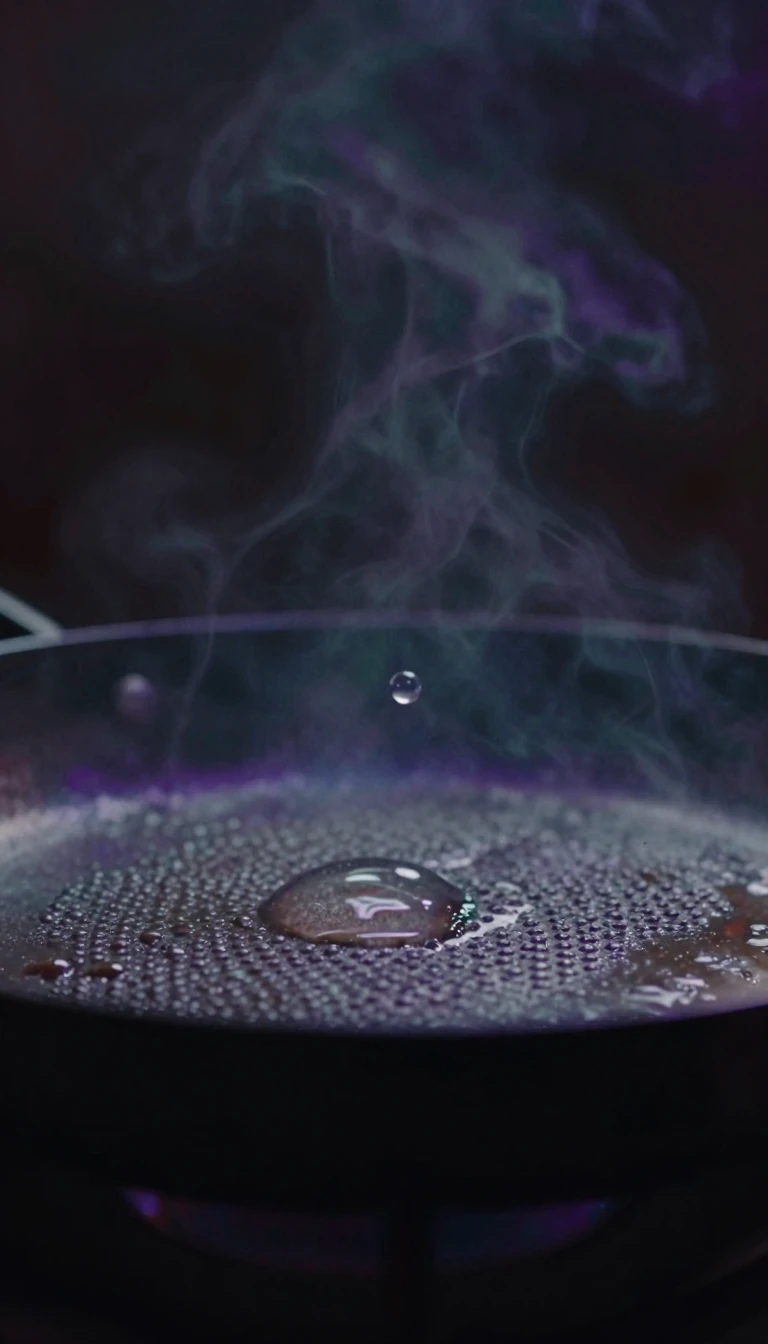
In short: Steam distillation allows scientists to extract volatile compounds that would otherwise decompose under intense heat. By using steam to carry vapors to a condenser, this ancient technique separates substances like essential oils from plant material, providing a simpler and more economical alternative to modern methods like supercritical fluid extraction.
Steam distillation works by leveraging the vapor pressure of volatile substances. In standard distillation, a substance must be heated to its boiling point to create a steady flow of vapor. However, many compounds, such as essential oils, have high boiling points and would degrade if heated to those temperatures. Steam distillation bypasses this by introducing steam, which provides the necessary positive flow of vapor without requiring the target substance itself to reach its boiling point.
The process relies on the fact that many volatile substances are immiscible with water. Once the steam carries the vapor to a condenser and the mixture cools, the water and the target compound form distinct phases. This allows for easy separation via decantation or a separatory funnel. Variations include hydrodistillation, where material is mixed directly with boiling water, and dry steam distillation, which uses superheated steam forced through the material in a separate container for greater efficiency.
Historically, this method has deep roots. Al-Kindi, an early Arabic philosopher living between c. 801 and 873, documented its use in perfume chemistry. Similarly, the physician Avicenna used it to produce essential oils from rose petals, and al-Dimashqi later scaled the process for rose water production. While modern laboratory techniques like vacuum distillation and supercritical fluid extraction have replaced it for many purification tasks, steam distillation remains a vital industrial tool for isolating products like eucalyptus oil, camphor oil, and fatty acids.
Despite its utility, the process is not without challenges. The environment is vigorous, involving temperatures around 100 °C for several hours, which can still lead to the degradation of sensitive compounds. Furthermore, while the formation of an azeotrope—where the mixture boils at a lower temperature than water—can occur, it is not a requirement for the process to function. Today, specialized equipment like the Clevenger-type apparatus or the Likens-Nickerson apparatus continues to facilitate these extractions in both research and industrial settings.
Opens the Intellect+ feed with this card first. Swipe up for the next one.
Sources
- Summary by Intellect · source: Steam distillation
- Also: www.britannica.com — Steam distillation | process | Britannica
To cite this card, link to https://intellectplus.co.uk/app/science-steam-distillation.
How we source, check and correct cards: Editorial standards.
General information, not professional advice. Spotted an error? Flag the card or see corrections and complaints.
Intellect Plus is a visual educational discovery platform for exploring fascinating facts and ideas. Brain Food, Not Brain Rot. What is Intellect Plus?
Related
More in Separation processes · More in Science · Latest · A–Z · All topics
