Thunder is the shock wave from air heated by a lightning bolt
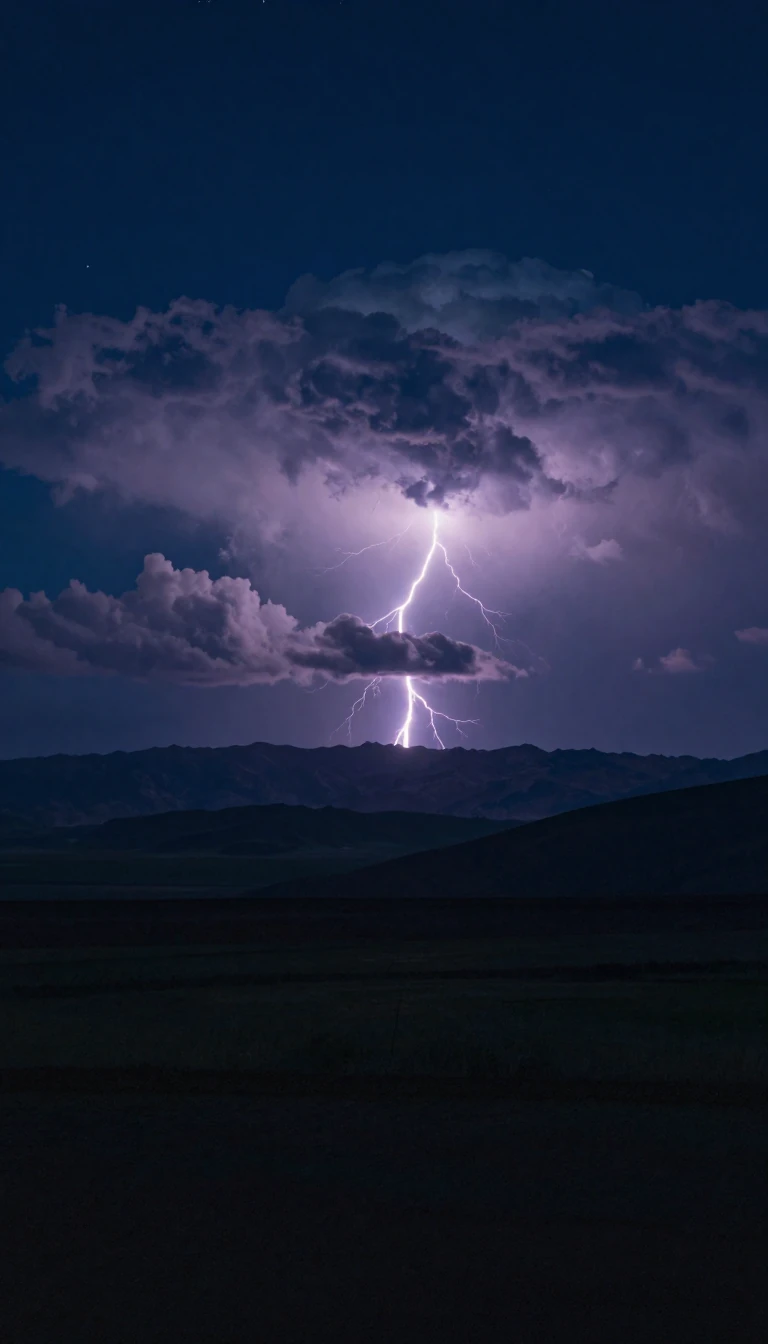
In short: A lightning bolt can heat the air in its path to around 20,000 kelvin, hotter than the surface of the Sun. That sudden heating pushes the air outward faster than sound, forming a shock wave. The shock wave is the thunder you hear, and the speed of light explains why you see the flash first.
Thunder begins with lightning. As a bolt passes through the air, the temperature of its channel rises very sharply. Measurements from spectral analysis show it starting near 20,000 K, climbing to about 30,000 K, then falling away gradually to about 10,000 K over the roughly 50 microseconds the channel exists. The average is about 20,400 K. This rapid heating makes the surrounding air expand outward faster than sound would normally travel, creating a pulse of pressure that is best understood through the same physics behind an explosion or a jet breaking the sound barrier.
The loudness depends on distance and conditions. Near the source, thunder typically registers between 165 and 180 decibels, and can exceed 200 in some cases. Close strikes can cause property damage and can rupture eardrums. Temperature inversions, where cooler air sits near the ground beneath warmer air, can make thunder carry more acoustic energy because sound is trapped in the near-ground layer instead of spreading upward. Later return strokes in cloud-to-ground lightning also tend to carry more acoustic energy than the first.
The sounds vary too. Claps are loud and brief, peals change in loudness and pitch, rolls are irregular blends of both, and rumbles are lower, quieter and can last more than 30 seconds. Close lightning is often heard first as a crack or snap, followed by a continuous rumble as the distant parts of the stroke arrive.
Understanding of thunder has changed over time. Early explanations credited deities, and later ones included wind striking clouds, hail colliding inside clouds, and a vacuum collapsing after a lightning strike. By the mid-19th century the accepted view was the vacuum theory, and the shock wave explanation became the consensus in the 20th century. Experiments with simulated lightning largely support the shock wave model, though researchers still debate some of the precise physical mechanisms.
The gap between flash and sound is a useful tool. Light travels much faster than sound, which covers roughly 343 metres per second in dry air at 20 degrees Celsius. Counting seconds between a flash and its thunder and dividing by three gives an estimate of distance in kilometres, a simple way to judge how close a storm is.
Thunder is the shock wave from air heated by a lightning bolt
hidden-mechanisms
Opens the Intellect+ feed with this card first. Swipe up for the next one.
Sources
- Summary by Intellect · source: Curious Kids: how does thunder work? And why is it so loud?
- Also: Noise rock
- Also: Thunder
To cite this card, link to https://intellectplus.co.uk/app/science-why-does-thunder-make-noise.
How we source, check and correct cards: Editorial standards.
General information, not professional advice. Spotted an error? Flag the card or see corrections and complaints.
Intellect Plus is a visual educational discovery platform for exploring fascinating facts and ideas. Brain Food, Not Brain Rot. What is Intellect Plus?
Related
More in Researched · More in Science · Latest · A–Z · All topics
