A twenty-thousand-year-old stellar explosion continues to race through space at breakneck speeds.
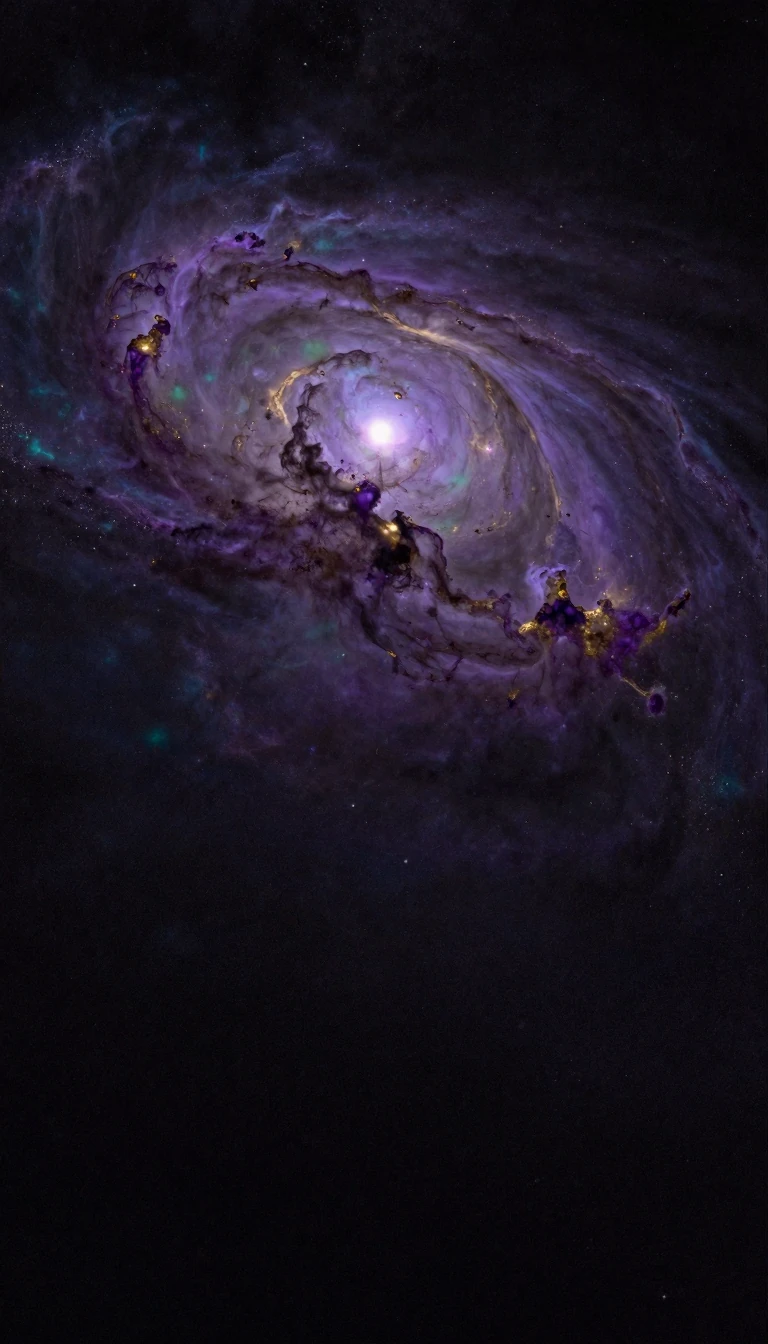
In short: The Cygnus Loop is a massive, bubble-shaped supernova remnant in the constellation Cygnus. Born from a star that detonated millennia ago, this nebula is still expanding into the surrounding interstellar medium. Recent observations reveal that its shock front remains remarkably fast, showing no signs of slowing down after twenty centuries.
The Cygnus Loop, also known as the Veil Nebula, represents the violent aftermath of a massive star's death. Astronomers estimate the explosion occurred approximately 20,000 years ago. This remnant is not a static object; it is a dynamic, expanding bubble of gas and dust that measures roughly 120 light-years in diameter. The structure is composed of various filaments, including the Western Veil, the Eastern Veil, and Pickering’s Triangle, which are visible across the electromagnetic spectrum, from radio waves to X-rays.
The nebula’s expansion is driven by a powerful shock wave that plows into the tenuous interstellar medium. As this shock front encounters regions of varying density, it creates the delicate, wrinkled ribbons of light observed by the Hubble Space Telescope. These filaments are formed when neutral hydrogen is heated to over one million degrees Fahrenheit, causing electrons to excite and emit photons. Behind this front, ionized oxygen atoms cool and produce a characteristic blue glow, providing a laboratory for studying extreme astrophysical turbulence.
Determining the precise distance to the Cygnus Loop has long challenged astronomers, with estimates fluctuating significantly over the last century. Early calculations suggested a distance of 2,500 light-years, while later models proposed values as low as 1,470 light-years. However, recent data from the Gaia mission, which measures the parallax of stars interacting with the remnant, has refined the distance to approximately 2,400 light-years. This updated measurement confirms that the nebula is a sprawling, high-energy feature of our galaxy, continuing to shape the interstellar environment as it propagates outward.
Opens the Intellect+ feed with this card first. Swipe up for the next one.
Sources
- Summary by Intellect · source: Cygnus Loop | supernova remnant, nebula, stellar explosion | Britannica
- Also: Cygnus Loop - NASA Science
- Also: Cygnus Loop
To cite this card, link to https://intellectplus.co.uk/app/space-cygnus-loop.
How we source, check and correct cards: Editorial standards.
General information, not professional advice. Spotted an error? Flag the card or see corrections and complaints.
Intellect Plus is a visual educational discovery platform for exploring fascinating facts and ideas. Brain Food, Not Brain Rot. What is Intellect Plus?
Related
More in Astronomical objects · More in Space · Latest · A–Z · All topics
