Why the most common light in space is technically forbidden by physics
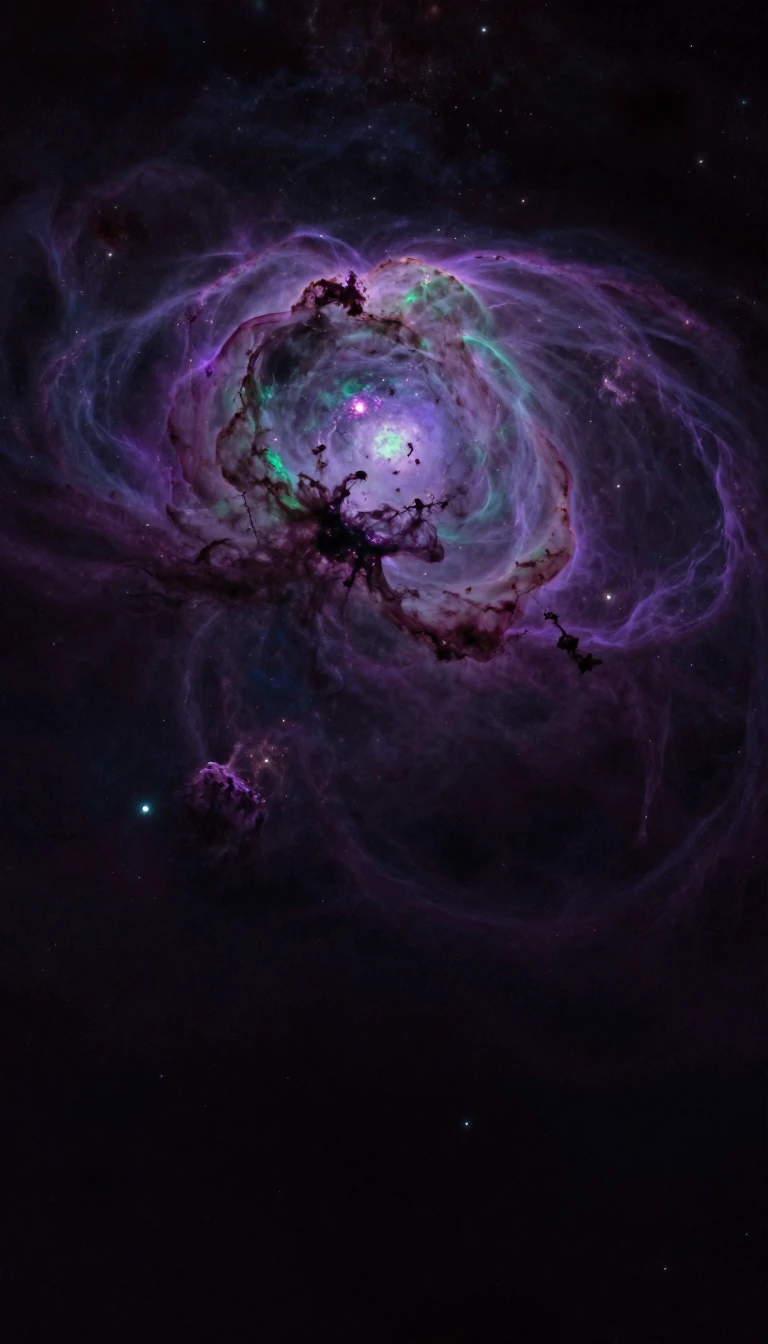
In short: In the vast, near-vacuum of space, atoms often emit light that should be impossible. These forbidden transitions occur when particles linger in meta-stable states, unable to decay through standard channels. Because collisions are so rare in deep space, these slow, ghostly emissions become the primary way we map the universe.
In quantum mechanics, selection rules dictate how atoms and molecules transition between energy states. A transition is labeled forbidden if it violates these rules, such as the electric dipole approximation. While these processes are theoretically suppressed, they are not strictly impossible. Instead, they occur at a significantly lower rate than permitted transitions, often requiring higher-order interactions like magnetic dipoles or electric quadrupoles to proceed.
The survival of these states depends on the environment. In dense materials, an excited atom will almost certainly collide with another particle and de-excite before a forbidden transition can occur. However, in the ultra-low density of outer space, where there may be only a few atoms per cubic centimeter, collisions are rare. This allows meta-stable states to persist until they eventually release a photon, making forbidden lines a dominant feature of astrophysical spectra.
These lines are essential tools for astronomers. By observing forbidden emissions from elements like nitrogen, sulfur, and oxygen, researchers can determine the density and energy balance of nebulae and H II regions. Perhaps most famously, the forbidden 21-cm hydrogen line serves as a critical beacon for radio astronomy, revealing cold neutral hydrogen gas that would otherwise remain invisible to our telescopes.
Beyond space, forbidden transitions have practical applications on Earth. They are used to stabilize the world's most accurate atomic and quantum clocks and serve as the basis for high-power solid-state lasers. In radioactive decay, the degree of forbiddenness can stretch half-lives by many orders of magnitude, as seen in the isotope Ta-180m, which is so stable that its decay has yet to be observed.
Opens the Intellect+ feed with this card first. Swipe up for the next one.
Sources
- Summary by Intellect · source: Forbidden mechanism
To cite this card, link to https://intellectplus.co.uk/app/space-forbidden-mechanism.
How we source, check and correct cards: Editorial standards.
General information, not professional advice. Spotted an error? Flag the card or see corrections and complaints.
Intellect Plus is a visual educational discovery platform for exploring fascinating facts and ideas. Brain Food, Not Brain Rot. What is Intellect Plus?
Related
More in Observational astronomy · More in Space · Latest · A–Z · All topics
