Black holes might not be empty pits but balls of strings
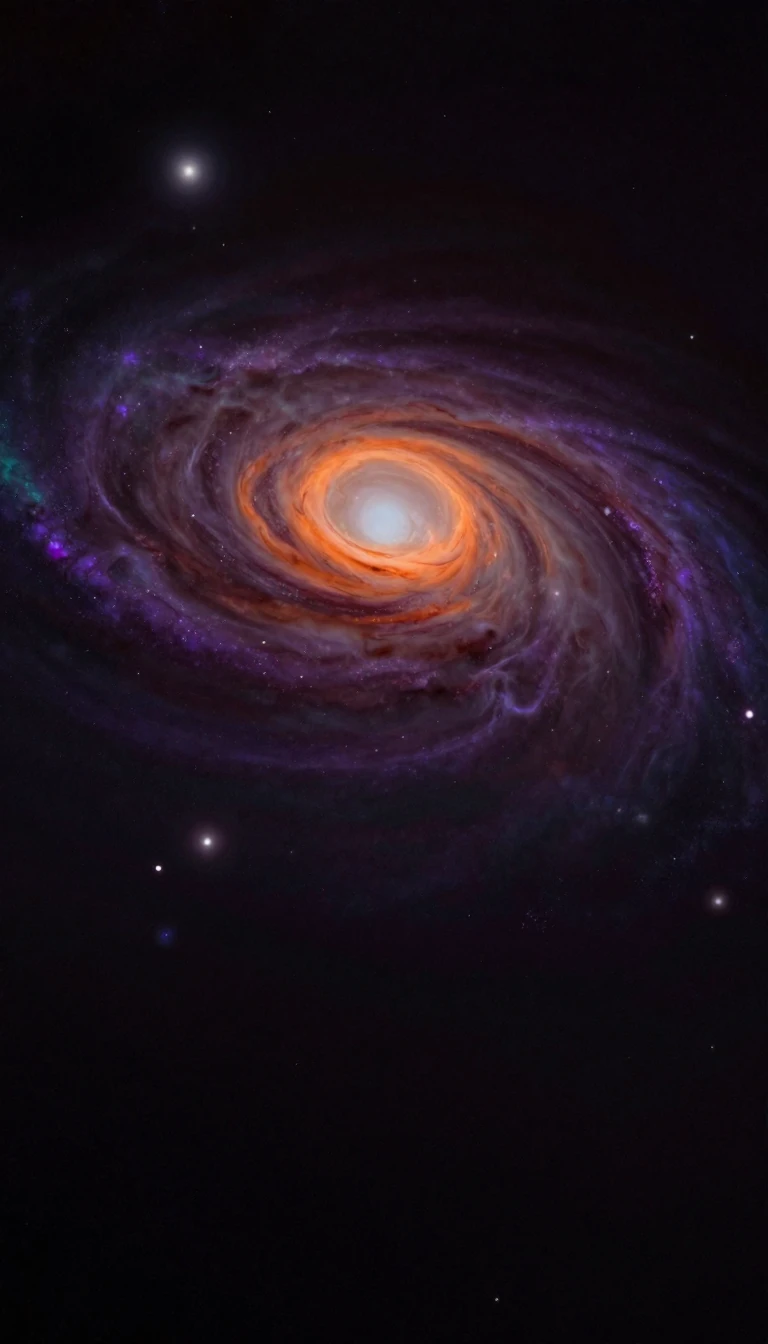
In short: General relativity predicts a singularity—a point of infinite density where physics breaks down. But what if there is no hole at all? The fuzzball hypothesis suggests black holes are actually dense, extended objects made of vibrating strings, potentially solving the greatest paradox in modern physics.
The fuzzball hypothesis, rooted in Type IIB superstring theory, proposes that black holes are not empty voids with a central singularity. Instead, they are 'fuzzballs': extended objects with a definite volume composed of strings—the fundamental building blocks of matter and light. In this model, the entire region within the event horizon is occupied by these strings, which vibrate in complex ways across three familiar dimensions and six compactified extra dimensions. This replaces the zero-dimensional singularity with a physical surface where matter and photons are absorbed and fused into larger, more complex string structures.
This shift in perspective addresses two massive hurdles in physics. First, it eliminates the gravitational singularity where spacetime curvature becomes infinite and unpredictable. Second, it resolves the black hole information paradox. Quantum mechanics requires that information be conserved, but classical black holes seem to destroy it as they evaporate via Hawking radiation. Fuzzballs solve this by ensuring that in-falling information is preserved within the fuzzball's quantum makeup and can eventually tunnel through the 'fuzzy' event horizon to be imprinted on outgoing radiation as delicate correlations.
While a fuzzball looks like a black hole to outside observers—sharing the same Schwarzschild radius and external gravitational effects—its internal mechanics are vastly different. For example, a non-spinning fuzzball with a mass of 4.3 million solar masses (like Sagittarius A*) would have a mean density only 51 times that of gold. Conversely, a tiny fuzzball the size of a water drop would have a mass of twenty million metric tons. While currently a product of theoretical calculation, the theory may one day be tested through gravitational-wave astronomy.
The theory suggests a fascinating transition for matter: as a neutron star exceeds the Tolman–Oppenheimer–Volkoff limit (between 2.2 and 2.9 solar masses), it doesn't just collapse into a point. Instead, its core hadrons decompose into a terminal phase of degenerate matter—a ball of strings. This provides a unified quantum description of gravity that aligns with M-theory, potentially bridging the gap between the physics of the very large and the very small.
Opens the Intellect+ feed with this card first. Swipe up for the next one.
Sources
- Summary by Intellect · source: Fuzzball (string theory)
To cite this card, link to https://intellectplus.co.uk/app/space-fuzzball-string-theory.
How we source, check and correct cards: Editorial standards.
General information, not professional advice. Spotted an error? Flag the card or see corrections and complaints.
Intellect Plus is a visual educational discovery platform for exploring fascinating facts and ideas. Brain Food, Not Brain Rot. What is Intellect Plus?
Related
More in Astronomical objects · More in Space · Latest · A–Z · All topics
