Our Milky Way is a cosmic crime scene revealing its own violent, ancient history
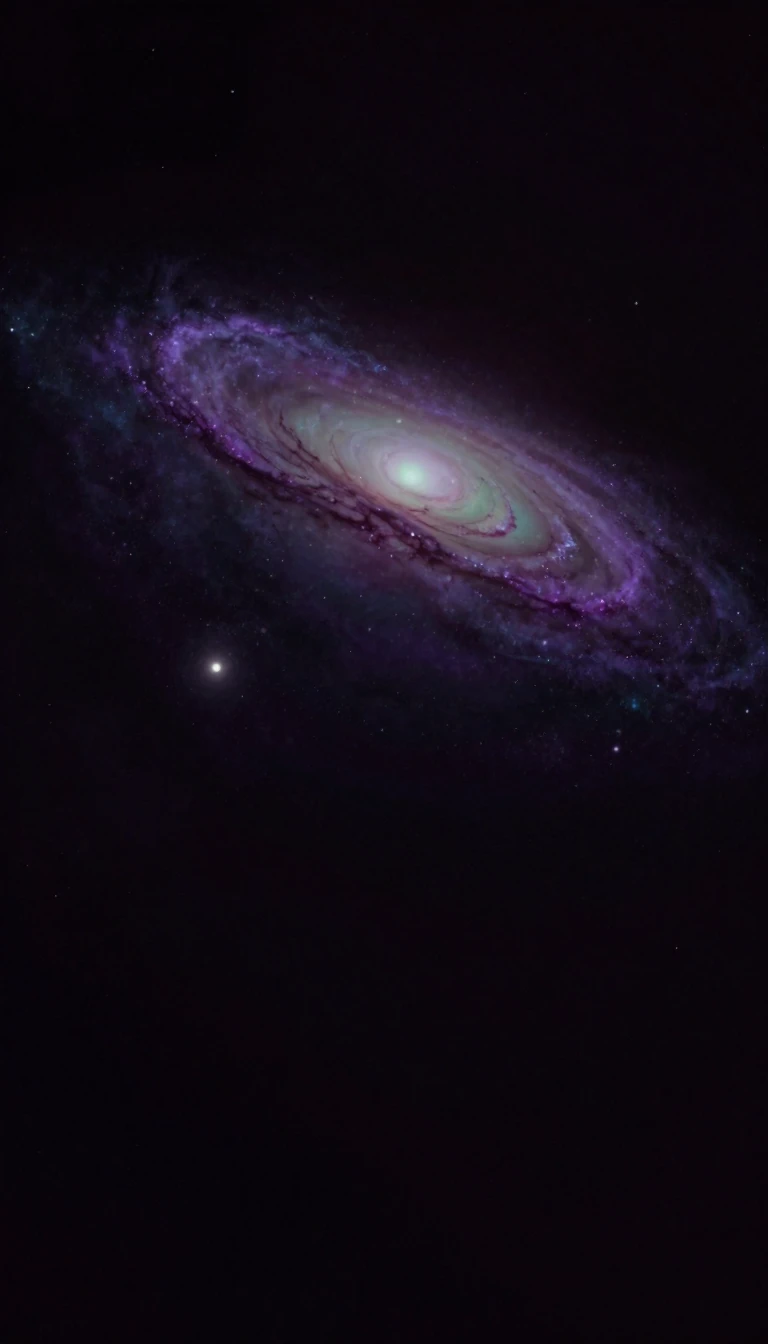
In short: Galactic astronomy has transformed from static mapping into a dynamic field of archeology. By analyzing tidally shredded dwarf galaxies and stellar streams, researchers are reconstructing the Milky Way's turbulent past, uncovering how our home galaxy grew through the relentless accretion of smaller neighbors and the complex evolution of its stars.
Galactic astronomy focuses on the structure, composition, and evolution of the Milky Way. Rather than viewing the galaxy as a static object, modern researchers treat it as a historical record. By mapping stellar populations—including the disc, bulge, bar, and halo—and analyzing their motions, scientists infer the underlying gravitational potential. This approach, known as Galactic archeology, uses the distribution of globular clusters and stellar streams to identify past accretion events where the Milky Way consumed smaller dwarf satellite galaxies.
The field relies on diverse probes to assemble a coherent picture of galactic development. Researchers study the interstellar medium across a vast temperature range, from cold molecular clouds traced by carbon monoxide to hot plasma at X-ray temperatures. Dynamics are further understood through rotation-curve studies, which expose the presence of the dark-matter halo. At the very center of the galaxy, infrared and radio imaging allow astronomers to probe the supermassive black hole, Sagittarius A*, and the high-velocity gas swirling in its immediate vicinity.
Technological advancements have been the primary driver of this revolution. The synergy between optical surveys like Gaia and SDSS and infrared data from WISE has enabled new methods, such as kinematic age measurements, to determine the formation and evolution timescales of stellar binaries. Meanwhile, ultraviolet observations from satellites like GALEX have provided insights into the chemical enrichment of the galaxy by hot white dwarfs and massive stars. These tools allow scientists to tease out rare, unusual objects from massive datasets, turning the Milky Way into a high-quality laboratory for studying exotic stellar behaviors and the fundamental physics of galaxy formation.
Opens the Intellect+ feed with this card first. Swipe up for the next one.
Sources
- Summary by Intellect · source: Galactic Astronomy | Center for Astrophysical Sciences
- Also: Galactic Astronomy | Astronomical Sciences | Physical sciences | Topics | Nature Index
- Also: Galactic astronomy
To cite this card, link to https://intellectplus.co.uk/app/space-galactic-astronomy.
How we source, check and correct cards: Editorial standards.
General information, not professional advice. Spotted an error? Flag the card or see corrections and complaints.
Intellect Plus is a visual educational discovery platform for exploring fascinating facts and ideas. Brain Food, Not Brain Rot. What is Intellect Plus?
Related
More in Galactic and extragalactic astronomy · More in Space · Latest · A–Z · All topics
