Andromeda’s hidden gas halo is so vast it is already touching our own galaxy.
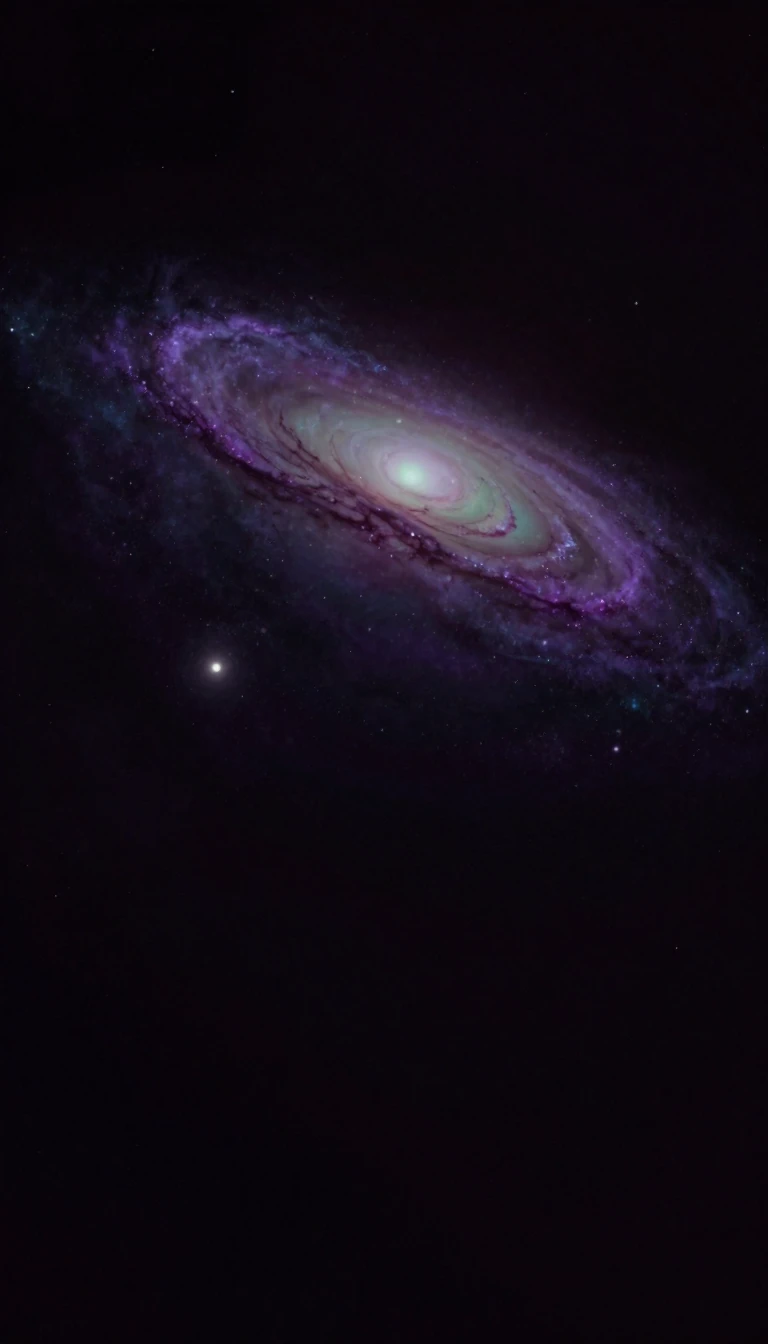
In short: Our nearest galactic neighbor, Andromeda, is surrounded by an immense, nearly invisible envelope of plasma. This halo stretches up to 2 million light-years into space, creating a massive reservoir of gas that fuels star formation. Remarkably, this structure is already colliding with the halo of our own Milky Way.
The Andromeda galaxy, or M31, is a massive spiral containing perhaps 1 trillion stars. While it appears as a faint smudge in the autumn sky, its true scale is far more impressive. Using NASA’s Hubble Space Telescope, researchers mapped its gaseous halo—a tenuous, ionized envelope—by observing how it absorbs ultraviolet light from 43 distant quasars positioned behind it. This technique, central to Project AMIGA, allowed scientists to overcome the difficulty of studying gas that does not emit easily detectable radiation.
The halo is not a uniform cloud but a complex, layered structure. The inner shell, extending to about 500,000 light-years, is dynamic and rich in heavy elements, likely contaminated by supernova activity within the galaxy’s disk. In contrast, the outer shell is smoother and hotter. This reservoir of ionized gas, including carbon, silicon, and oxygen, acts as a critical fuel source for future star formation, while also capturing outflows from the galaxy’s evolution.
Because we reside within the Milky Way, it is difficult to map our own halo with such precision. However, scientists believe our galaxy is likely quite similar to Andromeda. The two are currently on a collision course, destined to merge into a giant elliptical galaxy in about 4 billion years. Andromeda remains the only galaxy where such a detailed, multi-sightline experiment is currently possible, providing a unique window into the complex, invisible environments that shape galactic life.
Opens the Intellect+ feed with this card first. Swipe up for the next one.
Sources
- Summary by Intellect · source: Hubble Maps Giant Halo Around Andromeda Galaxy - NASA Science
- Also: Galactic halo
To cite this card, link to https://intellectplus.co.uk/app/space-galactic-halo.
How we source, check and correct cards: Editorial standards.
General information, not professional advice. Spotted an error? Flag the card or see corrections and complaints.
Intellect Plus is a visual educational discovery platform for exploring fascinating facts and ideas. Brain Food, Not Brain Rot. What is Intellect Plus?
Related
More in Galactic and extragalactic astronomy · More in Space · Latest · A–Z · All topics
