Leo is one of the few constellations that actually resembles its namesake celestial lion.
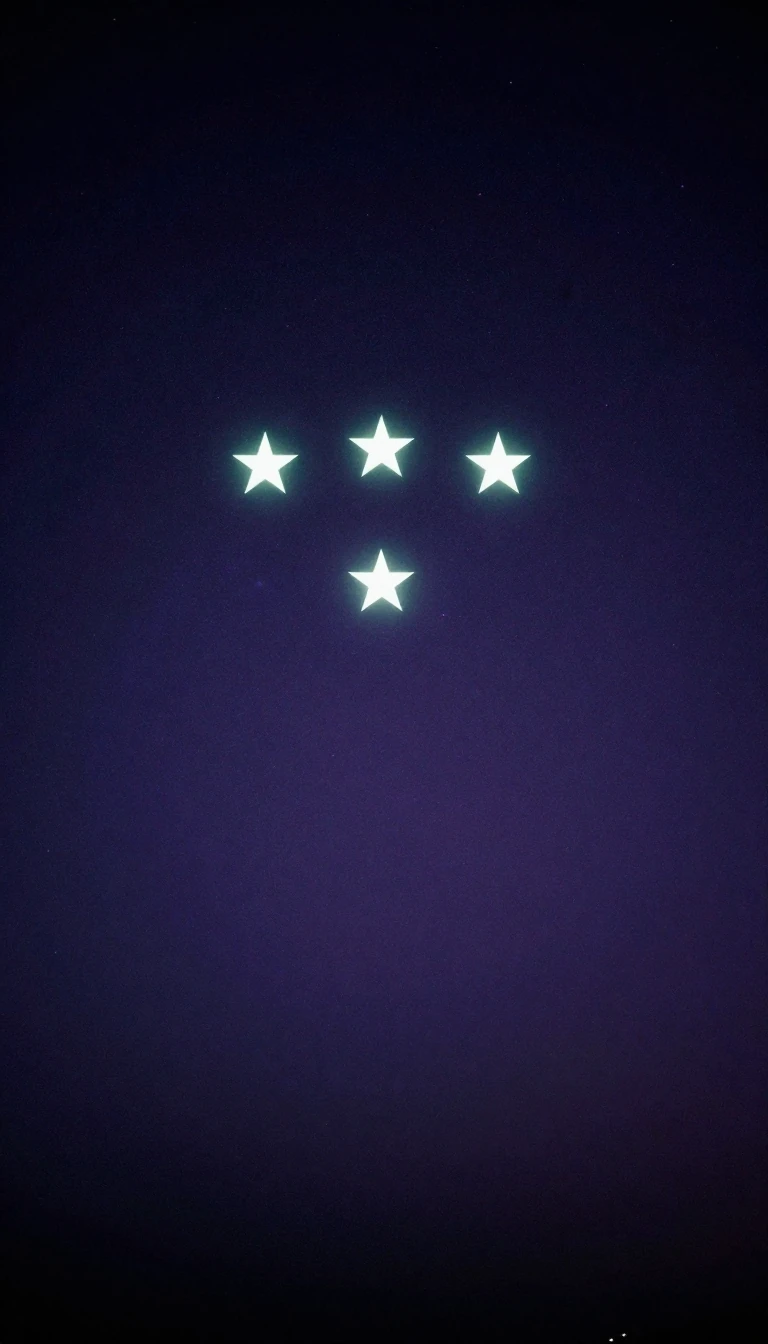
In short: While most constellations require a vivid imagination to identify, Leo is famously recognizable. Its stars form a distinct sickle-shaped head and a triangular haunch, mirroring a crouching lion. Beyond its iconic shape, this zodiac constellation serves as a massive laboratory for astronomers, housing primordial gas clouds and gravitationally bound galactic triplets.
Positioned between Cancer and Virgo, Leo is one of the twelve zodiac constellations. Its prominence in the night sky is bolstered by several bright stars, most notably Regulus, or Alpha Leonis, which marks the lion's breast. The constellation’s head is defined by the 'sickle'—a backward question mark of stars including Algeiba, also known as Gamma Leonis. When viewed through a telescope, Algeiba reveals itself as a stunning double star system composed of two distinct yellow stars. The lion's hindquarters are formed by a triangle of stars, with Denebola, meaning 'tail of the lion,' serving as the brightest point.
Leo is a treasure trove for deep-sky observers. It is home to the 'Leo Triplet,' a group of three spiral galaxies—M65, M66, and NGC 3628—that are gravitationally bound together. Estimates suggest these galaxies reside between 30 and 35 million light-years from Earth. Beyond these structures, the constellation contains the 'Leo Ring,' a vast, primordial cloud of hydrogen and helium gas. Discovered in 1983, this structure is six times wider than the Milky Way. Despite its immense density, the ring remains a scientific puzzle; although it appears capable of forming stars, it has yet to do so.
The constellation's history is as deep as its scientific utility. Archaeological evidence suggests Mesopotamian cultures recognized a lion-like figure in these stars as early as 4000 BCE. Ancient observers across various cultures, from the Persians to the Indians, identified the constellation with the lion. Today, Leo remains a vital tool for modern science. Beyond its stars and galaxies, it is used by the Globe at Night project to help measure light pollution, and its position in the sky allows astronomers to survey the extragalactic universe using advanced instruments like the VST and OmegaCAM.
Opens the Intellect+ feed with this card first. Swipe up for the next one.
Sources
- Summary by Intellect · source: Leo Constellation: Facts About the Lion
- Also: Celestial Wonders in Leo - NASA Science
- Also: Leo (constellation)
To cite this card, link to https://intellectplus.co.uk/app/space-leo-constellation.
How we source, check and correct cards: Editorial standards.
General information, not professional advice. Spotted an error? Flag the card or see corrections and complaints.
Intellect Plus is a visual educational discovery platform for exploring fascinating facts and ideas. Brain Food, Not Brain Rot. What is Intellect Plus?
Related
More in Celestial sphere · More in Space · Latest · A–Z · All topics
