The cosmic neighbors that are neither moons nor wandering stars
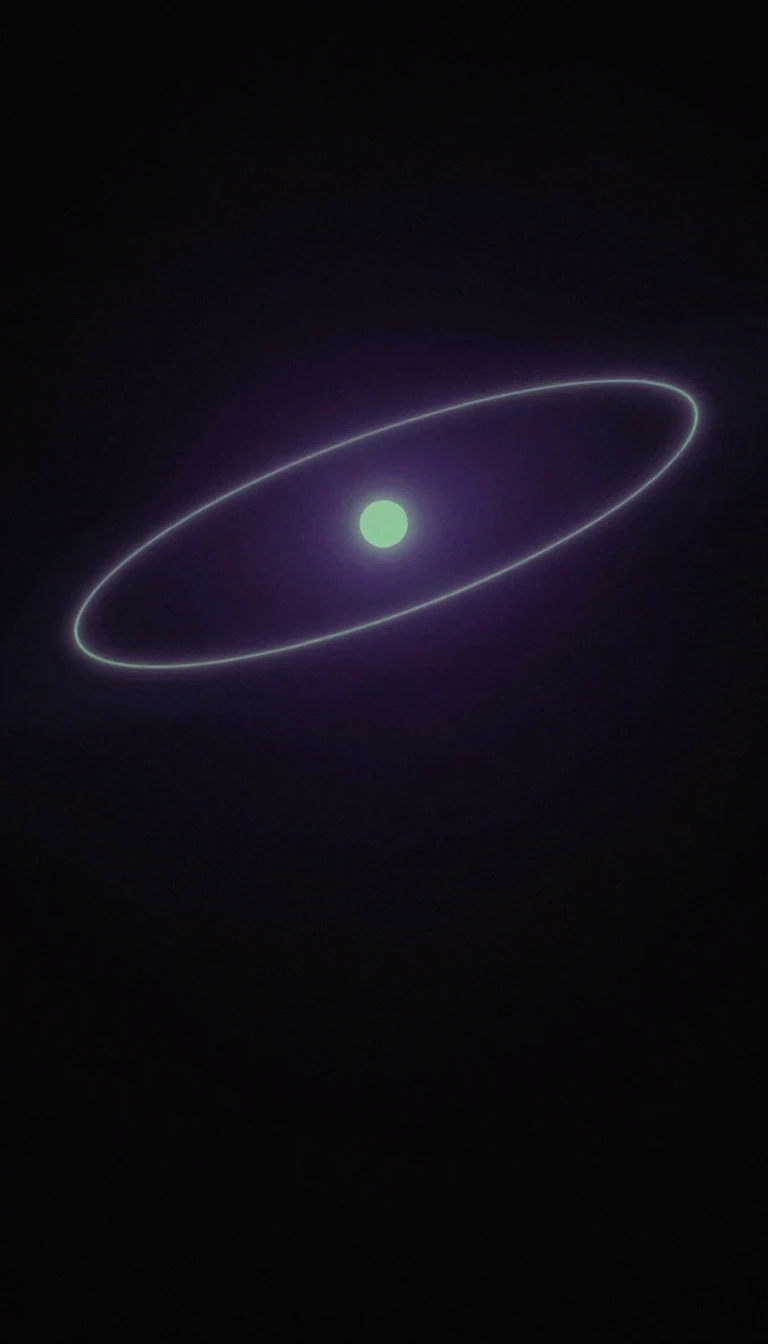
In short: Imagine an asteroid that follows a planet like a shadow but never actually orbits it. These objects, known as quasi-satellites, share the same orbital period as their planetary hosts while dancing in complex, oblong loops. They occupy a strange middle ground between permanent companions and passing travelers.
Objects orbiting planets or dwarf planets within a 1:1 resonance are defined as quasi-satellites. While a true moon is gravitationally bound to its host, a quasi-satellite's orbit lies outside the planet's Hill sphere—the region where a planet's gravity dominates over the Sun's. Because they are not bound, these orbits are inherently unstable. Over time, they evolve into other resonant motions, such as horseshoe or tadpole orbits, before potentially returning to a quasi-satellite state.
From an observer's perspective on the planet facing the Sun, these objects appear to move in retrograde loops. They share the same orbital period as the planet but typically possess a higher eccentricity. This distinction is vital: unlike geosynchronous satellites that revolve around Earth in a prograde sense, quasi-satellites are synchronized with the planet's motion around the Sun. For example, 469219 Kamoʻoalewa stays between 38 and 100 lunar distances from Earth, while others like 2015 OL106 intermittently become quasi-satellites of Jupiter.
The stability of these relationships varies wildly depending on the host's gravity. While Uranus and Neptune could theoretically hold quasi-satellites for up to 4.5 billion years, orbits near Jupiter are only stable for about 10 million years, and those near Saturn last roughly 100,000 years. Some are even 'accidental'; Pluto’s companion 15810 Arawn is forced into a quasi-satellite configuration by Neptune's gravity every 2.4 million years, staying in that state for nearly 350,000 years.
These dynamics aren't just theoretical; they have practical implications for space exploration. In 2005, engineer Thomas Gangale proposed using quasi-satellite orbits to provide communication relays between Earth and Mars during solar conjunctions when the Sun blocks direct signals.
Opens the Intellect+ feed with this card first. Swipe up for the next one.
Sources
- Summary by Intellect · source: Quasi-satellite
To cite this card, link to https://intellectplus.co.uk/app/space-quasi-satellite.
How we source, check and correct cards: Editorial standards.
General information, not professional advice. Spotted an error? Flag the card or see corrections and complaints.
Intellect Plus is a visual educational discovery platform for exploring fascinating facts and ideas. Brain Food, Not Brain Rot. What is Intellect Plus?
Related
More in Moons · More in Space · Latest · A–Z · All topics
