Are these four mysterious, distant objects the key to finding a hidden ninth planet?
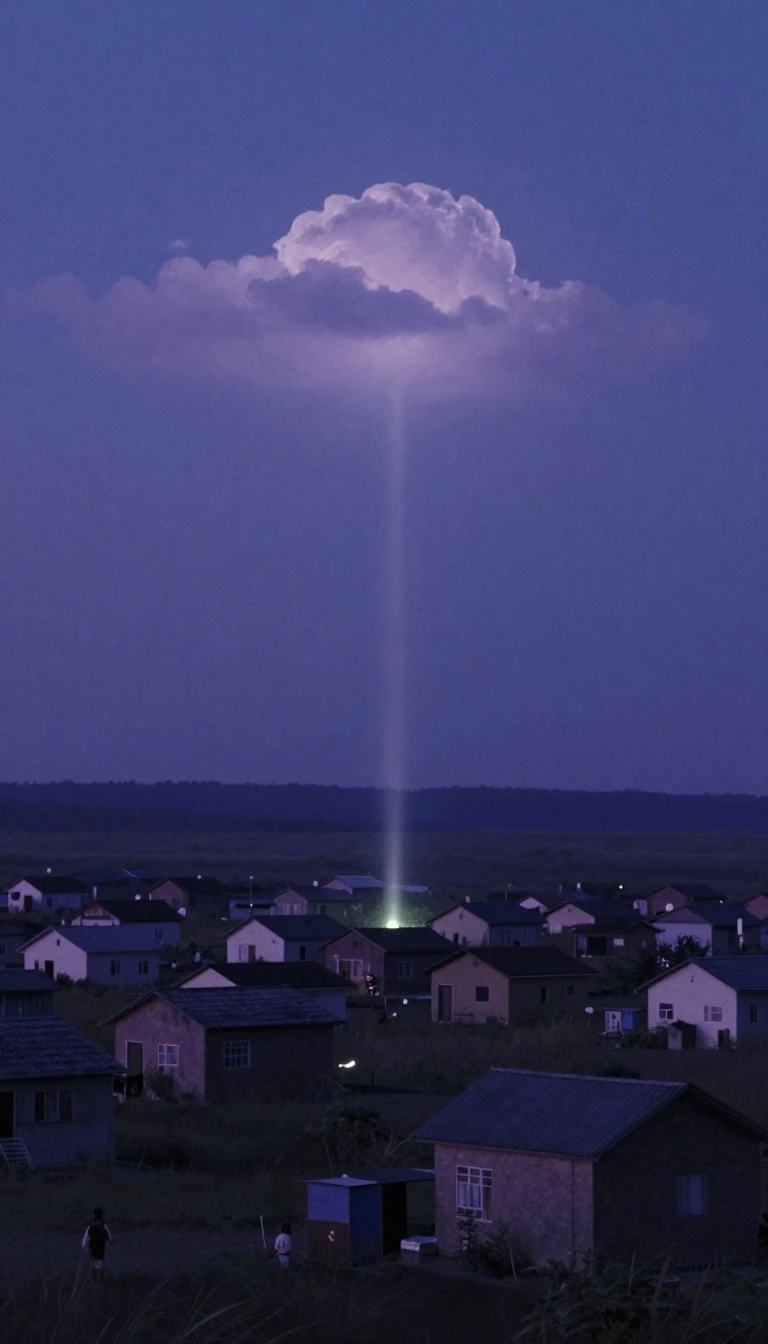
In short: Deep in the outer reaches of our solar system, four strange objects follow orbits that defy standard gravitational models. Known as sednoids, these bodies remain far beyond the influence of Neptune. Their peculiar, clustered paths suggest they may be guided by a massive, undiscovered world lurking in the dark.
Sednoids are defined as trans-Neptunian objects characterized by highly eccentric orbits, distant perihelia, and large semi-major axes. Only four objects—Sedna, 2012 VP113, 541132 Leleākūhonua, and 2023 KQ14—are currently accepted by the astronomical community as belonging to this distinct population. Because their perihelion distances exceed 60 AU, they are classified as detached objects, meaning Neptune's gravity is too weak to significantly alter their trajectories. Some researchers categorize these bodies as inhabitants of the Inner Oort Cloud, a region spanning 1,000 to 10,000 AU from the Sun.
The origin of these extreme orbits remains a subject of intense debate. Because their current elliptical paths would have prevented the accretion of smaller bodies into larger ones during the early solar system, astronomers hypothesize that these objects were moved into their present positions later. Proposed mechanisms include the gravitational influence of a passing star during the Sun's birth, the capture of objects from other stellar systems, or the presence of a rogue planet early in our solar system's history. Another compelling theory involves the gravitational pull of a massive, unseen body, often referred to as Planet Nine.
Evidence for a hidden perturber is bolstered by the observation that the first three known sednoids share a similar argument of perihelion near 0 degrees. This clustering is statistically unexpected and suggests that a super-Earth located at roughly 250 AU could be forcing these objects to librate over billions of years. While surveys have yet to confirm such a planet, the discovery of Leleākūhonua in 2018 implies a vast population of millions of Inner Oort Cloud objects. As researchers gather more data, these distant bodies act as a fossil record, potentially revealing the environment of the Sun's birth and the number of stars that were once its neighbors.
Opens the Intellect+ feed with this card first. Swipe up for the next one.
Sources
- Summary by Intellect · source: Sednoid
To cite this card, link to https://intellectplus.co.uk/app/space-sednoid.
How we source, check and correct cards: Editorial standards.
General information, not professional advice. Spotted an error? Flag the card or see corrections and complaints.
Intellect Plus is a visual educational discovery platform for exploring fascinating facts and ideas. Brain Food, Not Brain Rot. What is Intellect Plus?
Related
More in Astronomical objects · More in Space · Latest · A–Z · All topics
