Why the ultraviolet universe reveals the life and death of stars
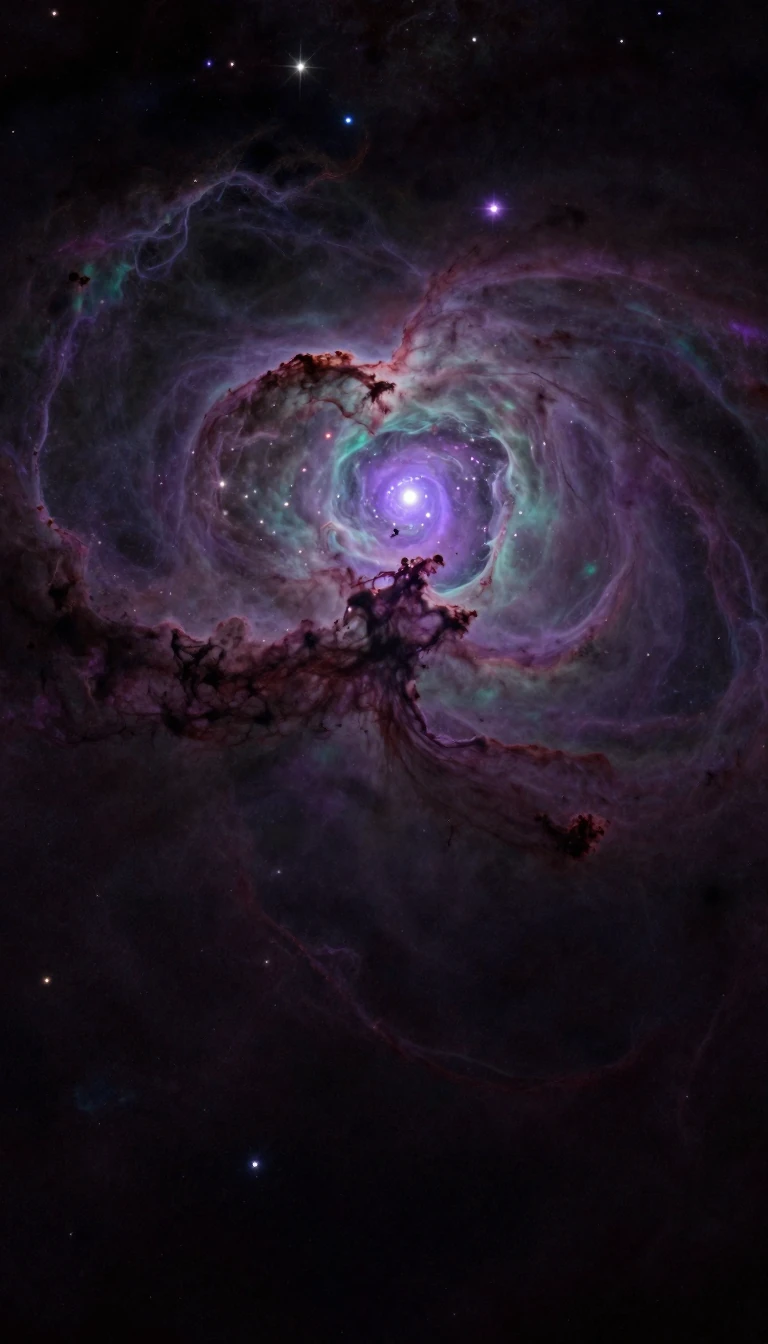
In short: Ultraviolet light is invisible to human eyes, but it is the primary language of the cosmos's most energetic events. By peering into this high-energy spectrum from space, astronomers can track the birth of massive stars, the evolution of entire galaxies, and the violent remnants of ancient supernovae.
Ultraviolet (UV) radiation occupies a high-energy region of the electromagnetic spectrum beyond the violet end of visible light. Because Earth's atmosphere absorbs most of this radiation, ground-based telescopes are largely blind to it. The field of ultraviolet astronomy only became viable in the mid-20th century, following the development of rockets capable of carrying instruments above the atmosphere. The first successful solar UV spectrum was captured in 1946, paving the way for decades of space-based observation.
Observing in ultraviolet is essential for studying hot, energetic phenomena. While visible light reveals the cooler, older stars that dominate the appearance of galaxies, UV light highlights clouds of gas containing newly formed, massive stars. These young stars shine most intensely at ultraviolet wavelengths, making UV data a powerful tool for measuring star formation rates. Furthermore, UV astronomy allows scientists to study plasmas—hot gases often exceeding one million degrees Celsius—found in the Sun's corona, binary star systems, and the gaseous debris left behind by ancient supernovae.
Beyond star formation, UV observations have fundamentally altered our understanding of the solar system's neighborhood. Data from missions like the Galaxy Evolution Explorer (GALEX) and the Far Ultraviolet Spectroscopic Explorer (FUSE) have helped map the 'local bubble,' an enormous cavity in interstellar space believed to have been carved out by a supernova roughly 4.5 billion years ago. By analyzing the UV spectra of these distant objects, astronomers can discern chemical abundances and physical processes that remain hidden in visible light, providing a clearer picture of the evolution of the universe from its earliest stages to its most violent ends.
Opens the Intellect+ feed with this card first. Swipe up for the next one.
Sources
- Summary by Intellect · source: Ultraviolet Waves - NASA Science
- Also: Ultraviolet astronomy | Observing Stars & Galaxies | Britannica
- Also: Observing the Universe in ultraviolet light
- Also: Ultraviolet astronomy
To cite this card, link to https://intellectplus.co.uk/app/space-ultraviolet-astronomy.
How we source, check and correct cards: Editorial standards.
General information, not professional advice. Spotted an error? Flag the card or see corrections and complaints.
Intellect Plus is a visual educational discovery platform for exploring fascinating facts and ideas. Brain Food, Not Brain Rot. What is Intellect Plus?
Related
More in Observational astronomy · More in Space · Latest · A–Z · All topics
