 Intellect Plus
Art
5,849 cards. Each one is a 40-second story with a five-minute read behind it. Page 3 of 98.
Subtopics: Art crime · Art history · Art museums · Arts: General · Baroque · Calligraphy · Ceramics · Children's literature · Classic literature · Colour · Concepts of fiction and narrative · Conceptual art · Conservation · Craft · Cultural venues · Dada · Detective fiction · Directors, producers and screenwriters · Dye · Entertainers · Expressionism · Fantasy literature · Fictional and legendary characters · Film and television · Filmmakers and theatre directors · Forgery · Fresco · History painting · Illustration · Impressionism · Literature · Medieval art · Michelangelo · Modern art · Mosaics & stained glass · Oil painting · Optics · Painting · Paris salon · Performing arts · Photography · Pigments · Poetry · Poets · Portraiture · Post impressionism · Printmaking · Renaissance · Romanticism · Science fiction literature · Sculpture · Shakespeare · Spanish golden age · Street art · Symbolism · Textiles · Theatre · UK & Ireland: arts · Van gogh · Vermeer · Victorian · Visual artists · Visual arts
 The architectural ghosts that made Shakespeare's theater impossible to replicateModern theaters are designed for observation, but Shakespeare’s original venues were built for immersion. To truly perform his works as intended, we would have to reconstruct not …
 The hidden language of threads: decoding traditional textile motifsTextiles are more than just fabric; they are repositories of cultural heritage. This video explores how specific patterns and stitches serve as a visual language, teaching you to …
 How a textile artist twists Confederate icons into messages of resilienceChristopher Martin uses the medium of large-scale tapestry to confront American racism. By physically manipulating symbols of hate, he creates a visual dialogue on Black Power and…
 The irreversible finality of a single mark on fine paperIn a digital world defined by the 'undo' button, Alex Mason finds profound meaning in art forms where mistakes are permanent. For Mason, working with ink and paper is an exercise …
 Why textiles might be the most honest archives of human historyWhile books and films capture specific moments, Indian textiles offer a different kind of narrative. This video explores how centuries of weaving and dyeing serve as a unique medi…
 How found objects and old fragments become evocative textile artThis interview explores the artistic philosophy of Cas Holmes, a renowned textile artist. It reveals how she transforms discarded materials into emotional narratives through a pro…
 Beyond the Thread: The Science and Soul of Textile ArtWe are constantly surrounded by fabrics, yet few understand the complex journey from raw fiber to finished form. Textile art is more than just sewing; it is a sophisticated inters…
 Why textiles are currently dominating the global contemporary art sceneExplore why textile arts have emerged as a premier trend in modern galleries. This video features Julien Delagrange, an art historian and curator, identifying eight essential arti…
 The 'Gothic' label was originally intended as a slur by Renaissance criticsWe often associate Gothic architecture with majesty, but the name itself began as an insult. To early modern observers, these soaring structures were seen as ugly and barbaric—a d…
 The first international style since antiquity emerged from faith and fearBetween 1000 and 1200, Western Europe underwent a visual revolution. The Romanesque period didn't just borrow from the past; it synthesized Roman engineering with a new spiritual …
- Medieval art is often a world of absolute fantasyTo modern eyes, medieval illustrations can look like fever dreams or surrealist jokes. Featuring armless frogs and human-sized snails, these works prioritize personality and humor…
 Why medieval artists painted animals they had never actually seenExplore the whimsical world of illuminated manuscripts where imagination took precedence over anatomy. This video highlights some of the most amusing depictions of exotic species …
 Why Medieval Art Prioritized Spiritual Truth Over Physical RealityExplore how Middle Ages aesthetics traded realistic proportions for divine symbolism. This video breaks down the core features of medieval art, explaining why every halo and disto…
 Beyond the likeness: how to read the hidden language of portraitureA portrait is rarely just an image of a face. It is a deliberate construction of identity, mood, and status. By learning to 'read' these works, you can uncover the secrets of the …
 A portrait is more than a likeness; it is a deliberate construction of identityExplore the intentional choices artists make to move beyond physical resemblance. This lecture breaks down how color, composition, and mood are used to communicate who a person tr…
 The 17th-century painter who mastered the art of the fleeting smileBefore the Impressionists, Frans Hals was already breaking the rules of formal portraiture. By moving away from rigid poses toward a loose, expressive style, he captured something…
 Beyond the Likeness: How Portraiture Captures the Human ExperienceExplore how artists use portraiture to move beyond simple resemblance, capturing diverse identities and personal narratives through different historical styles.
- How personal tragedy transforms into the visceral language of portraitureFor Francis Bacon, Jenny Saville, and Albert Oehlen, the portrait is not a mere likeness. It is a site of psychological excavation where massive life events—mourning, loss, and pr…
 What defines a portrait in the modern era?Explore the evolving landscape of contemporary portraiture through the perspectives of three award-winning artists. This conversation reveals how modern painters interpret identit…
- The Anti-Claude: The painter who traded pastoral peace for wild sublimeWhile his contemporaries painted serene, sun-drenched idylls, Salvator Rosa chose the jagged beach and the haunted ruin. A perpetual rebel of the Baroque era, he pioneered a 'subl…
 The hidden lives of women who built art in a crowded ageExperience a day in the life of a Victorian woman artist whose work traveled far while her identity remained private. This visual poem explores the quiet dedication required to ma…
 The 19th century was a turning point for public hygieneHistorian Ruth Goodman examines the massive shift in Victorian healthcare, tracing how society moved from filth to the foundations of modern sanitation.
- The visual language of Charles Dickens and Victorian illustrationExplore the intersection of literature and art in the Victorian era. This video examines how illustrated books shaped the public's perception of Charles Dickens' narratives.
 The high-definition history of Renaissance art preserved on analog tapeExplore a rare educational journey into the radiance of Renaissance art, originally broadcast in 1999 but never officially released on home media.
 The optical mystery behind Johannes Vermeer's masterful lightDid the Dutch master use a camera obscura to achieve his signature realism? This video explores the long-standing debate over whether Vermeer relied on technical optics or pure ar…
- The transition from science to art in early photographyBefore images could be captured in seconds, they required hours of stillness. The birth of photography was a grueling battle of chemistry and optics, moving from cumbersome scient…
 How artists used optical devices to master the mechanics of sightExplore the intersection of art and physics through historical tools like the camera obscura and camera lucida. This video reveals how these devices helped creators capture realis…
 From Cave Paintings to Cameras: The Evolution of Light as ArtLight is more than a tool for visibility; it is a medium, a metaphor, and a scientific phenomenon. From the first shadows in caves to modern LED installations, artists have manipu…
- Ancient structures may have functioned as prehistoric camerasArchaeo-optics explores how Neolithic and ancient civilizations engineered buildings to manipulate light. This video examines how deliberate optical effects could have shaped earl…
- Did Renaissance masters use optical tools 200 years earlier than believed?Professor Charles Falco challenges the traditional timeline of art history by arguing that artists utilized complex optical instruments much sooner than previously recorded. This …
 Why painting perception over perfection changed the course of art historyFor centuries, academic art demanded polished surfaces and historical subjects. This video explores how a group of radical artists rejected those standards to prioritize light, mo…
- How Renoir turned the fleeting pulse of Paris into permanent artBefore Impressionism became a global movement, it was a bohemian experiment in Montmartre. Pierre-Auguste Renoir didn't just paint scenery; he captured the invisible threads of hu…
 How industrial change shattered the rules of traditional European paintingBefore the 1800s, art served as a clear record of history and religion through realism. This video explores how rapid industrialization forced a radical shift in technique, giving…
- Capturing the Fleeting: The Origins of Impressionist ArtExplore how a radical shift in perspective redefined modern painting. This lecture traces the history of Impressionism, highlighting the key figures who moved art away from tradit…
 The single painting that gave a global art movement its nameIn 1872, Claude Monet produced an oil painting that would inadvertently define an entire era of art history. While it captured the fleeting light of a sunrise, its true legacy was…
 From Scandalous Mockery to Global Adoration: The Impressionist RevolutionToday, masterpieces by Monet and Degas are crown jewels of global museums. However, in the 1870s, these same works were dismissed as scandalous and rejected by the art world. This…
- The artistic rebellion that was once reviled by the publicIn 1874, a group of Parisian rebels staged an aesthetic uprising that would dismantle centuries of tradition. They traded the polished perfection of the Academy for vibrant brushs…
- The hidden visual reality behind Van Gogh's vibrant paletteWhy did Vincent van Gogh choose such striking colors for his masterpiece? This analysis explores the composition of Starry Night and a compelling theory regarding the artist's uni…
- The forgotten master whose vibrant colors shaped Van Gogh’s iconic styleBefore he became a household name, Vincent van Gogh was studying the work of Adolphe Monticelli. While Monticelli eventually fell out of fashion, his experimental use of color and…
- Van Gogh's secret to painting the night without using black paintHow did Vincent van Gogh capture a vivid, lively night scene while completely avoiding black pigment? This analysis explores his technical mastery of color contrast and the hidden…
 How two chairs became surrogate portraits for rival artistsVan Gogh's furniture paintings are far from ordinary. This video explores how a simple chair and an elegant armchair served as symbolic stand-ins for the personalities of two icon…
 The celestial turbulence of Van Gogh's most famous night skyPainted during a period of profound psychological distress, The Starry Night is far more than an expressive landscape. It represents a deliberate artistic struggle to capture the …
 Beyond the sunflowers: uncovering the man behind the masterpieceMost people recognize Vincent van Gogh by his iconic imagery and tragic reputation, but his life was far more complex than popular myths suggest. This video explores the nuances o…
 The artist who sold only one painting in his lifetimeThis video explores the life of Vincent van Gogh, a Dutch painter whose work was largely unappreciated during his life but became world-renowned for its emotional power and vivid …
- From Hand-Painted Frames to Digital Mastery: The Evolution of Cinematic ColorThis series traces the technical journey of color in cinema, moving from early 20th-century manual techniques to modern digital workflows. It explores how colorists shape the visu…
- The technical architecture behind cinematic storytellingOwen Ljunggren explores the foundational elements that elevate a sequence of images into a cohesive art form. This video breaks down how lighting, sound design, and pre-production…
 The rigorous pursuit of intellectual independence through the artsExplore how Reed College faculty bridge the gap between creative practice and scholarly inquiry. This video highlights discussions on art history, film, and media studies within a…
- The myth that Hollywood pioneered film art is historically inaccurateWe often credit Hollywood for the birth of cinematic art, but this narrative ignores a much broader, global evolution. Before the studio system dominated, the foundation of moving…
 Decoding the hidden language of cinema through semioticsLearn how to move beyond what you see to understand what a film actually means. This guide introduces Roland Barthes' theories on signs, helping you decode the visual and auditory…
- Why your brain craves the comfort of cinematic categoriesFrom Ancient Greek theater to modern streaming platforms, movie genres act as a silent contract between creators and viewers. They provide a roadmap for what to expect while offer…
 How a radical German movement still shapes modern cinemaFrom the surreal visuals of Euphoria to the stylized frames of The Grand Budapest Hotel, the DNA of German Expressionism remains embedded in contemporary filmmaking. This video ex…
 The chemistry of color: understanding Renaissance blue and redEver wondered what makes a masterpiece truly pop? This video explores the history of pigments, offering three essential facts to help you appreciate museum art with deeper context.
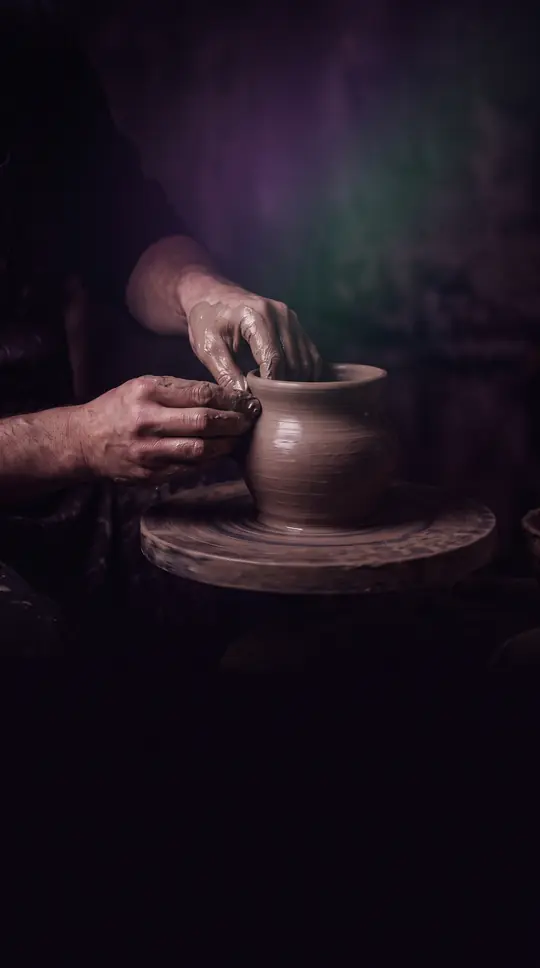 The alchemy of Mughal art: extracting vibrant color from raw stoneDiscover the meticulous craftsmanship behind some of history's most exquisite manuscripts. This video demonstrates how royal workshops transformed raw minerals into the vivid pigm…
 The chemistry of color: understanding the divide between natural and synthetic pigmentsWhy does a tube of paint look the way it does? This video explores the fundamental differences between traditional natural sources and modern synthetic chemistry in the world of a…
 How industrial chemistry gave Impressionists their signature vibrant paletteExplore how the birth of synthetic pigments fundamentally altered the visual language of art. This video examines Claude Monet’s 'The Gare St-Lazare' to reveal how scientific inno…
- The lethal price of light in Johannes Vermeer’s masterpiecesVermeer's signature glow may have been fueled by a deadly substance. This exploration reveals the toxic reality of lead white, the pigment that defined his brilliance while potent…
- The evolution of green from ancient minerals to modern chemistryGreen has been a challenging color for artists to master for two millennia. This video traces the pigment's journey from crushed minerals and organic mixtures to synthetic laborat…
- The chemistry of color: understanding the building blocks of artThis video introduces the fundamental world of pigments, exploring how raw materials are transformed into the colors used by artists. It serves as an essential primer for anyone l…
- The intricate geometry of Bai people tie-dyeing traditionsExplore the traditional center of Chinese tie-dyeing culture. This video documents a visit to Zhoucheng, where artisans use specific techniques to create elaborate patterns on fab…
- The forbidden art form that became a symbol of rebellionTie-dye is often dismissed as a 1960s hippie fad, but its history spans millennia and continents. From sacred religious ceremonies to being outlawed by governments, this ancient r…