 Intellect Plus
Ethics
102 cards. Each one is a 40-second story with a five-minute read behind it. Page 2 of 2.
 Is it possible that true belief requires us to abandon reason?For centuries, philosophers have debated whether faith and logic are partners or enemies. Fideism suggests that the most profound truths are actually inaccessible to the human min…
 The invisible hand keeping our hospitals running and safeBeyond the doctors and nurses, a complex system manages the very bones of our healthcare infrastructure. From electrical systems to fire safety, facility management ensures that h…
 Buildings have eyes: How architecture reveals the hidden mechanics of violenceCan a wall tell the story of a crime? Eyal Weizman uses forensic architecture to prove that the built environment is never neutral. By analyzing spatial, visual, and aural data, h…
 The invisible hand of trust in the European patent systemWhen a patent examiner cites an applicant's work, it is more than just a technicality. It reveals a hidden layer of professional trust that fluctuates based on nationality, econom…
 Why spending half your budget doesn't mean you're halfway doneA project manager reports that 50% of the budget is spent exactly six months into a one-year plan. It looks like perfect progress, but it could actually be a disaster. Without mea…
 Is morality just a series of emotional exclamation marks?When you say 'stealing is wrong,' are you stating a fact or just venting? Emotivism suggests that ethical claims carry no factual weight at all, acting instead as psychological to…
 Is the DBA the professional alternative to a PhD?While a PhD often focuses on studying organisations from the outside, the Doctor of Business Administration (DBA) shifts the lens inward. Designed for senior executives, this term…
- Why a 4-year-old might outsmart an AI at problem solvingAdults often get stuck on simple gadgets because we rely on what is likely to happen. Children, however, possess a unique cognitive flexibility that allows them to outperform coll…
 Why a crisis is more than just an unexpected problemMost people mistake a failure for a crisis. But true crisis management requires more than just fixing a mistake; it demands a fundamental transformation of the entire system. When…
 A movement of grace, not a set of dogmasThe Catholic Charismatic Renewal isn't a rigid organization with a single founder. Instead, it is described as a "current of grace"—a spiritual breath intended to make faith a liv…
 Can mapping clinical workflows save lives by reducing medical variation?In complex healthcare systems, managing patient trajectories is a massive logistical challenge. While Business Process Modeling Notation (BPMN) promises to standardize care and el…
 Is examining the past a way to understand the present?Afua Hirsch argues that confronting uncomfortable history isn't about erasing the past, but about understanding how it shaped our current identity. From the ethics of public monum…
 The evolution of a family firm into an employee partnershipHow does a 19th-century bookstore survive the shift from family legacy to modern retail? Blackwell's journey from a tiny Oxford shop to a major academic powerhouse reveals a compl…
 How a fog-delayed flight led to the discovery of a human cancer virusIn 1963, a shipment of medical samples from Uganda was diverted by heavy fog. What appeared to be a contaminated, cloudy mess was actually a scientific breakthrough. This accident…
 You might already be an absolute idealist without knowing itMost people believe reality is an external world we gradually discover through observation. But a provocative new reading of Sebastian Rödl suggests that the very act of making a …
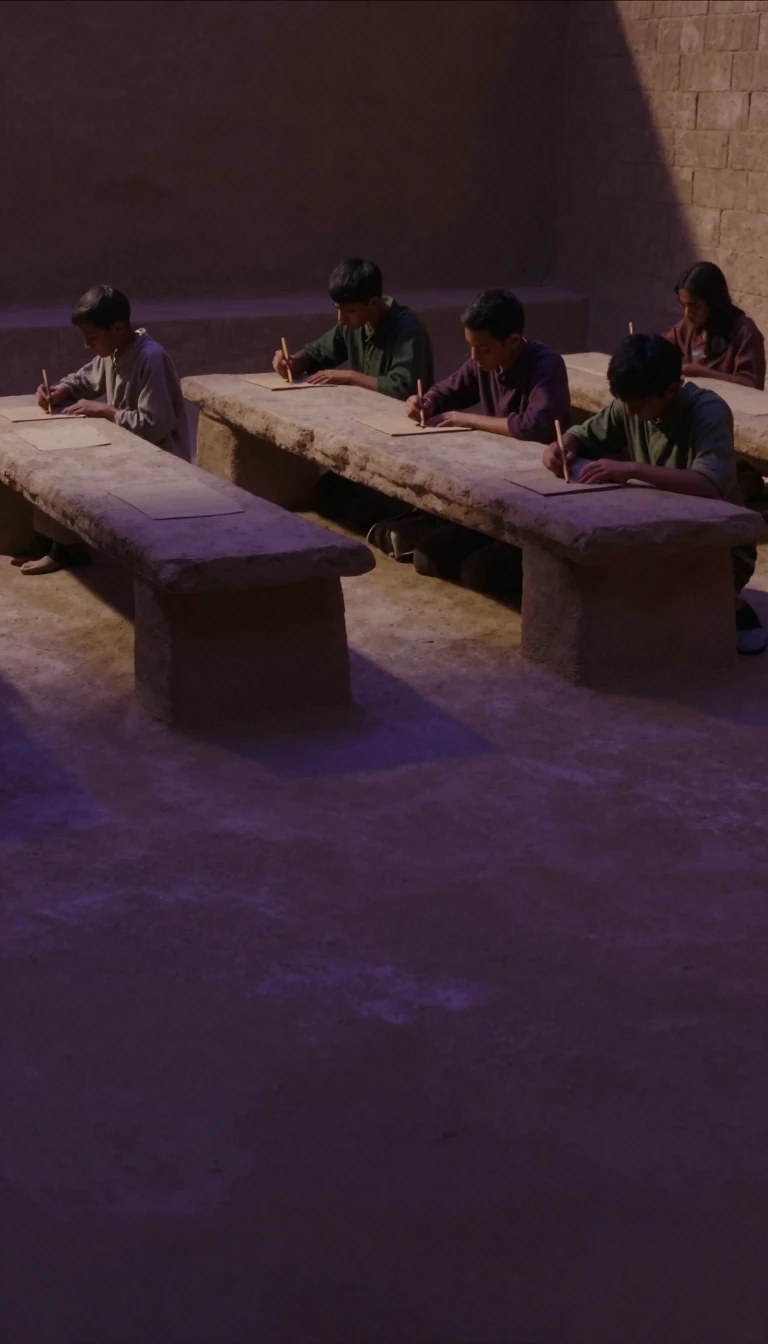 The 1929 mission to democratize the Oxford educationWhile many historic institutions were built on legacy and wealth, St Peter's College was founded on a specific social vision: ensuring that academic potential, rather than financi…
 How neuroimaging redefined our understanding of human painFor decades, we viewed pain as a simple signal of injury. But pioneering research by neuroscientist Irene Tracey suggests something far more complex: pain is an emergent experienc…
 Is morality a fact of the universe or just a human feeling?If you say 'stealing is wrong,' are you stating a fact like 'the earth is round,' or simply expressing a personal preference? Moral realism suggests that morality isn't just in ou…
 Is loyalty a moral root or a social tool?Loyalty is often called the heart of all virtues, but its history reveals a more complex mechanism. From feudal oaths to modern healthcare, it functions as both a personal devotio…
 Is morality a fact of nature or a human invention?If you believe that murder is wrong, are you describing a physical fact of the universe or a human construct? Moral nihilism suggests that objective moral properties do not exist …
 Is anything actually good in itself, or is everything just a tool?In moral philosophy, we distinguish between things that are valuable as a means to an end and things that are valuable in and of themselves. While we treat happiness as an ultimat…
 Are we born with the ability to share another's mind?Human connection might be a biological blueprint rather than just a learned skill. From preverbal infants syncing with parents to the way we navigate social reality, our capacity …
 Why the motive behind your actions matters more than the resultsMost of us judge morality by outcomes: did the action cause harm or help? But in 1785, Immanuel Kant proposed a radical alternative. He argued that the true moral worth of an act …
- How architects use 3D modeling to expose state-sponsored violenceWhen state actors commit crimes, they often control the narrative and the crime scene. Forensic Architecture flips this power dynamic. By using architectural tools like lidar scan…
 Is it moral to be selfish? The logic of ethical egoism.Most people assume selfishness is the opposite of morality. But ethical egoism argues that acting in your own self-interest is the only consistent way to live. It isn't about bein…
 Is the pursuit of profit the primary driver of modern health disparities?For decades, the Friedman doctrine has dictated that a corporation's only social responsibility is to maximize shareholder returns. But as profit-driven incentives reshape everyth…
 Why we blame owners for property crimes but ignore their successesImagine your robot dog bites someone; you're held responsible. Now imagine it saves a life—the hero is the robot, not you. This asymmetry in moral credit suggests a deep-seated co…
- Why your brain relies on habit rather than logic to understand cause and effectWe like to believe our decisions are driven by cold, rational calculation. But the philosopher David Hume argued that our most fundamental beliefs—including the very concept of ca…
- Why only 32 percent of leaders successfully guide employee adoptionMost organizational changes fail not because of bad ideas, but because of human friction. While companies must evolve to survive technological and economic shifts, successfully mo…
 The etymology of accountability is rooted in the act of countingWe often treat accountability as a vague moral feeling, but its origins are strictly mathematical. From ancient bookkeeping to modern governance, being accountable literally means…
 Buddhist ethics is a resolve to connect with your innate compassIn Buddhism, morality is not about external rules or social obligations. It is called Sīla—a commitment to an internal ethical compass. Rather than judging actions as good or evil…
- Is obedience to God a requirement for salvation or a result of it?In Christian theology, the line between sincere devotion and "legalism" is often blurred. While some see strict adherence to religious laws as a way to earn heaven, others argue t…
 Is morality a matter of justice or a web of care?For decades, psychology suggested that moral maturity was defined by abstract principles and individual autonomy. In 1982, Carol Gilligan challenged this, arguing that for many, m…
 Does 'knowing' change depending on who is asking and where?In a cafe with friends, you know your hands exist. In a philosophy seminar, that certainty vanishes. This isn't a psychological trick; it might be a linguistic reality called cont…
 The physician turned pirate was inspired by a real surgeon's ordealWhile Captain Blood is a fictional legend, his origins are rooted in the brutal reality of the 1688 Monmouth Rebellion. Rafael Sabatini wove historical political shifts and the tr…
 Do you actually deserve your talents, or was it just luck?We often believe our successes are earned through merit alone. However, some of the world's most influential philosophers argue that our greatest assets—intelligence, athletic abi…
 Is it clever reasoning or just a sophisticated excuse?When rules clash with reality, how do we decide what is right? Casuistry offers a way to navigate these murky waters by comparing complex dilemmas to clear-cut examples. But for c…
 The psychological cost of conformity can manifest as physical metamorphosisWhen a child suppresses their true preferences to fit in, the internal conflict can feel like a physical transformation. In David Shannon's 1998 book, Camilla Cream experiences a …
 The secular fight for a seat at the table of ethicsCan a non-religious worldview provide a foundation for public ethics and charity? The American Humanist Association argues yes, moving beyond mere atheism to advocate for social j…
- How one discovery helped dismantle the medical promises of TheranosIn 2014, Erika Cheung uncovered evidence that would eventually lead to the downfall of Elizabeth Holmes and her company, Theranos. Watch her recount the personal and professional …
- Can your innermost thoughts and desires remain truly private?As neurotechnology advances, devices capable of tracking brain activity offer profound health benefits. This video explores the tension between medical breakthroughs and the risk …
- How do you turn your personal values into daily action?It is simple to claim you hold certain values, but much harder to live them. In this discussion, ethicist and rabbi Ira Bedzow explores how to bridge the gap between belief and be…