 Intellect Plus
Archaeology
598 cards. Each one is a 40-second story with a five-minute read behind it. Page 2 of 10.
 Ancient dental remains reveal a gradual shift in human microbiomes during the Neolithic transitionResearchers who analyzed dental calculus from ancient remains found that the human oral microbiome underwent a significant transformation as humans moved from hunter-gatherer life…
 The largest piece of Native American art ever found in North AmericaDiscover a massive prehistoric masterpiece hidden on limestone bluffs. This video explores the Piasa and Pere Marquette, an extraordinary work of art that bridges the gap between …
 How the mighty Itza ruled the Yucatan for a millenniumWhile much of Mayan history was lost to Spanish destruction, fragments of the Itza legacy remain. This video explores the forgotten story of a civilization that once dominated the…
 One sandstone outcropping holds four centuries of American historyLocated in Western New Mexico, Inscription Rock serves as a physical timeline of human migration and settlement. This video explores how a single monolith preserves the marks of p…
 Why the discovery of the Silver Pharaoh went largely unnoticed by the worldWhile the 1923 discovery of Tutankhamen's tomb captured global attention, another untouched tomb was found seventeen years later. This video explores how modern historical events …
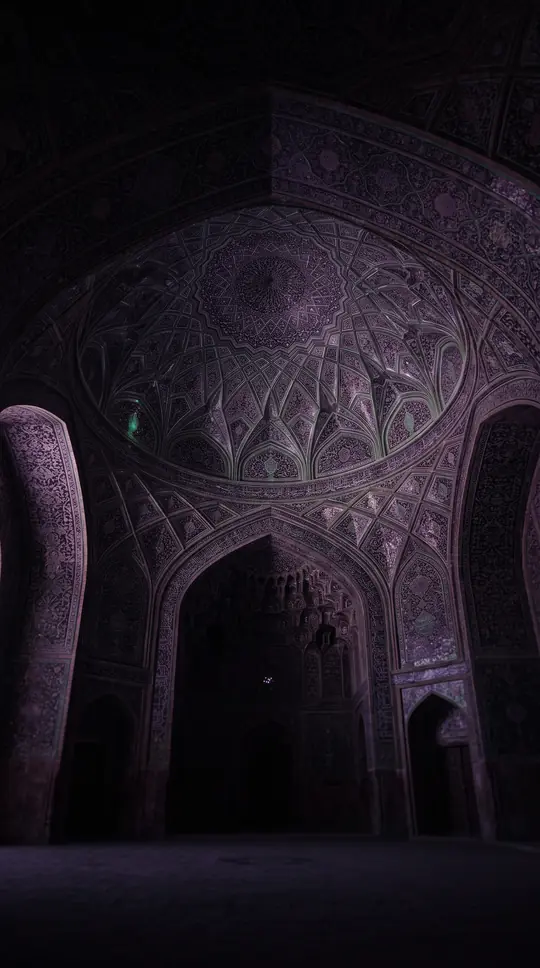 How long have we been searching for Stonehenge's secrets?Stonehenge is a defining icon of the British Isles, yet the quest to uncover the meaning of this Neolithic monument has its own ancient history. This video explores the surprising…
 Are the traditional narratives of human civilization fundamentally incorrect?Archaeologist David Wengrow challenges the established history of human social evolution. This video explores how rethinking the origins of agriculture, cities, and class systems …
 How a jungle civilization mastered time, math, and monumental architectureExplore the rise of the Maya, an ancient civilization that built soaring pyramids and complex calendars deep within the Yucatan Peninsula. This video explores how they achieved so…
 The 1687 accident that reshaped the face of Western historyDiscover how a single moment of military chaos during the Venetian siege of Athens led to the catastrophic destruction of the Parthenon. This video explores the historical context…
 The enduring rhythms of rural life in 1960s AfghanistanThis archival footage captures a snapshot of Samangan Province in 1965. It offers a rare, intimate look at the traditional crafts, agricultural techniques, and architectural style…
- A rare color window into Machu Picchu as it appeared in 1950Experience some of the earliest known color footage of Peru's iconic ruins. This archival film captures the atmosphere of a mid-century journey, from bustling marketplaces to the …
 From Persian tiles to Alaskan carvings: a global archaeological surveyThis 1952 film from the Penn Museum offers a curated journey through diverse global artifacts. It explores the craftsmanship, cultural significance, and historical origins of obje…
 A visual journey through the diverse artifacts of human historyThis archival film from approximately 1952 presents a curated selection of global antiquities, exploring the intricate craftsmanship and cultural significance of objects spanning …
 From mammoth ivory to Aztec rock: a global tour of human artifactsTravel through time and geography with this 1952 archival film. It showcases a diverse collection of cultural objects, ranging from Siberian headpieces to Mesopotamian sculptures,…
 From Paleolithic tools to Eskimo masks: a journey through human historyThis 1952 film, a British version of BBC's 'Animal, Vegetable, or Mineral', explores diverse artifacts from the Penn Museum collection, spanning millions of years of human and nat…
 Unearthing the Iron Age secrets of northern LaosDiscover how archaeological excavations in remote caves are reshaping our understanding of human prehistory in Southeast Asia. This video explores the Middle Mekong Archaeological…
 The Red City and the Buddha Cliff: Afghanistan through a pioneer's lensBefore high-definition travel vlogs, a chemical engineer captured the rugged soul of 1960s Afghanistan. His films reveal a landscape of ancient ruins destroyed by Genghis Khan, to…
 Uncovering the treasures within the legendary Midas MoundThis archival footage documents the archaeological excavation of King Midas' tomb in Turkey. Witness the moment the mound was opened and see the artifacts recovered from the site.
- How archaeologists and brewers reconstruct the intoxicating drinks of antiquityDiscover how scientific clues and experimental brewing bring ancient ales and wines back to life. This video explores the profound role fermented beverages have played throughout …
 How ancient language migrations shaped the vast expanse of EurasiaExplore the sweeping movement of Indo-European languages across the Eurasian steppelands. This lecture examines how these linguistic expansions connected distant regions, from the…
 Uncovering the sophisticated artistry of ancient Xinjiang textilesIn this presentation, archaeologist Elizabeth Wayland Barber examines rare textile masterpieces from the Xinjiang 'mummy' exhibit. She reveals how these surviving fragments offer …
 Did two distant ancient cemeteries share a single ancestral origin?Archaeologists are investigating the mysterious connection between two burial sites in the Tarim Basin. Despite being separated by 600 km, their striking similarities suggest a sh…
 Why the modern Maya look to the 19th century rather than ancient ruinsWhile the world focuses on ancient pyramids, contemporary Maya in the Yucatan find their identity in a different era: the mid-19th century Caste War.
 How a catastrophic volcanic eruption preserved an entire Roman city for nearly two millenniaWhen Mount Vesuvius erupted in 79 CE, it buried Pompeii under a thick blanket of ash and pumice, effectively freezing a sophisticated Greco-Roman society in time. Today, this uniq…
 Uncovering the Ancient Maya: The 1959 Tikal Excavations Captured on FilmIn 1959, the University of Pennsylvania Museum launched a major archaeological expedition at Tikal. Through rare 16mm color footage, researchers documented the meticulous process …
- A 1965 travelogue captures the fading architectural splendor of Herat, AfghanistanIn June 1965, engineer Watson Kintner documented the ancient ruins and intricate mosaics of Herat, Afghanistan. His unedited footage, part of a vast travel collection, offers a ra…
- A Chemical Engineer's 1965 Journey Through the Architectural Wonders of AfghanistanIn June 1965, Watson Kintner, an RCA engineer and amateur filmmaker, captured the intricate mosaics and ancient shrines of Afghanistan. His unedited footage, now preserved by the …
 Prehistoric cave art was far more sophisticated and global than once believedFor decades, Europe was considered the cradle of figurative art. New discoveries in Indonesia, however, have pushed the timeline back to over 67,000 years ago. These ancient maste…
- Does a quiet English churchyard conceal the resting place of a legendary Viking army?Beneath the overgrown forests and unassuming fields of Derbyshire lies a mystery that challenges everything we thought we knew about the Viking presence in Britain. Recent archaeo…
 The Indus Valley Civilization was the most extensive of the world's three earliest culturesSpanning modern-day Pakistan and Northwest India, the Indus Valley Civilization was a marvel of ancient urban planning. While its contemporaries in Egypt and Mesopotamia are more …
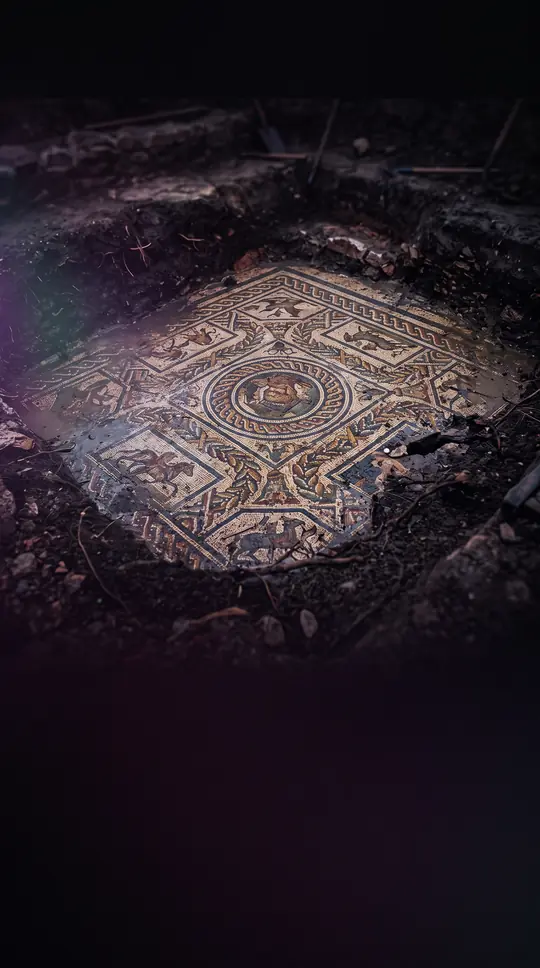 Why the Cradle of Civilization is a Concept Shaped by 19th-Century BiasThe Fertile Crescent is often called the cradle of civilization, a region in Western Asia where cities first emerged. While the term remains a cornerstone of historical study, its…
 The eruption of Mount Vesuvius in 79 A.D. remains a subject of historical debateAt noon on a day in 79 A.D., Mount Vesuvius exploded, sending a massive cloud of ash into the stratosphere. While the disaster is famous, the exact date of the eruption is still c…
 What physical traces did the real Band of Brothers leave behind in England?Before the 101st Airborne Division parachuted into Normandy, they spent months training in the quiet Wiltshire village of Aldbourne. Today, archaeologists and veterans are unearth…
 Why was a Roman Emperor's medallion buried in an Iron Age British tomb?Archaeologists have unearthed a mysterious medallion featuring the face of Augustus in a British Iron Age burial site. This discovery, alongside other luxury goods, suggests that …
 Archaeologists reconstruct the rise of a monumental Swedish power centreResearchers studying the site of Gamla Uppsala have integrated decades of excavations with new findings from 2011 and 2015. By re-evaluating old data alongside recent digs, they h…
 New formulas improve height and weight estimates for ancient European remainsResearchers who analyzed skeletal remains from the Mesolithic through the 20th century developed more accurate ways to estimate body size. By studying hundreds of individuals acro…
 Enamel proteins reveal the 'Lovers of Modena' were actually two malesResearchers studying the 'Lovers of Modena'—two Late Antique individuals buried hand-in-hand—found they were not a male-female couple as previously assumed. By analyzing proteins …
 Spectroscopy helps tell natural plant fibers from man-modified onesResearchers tested a spectroscopy technique called ATR-FTIR on microsamples from samurai armor spanning several centuries, held in a Swiss museum collection. They found the method…
 Evidence of multiple distinct human groups colonizing the AmericasArchaeologists studying the Paisley Caves in Oregon found evidence that the first humans to reach the Western Hemisphere were not a single group. By analyzing ancient artifacts an…
 The myth of British barbarism after the Roman collapseArchaeology is dismantling the long-held belief that Britain descended into anarchy after 410 AD. This video explores how new evidence reveals a sophisticated, literate society th…
 Is the hunt for the Dead Sea Scrolls truly finished?Professor Jim Charlesworth believes many Dead Sea Scrolls remain hidden, waiting to be discovered by modern-day explorers and scholars.
 A glimpse into life and labor in 1939 OaxacaThis archival footage captures the daily rhythms of Mexico's Oaxaca region, documenting traditional transport, local crafts, and the rugged landscapes of the era.
 Human activity likely created the fertile dark soils of the AmazonResearchers studying Amazonian Dark Earths found evidence that these exceptionally fertile soils were shaped by human activity. While some scientists suggested these nutrient-rich…
 The myth that cultural landscapes expanded global heritage recognitionResearchers examining the UNESCO World Heritage List found that the 1992 introduction of 'cultural landscapes' did not truly diversify heritage representation. While often celebra…
- New mass spectrometry markers reveal diverse animal diets in Iron Age ZambiaResearchers using Zooarchaeology by Mass Spectrometry (ZooMS) have identified new peptide markers to distinguish between African bovid species. By applying this method to highly f…
 Natural river deposits may have formed fertile Amazonian Dark EarthsResearchers studying a well-known Amazonian Dark Earth site found that these fertile soils may not have been created by humans. By analyzing nutrient levels and trace elements, th…
 Learning to accept heritage loss may strengthen cultural resilience, argues paperChallenging the common assumption that heritage must be preserved at all costs to protect communities from conflict and disaster, a theoretical paper argues that cultural resilien…
 Ancient Borneo remains reveal successful limb amputation occurred 31,000 years agoResearchers examining skeletal remains from a cave in Borneo have discovered evidence of a surgical limb amputation dating back at least 31,000 years. The remains of a young indiv…
 Ancient artifacts suggest modern hunter-gatherer culture emerged much earlier than previously thoughtResearchers reanalyzing organic artifacts from Border Cave in South Africa found evidence of sophisticated tools and ornaments dating back to approximately 44,000 years ago. These…
 Genome from a Siberian finger bone reveals a new ancient human groupScientists sequenced DNA from a finger bone unearthed in a Siberian cave and identified a previously unknown group of ancient humans, now called Denisovans. Although this populati…
- New visual method achieves 95% accuracy in identifying sex from hip bonesResearchers have developed a new visual method for determining biological sex using the human hip bone. By evaluating five specific bone characteristics simultaneously, the study …
 Ancient skull porosities may be caused by different types of anemiaResearchers who study ancient human remains have long used specific bone porosities to identify past iron deficiency. However, a reappraisal of this common assumption suggests tha…
 Sea-level changes have shaped human migration and coastal settlement patterns for millenniaA review of geological and archaeological data in the Mediterranean Basin found that sea-level fluctuations have profoundly influenced human history. By examining the region from …
- Evidence of repeated interpersonal violence in one of the world's earliest cemeteriesResearchers reanalyzing a Late Pleistocene cemetery in Egypt discovered that interpersonal violence was a recurring occurrence rather than a single isolated event. By examining 61…
 Ancient road networks once connected large urban centers in the Amazonian EcuadorArchaeologists using LIDAR and fieldwork in the Upano Valley have discovered a vast network of pre-Hispanic urban centers. The research revealed a sophisticated landscape of plaza…
 Ancient artifacts offer a real-world test for understanding how glass decaysA literature review of glass corrosion highlights how studying archaeological glass can validate modern scientific models. While researchers often use laboratory-created samples t…
- A fossil discovery suggests modern humans left Africa much earlier than previously thoughtResearchers examining a fossilized jaw fragment found at Mount Carmel, Israel, have found evidence that modern humans may have migrated out of Africa more than 55,000 years earlie…
 Ancient plant domestication in the Neotropics predates the rise of large-scale agricultureResearchers analyzing the archaeobotanical record found that the domestication of native plants in the Neotropics began significantly earlier than the development of organized foo…
 Lidar technology reveals ancient large-scale urban networks in the Bolivian AmazonResearchers using Lidar technology have uncovered evidence of a complex, low-density urban system in the Bolivian Amazon. By scanning through dense tropical forests, the team iden…
 Preserving the remnants of the Caste War in TihosucoDiscover how a new cooperative initiative is working to identify and protect the historical artifacts and sacred sites left behind by the Maya rebellion.