 Intellect Plus
Biology
969 cards. Each one is a 40-second story with a five-minute read behind it. Page 13 of 17.
 How one man classified thousands of species and redefined the reptile family treeAlbert Günther was a titan of Victorian zoology. From his base at the British Museum, he described over 2,000 species of fish and reptiles, fundamentally changing our understandin…
 Why Nobel Prize winner Albert Szent-Györgyi believed science needs more scientific dissentersAlbert Szent-Györgyi, the man who isolated vitamin C, famously divided scientists into two camps: the Apollonians, who perfect established paths, and the Dionysians, who explore t…
- Albrecht von Haller: The polymath who defined modern physiology and mapped the AlpsKnown as the father of modern physiology, Albrecht von Haller was a Swiss prodigy who mastered medicine, botany, and poetry. He pioneered the distinction between nerve sensibility…
 How a self-taught engineer unlocked the secrets of human movement and nerve impulses.Sir Andrew Huxley was a master of custom-built instrumentation who transformed biology. By applying rigorous mechanical engineering to the study of living tissue, he decoded how n…
 How one botanist reshaped our understanding of the world's flowering plant evolutionArmen Takhtajan was a titan of twentieth-century botany who transformed how we classify the natural world. By emphasizing phylogenetic relationships, he created a complex, influen…
 Could the first human to live for a millennium already be walking among us?Biomedical gerontologist Aubrey de Grey argues that aging is a collection of manageable metabolic side effects rather than an inevitable fate. By targeting these cellular damages,…
 Why your life experiences cannot be passed down to your children through your genesAugust Weismann revolutionized biology by proposing the germ plasm theory, which established a strict divide between body cells and reproductive cells. This concept, known as the …
 How a Swiss Botanist Predicted Natural Selection and Discovered Our Internal Biological ClocksAugustin Pyramus de Candolle was a polymath who fundamentally reshaped biology. He coined the term taxonomy, pioneered the concept of homology, and proposed that plants compete in…
 How Aziz Sancar decoded the molecular machinery that repairs our damaged DNAAziz Sancar, a Nobel laureate in Chemistry, transformed our understanding of how cells fix genetic damage. From his early work on light-activated enzymes in bacteria to his discov…
 How a Tasmanian shark fisherman sparked a global movement for permanent human cultureBill Mollison, a former shark fisherman and scientist, grew disillusioned with industrial agriculture's degradation of the soil. In 1974, he co-developed permaculture, a design sy…
 How one researcher transformed our understanding of the world's least understood great apeBefore Biruté Galdikas arrived in the Borneo rainforest in 1971, orangutans were the least understood of the great apes. Over four decades, she built one of the longest continuous…
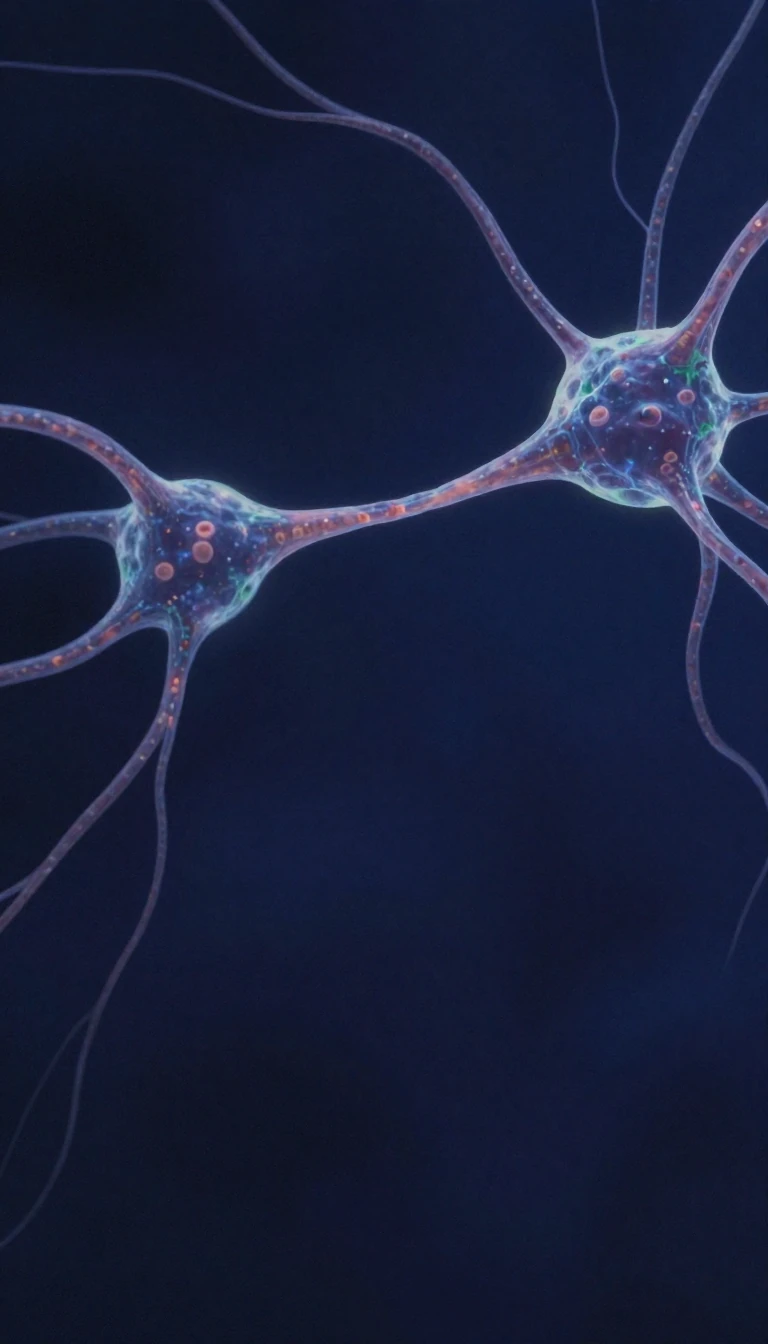 The Nobel laureate who discovered a vital cellular organelle but was ignored for decades.Camillo Golgi revolutionized neuroscience with a staining technique that revealed the brain's hidden architecture. Yet, his most enduring discovery—the Golgi apparatus—was dismiss…
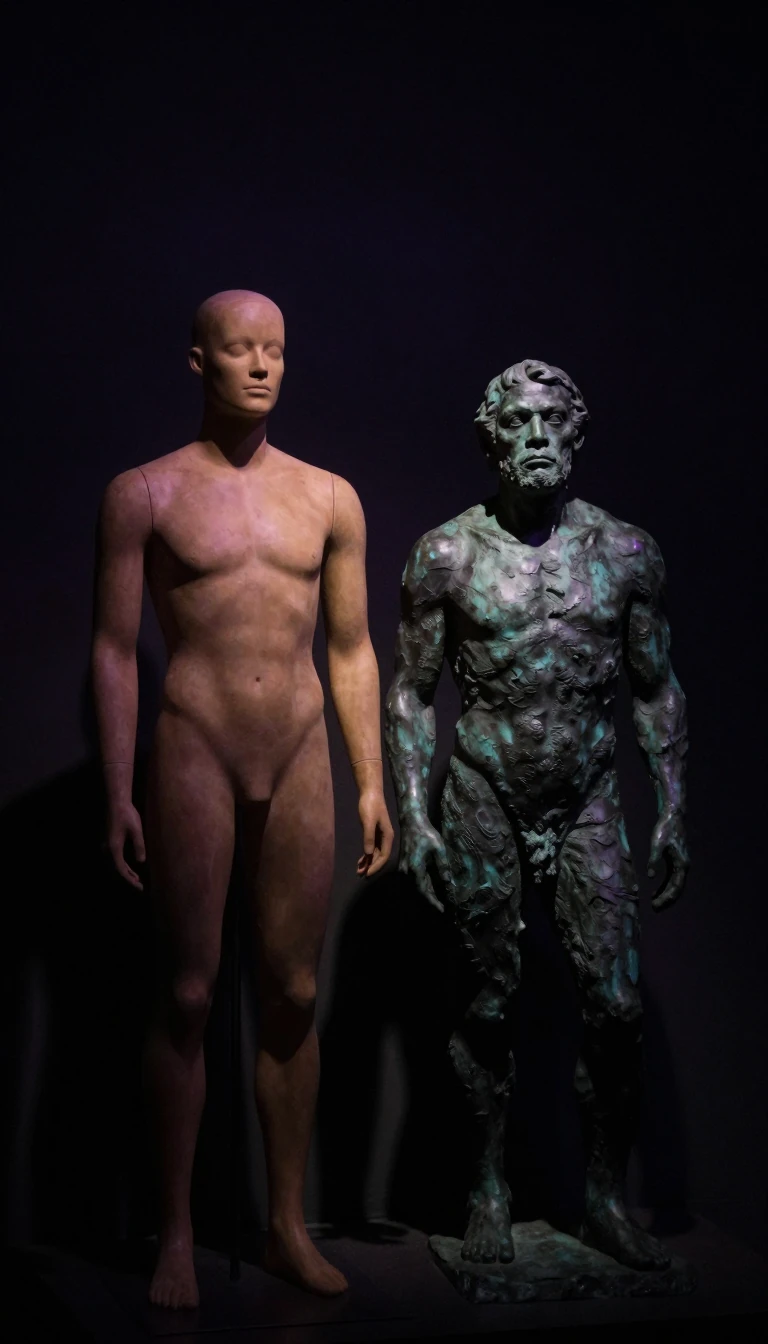 How a self-taught taxidermist transformed museum exhibits from stiff displays into living artCarl Akeley revolutionized natural history museums by replacing static, lifeless animal mounts with anatomically precise, dynamic dioramas. Beyond his artistic taxidermy, he was a…
 How a German biologist revealed the hidden, vertical life of the deep oceanCarl Chun was a pioneer of deep-sea exploration who organized the first German oceanographic expedition in 1898. By inventing specialized sampling equipment and studying the myste…
- The botanist who missed the birth of genetics while chasing an inner perfecting principleCarl Nägeli was a titan of 19th-century botany, credited with naming xylem and phloem. Yet, he is remembered today for a tragic oversight: discouraging Gregor Mendel and ignoring …
 How one man’s radical tree of life shattered our understanding of biologyFor most of the 20th century, scientists believed all life fell into two simple categories: prokaryotes and eukaryotes. Carl Woese upended this consensus by discovering a third do…
 How a dyslexic graduate student discovered the enzyme that controls cellular life spanCarol W. Greider faced rejection from most graduate schools due to her dyslexia, yet she persisted to identify telomerase. This enzyme protects chromosomes from shortening, a proc…
- How a sixteenth-century botanist accidentally sparked the world's first major speculative financial bubble.Carolus Clusius was a pioneering scientist who introduced the tulip to the Netherlands. His meticulous observations of the flower's mysterious color-breaking patterns—later reveal…
- Conrad Gessner was a sixteenth-century polymath who functioned as a human search engine.Long before the digital age, Conrad Gessner attempted to catalogue all human knowledge. A Swiss physician and naturalist, he built a massive, physical database by cutting, categor…
 Why did a biologist argue that physical forces, not evolution, shape the living world?D'Arcy Wentworth Thompson challenged the Darwinian consensus of his time, proposing that the forms of plants and animals are governed by mechanical laws rather than natural select…
 How David Baltimore overturned the central dogma of biology and reshaped modern medicineIn 1970, David Baltimore discovered reverse transcriptase, an enzyme that allows genetic information to flow from RNA back to DNA. This breakthrough shattered the prevailing view …
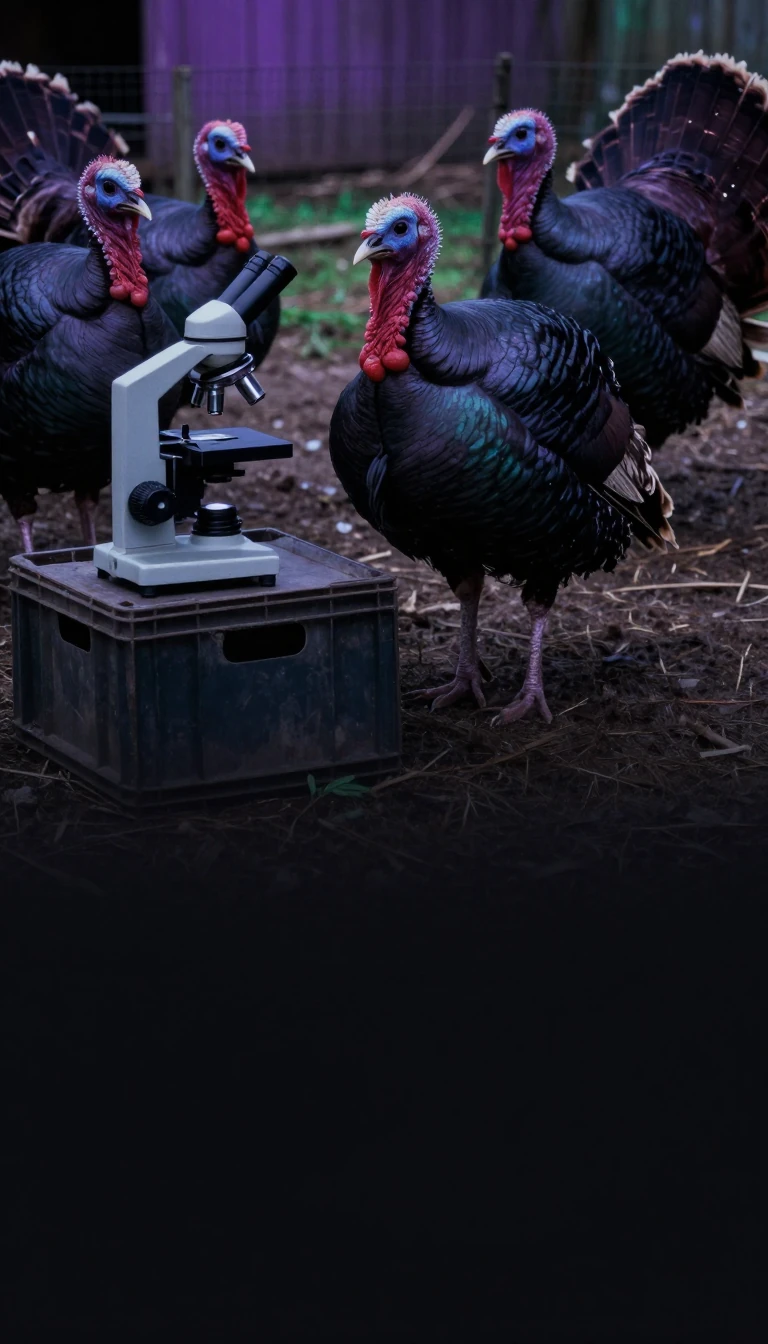 How a Russian botanist accidentally discovered the existence of the world's first virusIn 1892, while investigating a mysterious tobacco blight, Dmitri Ivanovsky made a discovery that defied the biological wisdom of his time. He found an infectious agent so small it…
 How the tiny caps on your chromosomes dictate the speed of your biological agingElizabeth Blackburn discovered telomerase, the enzyme that replenishes the protective ends of our chromosomes. Her work revealed that these structures, known as telomeres, are not…
 How a humble sea snail revealed the biological secrets of human memory storageEric Kandel transformed our understanding of the mind by studying a simple marine mollusc. By observing how a snail learns, he discovered that memories are not fixed, but are phys…
 How the last student of Carl Linnaeus transformed our understanding of the lichen world.Before Erik Acharius, all lichens were lumped into a single, undifferentiated genus. As the final pupil of the legendary Carl Linnaeus, Acharius pioneered the complex taxonomy of …
 The brilliant microbiologist whose foundational discoveries were often credited to her Nobel-winning husbandEsther Lederberg was a titan of bacterial genetics who discovered the lambda phage and the F fertility factor. Despite her genius, she faced systemic exclusion and the Matilda eff…
 How a 17th-century Italian physician dismantled the ancient myth of spontaneous lifeBefore Francesco Redi, science held that maggots simply appeared from rotting meat. By applying rigorous experimental design, Redi proved that life only emerges from existing life…
 How one man transformed ecology from simple natural history into a rigorous mathematical science.G. Evelyn Hutchinson, often called the father of modern ecology, pioneered the use of statistics and radioisotopes to map the hidden life of lakes. By treating ecosystems as compl…
 Why the most famous theory on shared resources is deeply contested by modern economists.Garrett Hardin’s 1968 essay, The Tragedy of the Commons, warned that individual freedom in shared spaces inevitably leads to ruin. While his work became a cornerstone of ecologica…
 Ten years of preparation for ten hours of discovery in the Alaskan wilderness.Georg Wilhelm Steller was the first European naturalist to document North American wildlife, yet his historic expedition was defined by bureaucratic friction and tragedy. After ar…
 The polymath zoologist who named over 2,000 species and mastered the study of rosesGeorge Albert Boulenger was a relentless force in natural history, cataloging thousands of fish, reptiles, and amphibians during his decades at the British Museum. Beyond his monu…
 Gerard Krefft was a rare Australian voice supporting Darwin in the nineteenth centuryAs curator of the Australian Museum from 1861 to 1874, Gerard Krefft was a scientific outlier. While most of his peers clung to supernatural explanations for the origins of life, …
 How Gerty Cori overcame systemic exclusion to revolutionize our understanding of human energy metabolismGerty Cori was the first woman to win a Nobel Prize in Physiology or Medicine, yet she spent decades fighting for basic professional recognition. Despite being barred from faculty…
 Before Darwin, a German doctor pioneered the study of life and evolutionary changeLong before the theory of natural selection became mainstream, Gottfried Reinhold Treviranus was already exploring the transmutation of species. A polymath who bridged medicine, m…
 Hans Hass: The Austrian Biologist Who Pioneered Underwater Exploration and Modern Diving TechnologyLong before underwater documentaries became commonplace, Hans Hass was capturing the hidden world of coral reefs and sharks. A biologist and inventor, he revolutionized how humans…
 How a Nobel-winning geneticist’s fear of radiation shaped modern public health policyHermann Joseph Muller discovered that X-rays induce genetic mutations, earning him the 1946 Nobel Prize. Yet, his later insistence that even the smallest dose of radiation is dang…
 A brilliant scientist who overcame a childhood tragedy to revolutionize early twentieth-century medical research.Hideyo Noguchi rose from an impoverished Japanese farming family to become a pioneering bacteriologist at the Rockefeller Institute. Despite a severe hand deformity, he achieved i…
 Hugo de Vries: The Botanist Who Redefined Evolution and Coined the Term MutationHugo de Vries was a pioneering Dutch geneticist who fundamentally altered our understanding of heredity. While he famously rediscovered Mendelian laws, he is best known for his mu…
- Can a machine-like cell make rational choices, or is it just blind chemistry?Jacques Monod, a Nobel-winning biochemist and French Resistance hero, argued that life is built on a paradox. While our biological components are governed by rigid, unthinking che…
 James Lovelock: The Independent Scientist Who Saw Earth as a Single Living OrganismJames Lovelock was a polymath who bridged the gap between cryobiology and planetary science. Best known for the Gaia hypothesis, he proposed that Earth functions as a self-regulat…
 How a seventeenth-century Dutch biologist dismantled the myth of spontaneous generation in insectsJan Swammerdam transformed biology by proving insects were not imperfect, spontaneously generated creatures. Through meticulous microscopic dissections, he revealed that life cycl…
 The pioneering zoologist who walked Komodo dragons on a leash at London ZooJoan Beauchamp Procter was a brilliant herpetologist who transformed how zoos display animals. Despite chronic illness, she designed the world's first purpose-built reptile house …
- Johann Friedrich Blumenbach: The 18th-century polymath who defined human variety and vital forceLong before modern genetics, Johann Friedrich Blumenbach pioneered physical anthropology and zoology. While he is often remembered for his controversial racial classifications, hi…
- The self-taught taxidermist who revolutionized our understanding of freshwater fishJohann Jakob Heckel was never formally trained as a biologist, yet he became a titan of ichthyology. While his contemporaries explored the globe, Heckel stayed in Vienna, transfor…
- How a Victorian taxidermist transformed stuffed animals into dramatic, lifelike works of artBefore John Hancock, taxidermy was often stiff and lifeless. By introducing dynamic, narrative-driven arrangements, the English naturalist turned preserved specimens into celebrat…
- How a seventeenth-century blacksmith's son revolutionized the way we classify the natural worldBefore modern biology, naturalists relied on rigid, arbitrary systems to categorize life. John Ray, an English parson-naturalist, dismantled these methods in favor of careful obse…
- The polymath who discovered the mammalian egg and founded modern permafrost scienceKarl Ernst von Baer was a titan of 19th-century science, yet his legacy remains surprisingly fragmented. While he laid the foundations for comparative embryology and identified th…
 How an 18th-century priest proved that digestion is chemistry, not just grinding.Lazzaro Spallanzani was a polymath priest who dismantled the theory of spontaneous generation, pioneered artificial insemination, and discovered how bats navigate in total darknes…
- How do we smell? The molecular map of the nose's hidden genetic libraryLinda B. Buck transformed our understanding of olfaction by identifying the massive family of genes responsible for detecting scents. Her work revealed how the nose translates che…
 Did a deer skull in a forest reveal the secret architecture of the head?In 1806, naturalist Lorenz Oken stumbled upon a bleached deer skull in the Harz forest. A sudden realization struck him: the skull was merely a modified vertebral column. This int…
- How a Nobel Prize winner used a car tire to revolutionize biochemical researchLuis Federico Leloir, the Argentine biochemist who won the 1970 Nobel Prize in Chemistry, achieved global scientific breakthroughs despite working in a laboratory that lacked basi…
 How a seventeenth-century artist dismantled the myth that insects were born of mud.Maria Sibylla Merian was a pioneer who proved insects undergo predictable life cycles, debunking the era's belief in spontaneous generation. By documenting the metamorphosis of 18…
- The Dutch microbiologist who discovered viruses but never studied human diseaseMartinus Beijerinck was a pioneer of virology and environmental microbiology, yet he remains less famous than contemporaries like Louis Pasteur. By focusing on plants and soil rat…
 How a Canadian pioneer defined the mathematical heartbeat of every living cellMaud Menten was one of the first Canadian women to earn a medical degree, yet her most enduring legacy lies in a simple equation. By mapping how enzymes interact with substrates, …
 Was Maurice Wilkins the forgotten architect of the double helix discovery?Long overshadowed by his peers, Maurice Wilkins was the biophysicist who initiated the DNA diffraction research at King’s College London. His early work with high-quality fibers p…
 How the brain maps its surroundings: The discovery of our internal positioning systemMay-Britt Moser transformed our understanding of how we navigate the world. By identifying grid cells in the brain, she revealed the biological mechanism that allows us to track o…
 How Melvin Calvin mapped the secret route of carbon through the heart of plantsMelvin Calvin revolutionized our understanding of photosynthesis by tracing how plants convert light into chemical energy. While his Nobel-winning work remains a cornerstone of bi…
- Is the engine of evolution driven by natural selection or random genetic drift?Motoo Kimura challenged the Darwinian orthodoxy by proposing that most genetic changes at the molecular level are neutral. Instead of natural selection, he argued that random gene…
 The geneticist who solved the mystery of sex determination was largely forgotten by historyIn 1905, Nettie Stevens discovered that sex is determined by chromosomes, a breakthrough that fundamentally changed biology. Despite her monumental contribution, she was frequentl…
 Why animals sometimes prefer artificial objects over their own natural counterpartsNikolaas Tinbergen, a Nobel-winning biologist, discovered that animals often respond more intensely to exaggerated, artificial stimuli than to natural ones. This concept of the su…