 Intellect Plus
Social scientists
1,050 cards. Each one is a 40-second story with a five-minute read behind it. Page 9 of 18.
 The lost Hebrew roots of a 'meaningless' Greek psalmFor centuries, scholars debated whether Psalm 151 ever existed in Hebrew. It was often dismissed as a Greek invention—a 'desiccated' and 'jumbled' addition to the Bible. However, …
 The anarchist geographer who mapped the world from exileImagine a scholar so radical that he was sentenced to life in prison for his politics, yet so brilliant that scientists pleaded with the government to set him free. Élisée Reclus …
 The first woman governor and 'Mother of Pakistan' who shaped a nationBefore she was a stateswoman, she was an economist mobilizing students and training women for the front lines. Ra'ana Liaquat Ali Khan didn't just witness the birth of Pakistan; s…
 A modernist jewel designed to spark national civic dialogueLocated in the heart of Philadelphia, the National Constitution Center functions as a national town hall. It is not a repository for the original documents, but a space designed t…
 The Silk Road city that survived the Mongols to become a libraryHidden in the Mongolian desert, Khara-Khoto was once a thriving hub of the Western Xia dynasty. While many cities fell to Genghis Khan, this fortress not only endured but expanded…
 The dry earth system: why our modern flush toilets won a historical warBefore the roar of sewers dominated urban life, an English clergyman proposed a revolution in sanitation. He didn't want to wash waste away; he wanted to manage it. His 'dry earth…
 The Twa: A forest people navigating the cost of conservationFor centuries, the Twa lived as semi-nomadic hunter-gatherers in the forests of the African Great Lakes. Today, they face a modern paradox: their ancestral lands are being protect…
 Was it a tactical arrest or an extra-judicial execution?The death of Puerto Rican secessionist Filiberto Ojeda Ríos sparked a global debate over the limits of federal power. While the FBI maintained it was a justified response to a gun…
 The enslaved woman who tailored the First Lady's private lifeElizabeth Keckley bought her freedom for $1,200 and rose from a brutal life of servitude to become the personal modiste of Mary Todd Lincoln. Beyond sewing gowns, she became a con…
 Is equality of outcome a moral goal or a practical impossibility?While equality of opportunity focuses on the starting line, equality of outcome demands we look at the finish line. It suggests a society where material wealth and economic condit…
 From 1788 artisans to 1.7 million people: Canada's Chinese historyThe first Chinese people arrived in Canada in 1788, yet for over a century, they were systematically excluded from the rights of citizenship. This portrait of a population reveals…
 The first American immigration station was a former military fortLong before Ellis Island became the famous gateway to the United States, a circular sandstone fort in Manhattan served as the primary processing center for newcomers. From 1855 to…
 The 'Group of Death' where geopolitical tension met pitch-side protestIn late 2022, Group B of the FIFA World Cup became a microcosm of global friction. It featured high-ranking teams, deep political hostilities between nations, and a controversial …
 The world's oldest continuous cultures may have mastered aquaculture firstFor decades, the prevailing narrative was that Australian Aboriginal peoples were purely nomadic hunter-gatherers. New archaeological evidence is dismantling this myth, suggesting…
 The 2016 presidential debates broke records but missed a crisisThe first 2016 presidential debate became the most-watched in American history, drawing 84 million viewers. Yet, despite the massive audience, the moderators failed to ask a singl…
 The economist who wanted money to rot like a bananaMost money is designed to last forever, creating a massive advantage for those who can hoard it. Silvio Gesell argued this imbalance causes economic decay. He proposed a radical a…
 The war for memory: How 'Lost Cause' mythology reshapes the presentHistory is often treated as a static record, but for neo-Confederates, it is an active battlefield. By reframing the Civil War as a noble struggle for liberty rather than a defens…
 How a single book forced automakers to prioritize safety over styleIn 1965, Ralph Nader published a book that transformed the American highway from a site of 'wholesale slaughter' into a regulated space. By exposing how manufacturers prioritized …
 The Admiral who dismantled a spy agency's clandestine heartIn 1977, President Jimmy Carter appointed an admiral to lead the CIA. His mission was to repair a tarnished reputation, but his methods were radical. He traded human spies for hig…
 The evolution of psychosurgery from blunt destruction to precise stimulationModern neurosurgery for mental disorders (NMD) is often confused with the infamous lobotomies of the mid-20th century. While both involve brain intervention, today's techniques ar…
 From keepers of tablets to first responders in an infodemicThe librarian is far more than a keeper of books. This profession has evolved from ancient scribes organizing clay tablets into modern information architects who manage complex da…
 The largest non-collecting contemporary art museum in EuropeUnlike traditional museums that preserve the past, the Palais de Tokyo is designed to manufacture the future. It operates without a permanent collection, focusing instead on the e…
 The invisible backbone of the world's shared library dataBefore the internet made information instantly accessible, a small group of Ohio librarians envisioned a way to merge the world's oldest institution—the library—with the newest: t…
 The first law school in New York City set the national standardBefore the modern legal landscape existed, NYU Law pioneered the way lawyers are taught. By introducing a revolutionary "course method" in 1838, it moved legal education away from…
 Who decides when the American economy is actually in a recession?While the media often points to two quarters of shrinking GDP as the rule, the official word comes from a private nonprofit. The National Bureau of Economic Research (NBER) acts a…
 A stone of hope rising from a mountain of despairThe Martin Luther King Jr. Memorial is more than a statue; it is a physical journey through struggle. Visitors must figuratively walk through a granite mountain of despair before …
 The Maratha general who resurrected an empire from the ashes of defeatAfter the catastrophic Third Battle of Panipat in 1761, the Maratha power seemed shattered. Yet, one man—Mahadji Shinde—transformed a military debacle into a continental resurgenc…
 How a nationalist movement reversed a decade of neoliberal policyArgentina's Kirchnerism didn't just change the government; it dismantled a neoliberal era. By blending Peronist tradition with 21st-century populism, it traded international marke…
- Why your choices are shaped by invisible rules and social habitsMost economic theories assume humans are perfectly rational actors making independent decisions. Institutional economics argues the opposite: our behavior is deeply embedded in fo…
 Why a fashion mogul burned a multi-million pound punk archiveIn 2016, Joseph Corré and his mother, Vivienne Westwood, burned an archive of punk memorabilia worth an estimated £6,000,000. Was it a radical statement on the commercialization o…
 The novelist who wrote the future while living in its shadowIrène Némirovsky was a literary sensation whose masterpiece remained hidden for fifty years. While she lived through the Nazi occupation of France, she was crafting a narrative of…
 From Ancient Grain to Modern Cash: The Evolution of Survival GuaranteesIs a guaranteed minimum income a radical modern invention or a fundamental human right? While it feels like a contemporary response to automation, the concept of a state-backed fl…
 The historian who predicted the Soviet collapse while guarding a Nazi secretHélène Carrère d'Encausse was a titan of Russian history who accurately foresaw the USSR's disintegration in 1978. Yet, her personal history was shadowed by a darker reality: her …
 Why some profits are impossible to eliminate through perfect competitionMost economic models assume we can calculate probabilities for almost everything. Frank Knight argued that this is a fundamental misunderstanding of reality. He distinguished betw…
 The islands that walk: a 500-kilometer migration across the North SeaThe Frisian Islands are not static landmasses; they are in a state of perpetual motion. Driven by tidal action and sediment transport, these barrier islands are slowly migrating e…
- Why society views some sex as 'natural' and others as 'bad'Is our moral compass on sexuality a biological reality or a social construct? Anthropologist Gayle Rubin argues that our judgment of 'good' versus 'bad' sex stems from a hierarchi…
 Your brain creates a 'whole' that is greater than its partsWhy do you see a vase instead of two faces? Figure-ground perception is the fundamental process of segregating objects from their surroundings. It is one of the first visual skill…
 The fraternity that survived a college-wide ban on secret societiesIn the early 1830s, Union College president Dr. Eliphalet Nott ordered all fraternities dissolved. One man's argument saved Delta Phi from erasure, preserving an organization that…
- The art of winning by threatening to lose everythingBrinkmanship is the high-stakes game of pushing a situation toward active conflict to force an opponent into concessions. It relies on a paradox: you must prove you are willing to…
 The legal ghost in the machine: how corporations became peopleCorporations aren't just businesses; they are legal fictions with the power to own land, sign contracts, and sue you. This 'personhood' allows them to exist forever, outliving the…
- Why some games are solved while others remain mathematically unreachableIn the world of mathematics, a game is more than entertainment; it is a recursive structure of moves. While we can prove that perfect play in tic-tac-toe always ends in a draw, th…
 The man who invented a religion by 'discovering' a witch's gospelCharles Godfrey Leland was a journalist, a revolutionary, and a pioneer of industrial art. Yet he is most famous for a book that shaped modern Neopaganism. By claiming to document…
- The law school that survived a total institutional shutdownIn 1943, World War II nearly erased Brooklyn Law School from existence. With enrollment plummeting and its parent university moving to shutter the program, the school's survival w…
 How a 1916 laboratory school redefined the science of childhood developmentEducation is often viewed as a simple pipeline for information, but for some, it is a laboratory for human growth. Founded in 1916, Bank Street College of Education began as an ex…
 The scholar cited by every federal court of appeals in AmericaIn the world of constitutional law, few voices carry as much weight as Akhil Reed Amar. His scholarship is so pervasive that it has been cited by Supreme Court justices across the…
- The world's most cited economist holds office hours on a running trackAndrei Shleifer is a titan of modern economics, ranked as the top economist in the world in 2024. Yet, instead of just staying in the ivory tower, he holds office hours while jogg…
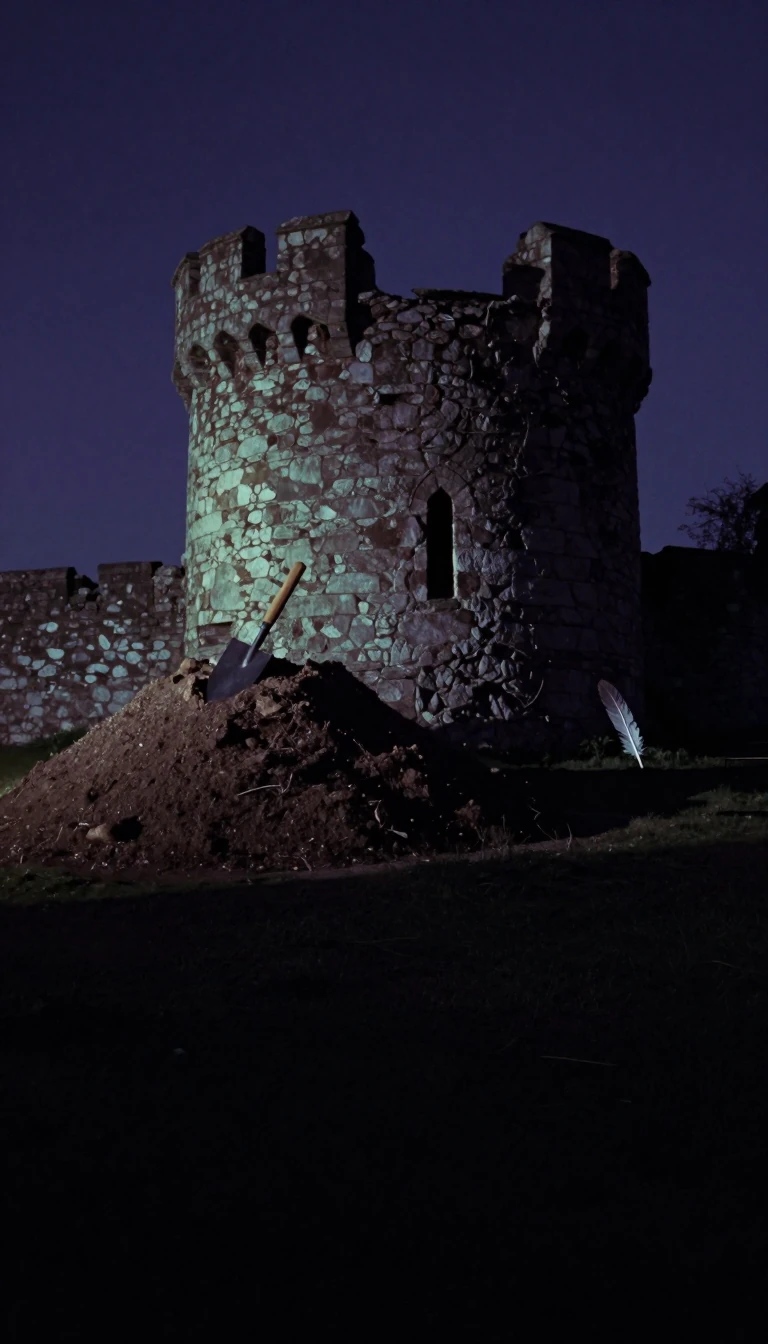 The legal paradox of the home as a sovereign castleIn many legal systems, your home is considered a sanctuary where the rules of engagement change. This principle, known as the castle doctrine, suggests that the right to defend on…
 The era of 'heroic' medicine and the quest to cure the mindIn the early 20th century, psychiatry faced a crisis of efficacy. To move beyond mere custodial care, doctors turned to 'heroic' physical therapies. Among the most extreme was ins…
 Ancient Egyptian mummies wore the high fashion of Imperial RomeIn the Faiyum Basin, the dead were dressed in the latest Roman trends. These naturalistic portraits, painted on wooden boards and wrapped around mummies, reveal a stunning cultura…
- Why humans can talk about things that aren't thereMost animals can only communicate about the here and now. Humans, however, possess a unique cognitive leap: displacement. Linguist Derek Bickerton argues this ability to discuss d…
 How a single voyage provided the blueprint for Japan's rapid modernizationIn 1871, Japan sent a massive diplomatic expedition to the West. While other nations responded to Western expansion with military resistance, Japan chose a different path: an exha…
- The Anglican priest who became the most powerful figure in Australian anthropology for decades.A. P. Elkin was a dual-career force, balancing his role as an Anglican clergyman with a dominant influence over Australian anthropology. From the 1930s to the 1950s, he shaped gov…
 The Egyptian jurist who reconciled Islamic law with modern European legal systemsAbd El-Razzak El-Sanhuri was the architect of the 1948 Egyptian Civil Code, a monumental legal framework that remains a cornerstone of Arab jurisprudence. By blending Islamic prin…
- Did a sixteenth-century mapmaker predict the movement of the continents centuries before science?Abraham Ortelius, the visionary behind the first modern atlas, noticed something peculiar about the world map. By observing the coastlines of Europe, Africa, and the Americas, he …
 Why the power to kill has become the ultimate form of modern sovereignty.Cameroonian theorist Achille Mbembe argues that traditional ideas of biopower fail to explain contemporary subjugation. Instead, he introduces the concept of necropolitics, where …
- Did a Habsburg court librarian invent the modern study of human cultures?Adam František Kollár, a polyglot advisor to Empress Maria Theresa, coined the term ethnology in 1783. While he served as a centralist political strategist, his scholarly work lai…
 Can a single social scientist solve the systemic failures of rural and urban poverty?Akhtar Hameed Khan, a former civil servant turned development practitioner, rejected bureaucratic top-down mandates to pioneer grassroots participatory models. From the Comilla Mo…
 How one man’s obsession with folk music helped define the sound of the world.Alan Lomax spent his life capturing the vanishing voices of humanity. From the American South to the mountains of Spain, he recorded thousands of songs, preserved endangered tradi…
 The Italian refugee who became the father of modern international law in England.Alberico Gentili fled the Inquisition to become a Regius Professor at Oxford and a trusted advisor to Queen Elizabeth I. Though his fame was later eclipsed by Hugo Grotius, this j…
 Albert O. Hirschman: The Economist Who Found Hope in Unbalanced Growth and Human ChoiceFrom rescuing refugees in World War II to advising Latin American leaders, Albert O. Hirschman was a polymath who defied simple categorization. He challenged the rigid models of h…