 Intellect Plus
Moon
18 cards. Each one is a 40-second story with a five-minute read behind it.
 The Moon is slowly drifting away from Earth due to tidal frictionWe see the same face of the Moon every night, but that constant gaze hides a slow-motion migration. The Moon is currently drifting away from our planet, a process driven by the sa…
 The 2026 mission that broke a fifty-year lunar silenceFor over five decades, no human has traveled to the Moon. In April 2026, the Artemis II mission changed that, performing a high-stakes lunar flyby to test the systems that will ev…
 Gravity's invisible tether keeps the Moon's far side hiddenWhy do we never see the rest of the Moon? This video explains the gravitational mechanics that lock our nearest celestial neighbor into a permanent face-to-face relationship with …
 Why your mental image of the Moon is likely incorrectThe Moon is one of our most familiar celestial neighbors, yet it is frequently depicted with significant scientific inaccuracies. This video breaks down common misconceptions to s…
 The Moon doesn't orbit the Earth in a simple spiralWe often imagine the Moon following a smooth, spiraling path around our planet. In reality, its trajectory is far more complex. Depending on your perspective, the Moon might actua…
 The Moon may have formed in just five hoursThe giant impact hypothesis suggests a Mars-sized protoplanet struck the young Earth, creating a debris field. While the Moon was long thought to have coalesced over millions of y…
 A lunar outpost as a mirror for an energy-starved EarthThis analysis explores the 2009 film Moon, examining how its portrayal of a lunar mining base serves as a psychological drama reflecting our own world's potential future.
 The unsettling reality of lunar mining and identity in MoonThis recap breaks down Duncan Jones's sci-fi masterpiece, exploring the secrets hidden within a lonely lunar mining base. It is essential viewing for understanding the film's narr…
- You can't own the Moon, but you can still buy itDespite international laws declaring space a global commons, private individuals have spent decades selling "Lunar deeds" and Martian plots. While these titles hold no legal weigh…
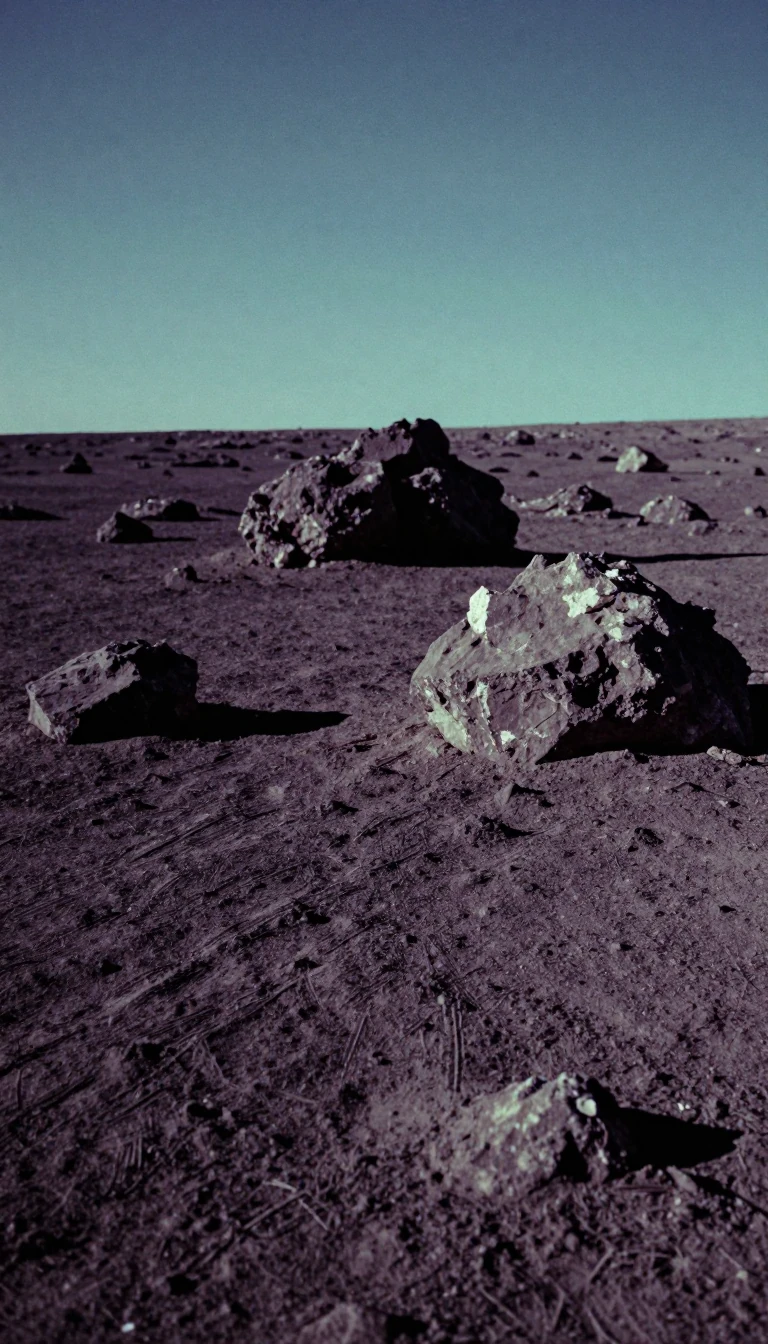 To reach deep space, we must learn to live off the landSending everything humans need from Earth to the Moon is becoming prohibitively expensive. To make lunar exploration sustainable, agencies are shifting focus toward In-Situ Resour…
- The Moon's gravity is far from uniform or simpleWhile we often think of lunar gravity as a constant 1/6th of Earth's, the reality is much more complex. Hidden geological features and internal stresses create significant anomali…
- The Moon's destruction would trigger chaotic climate swings and ocean upheavalDestroying our lunar neighbor isn't just a cinematic trope; it is a physics problem of staggering proportions. From the energy required to shatter its core to the resulting atmosp…
- Lunar craters create fluffy regions that stay freezing during the nightWhy do certain lunar craters stay freezing long after the sun goes down? It is not just a shadow but a structural anomaly. These regions, known as cold spots, reveal how hypervelo…
- How the Navy used the Moon as a giant radio mirrorBefore the era of satellites, the Moon served a vital strategic purpose. By bouncing microwave signals off its lunar surface, the U.S. Navy established a secure, global communicat…
- The Moon once possessed a thick atmosphere capable of driving windstormsWhile the Moon today is a dry desert of near-vacuum, recent research suggests a much more dynamic past. Billions of years ago, a significant atmosphere likely existed, potentially…
- The Moon's mantle source for recent volcanic activity is remarkably dryResearchers analyzing samples from China's Chang'e-5 mission found that the lunar mantle source for recent volcanic activity is extremely dry. By examining melt inclusions in some…
- Moon's youngest basalts may not need heat-rich elements to formScientists who analysed two-billion-year-old basalt fragments returned by China's Chang'e-5 mission found that, although the rocks sit in a region known for heat-generating elemen…
 The Moon shows us one face because Earth's gravity slowed its spin.The Moon turns exactly once for every orbit, so the same side always faces Earth. That is no coincidence: tides raised by Earth's gravity braked its spin long ago. The Moon is doi…