 Intellect Plus
Inventions
983 cards. Each one is a 40-second story with a five-minute read behind it. Page 6 of 17.
 Are you observing a culture or living it? The emic and etic divide explained.To understand human behavior, researchers often choose between two distinct lenses: the emic approach, which seeks the insider's perspective, and the etic approach, which applies …
 Why Hubble's view of the Engraved Hourglass Nebula defied decades of stellar theoryThe Engraved Hourglass Nebula, MyCn18, was once thought to be a simple collection of rings. Hubble’s high-resolution imaging revealed a complex, etched structure that challenges o…
 The Entity–Relationship model turns complex business realities into simple, structured database blueprints.Before a database can store information, it needs a map. Developed by Peter Chen in 1976, the Entity–Relationship model provides a visual language to define how data entities—like…
 Why Bertolt Brecht wanted you to stop believing in the magic of theatreEpic theatre rejects the traditional goal of total immersion. Instead of pulling you into a fictional world, it uses interruptions and alienation to keep you critical. By remindin…
 Why the conical flask is the unsung hero of the modern chemistry labInvented in 1860, the Erlenmeyer flask transformed laboratory work through its simple, tapered geometry. By allowing for vigorous swirling without spills and efficient boiling wit…
 Why a simple test measuring how fast blood cells sink reveals hidden body inflammationThe erythrocyte sedimentation rate, or ESR, is a classic blood test that tracks how quickly red blood cells settle to the bottom of a tube. While it sounds rudimentary, this physi…
 The evolution of the espresso machine from bulk brewing to the perfect shotThe modern espresso machine is a marvel of fluid dynamics, transforming finely ground coffee into a concentrated shot through precise pressure. From 19th-century steam-driven bulk…
 How a remote Tongan island became the accidental armory of the PacificLong before it was known for its rugged peaks and unique wildlife, the island of ʻEua served a surprising role as the primary trading hub for whalers. It was here that locals exch…
 Why the most important points in a triangle always align on one invisible pathIn geometry, almost every triangle hides a secret alignment. Leonhard Euler discovered in 1765 that a triangle's most significant centers—the orthocenter, circumcenter, and centro…
 Can you sum fewer than k powers to equal another kth power?In 1778, Leonhard Euler proposed a bold generalization of Fermat's Last Theorem. He conjectured that to represent a number as a sum of kth powers, you need at least k terms. For t…
 Is the Eurabia conspiracy theory a modern echo of historical antisemitic propaganda?The Eurabia theory posits that European elites are secretly collaborating with Arab regimes to replace Western culture with Islam. While framed as a geopolitical analysis, scholar…
- Why we choose to act: the hidden math behind your daily motivationMotivation is not just a feeling; it is a calculated decision. Developed by Victor Vroom in 1964, expectancy theory suggests we choose our actions based on a mental equation of ef…
 Why Extreme Programming treats software development like a high-stakes, rapid-fire experimentExtreme programming takes traditional engineering best practices and cranks them to the maximum. By prioritizing constant testing, pair programming, and radical simplicity, it tre…
 How to distill complex data into a few hidden, underlying driversEver wonder if your dozens of data points are actually just symptoms of a few invisible forces? Factor analysis is the statistical sleight of hand that transforms messy, correlate…
 How a mysterious migration of metal-working warriors transformed the ancient Russian forest landscapeEmerging around 2900 BC, the Fatyanovo–Balanovo culture moved from Central Europe into the Russian forests. These mobile, warlike people introduced livestock and advanced metallur…
 Why the Feistel cipher remains a cornerstone of modern digital security and encryptionNamed after physicist Horst Feistel, this clever cryptographic structure allows for secure data encryption using functions that do not even need to be reversible themselves. By sp…
 The film frame is more than just a picture; it is a unit of time.A film frame is a single still image, yet it serves as the fundamental building block of motion. By flashing these images in rapid succession, we create the illusion of movement. …
 Leaked Treasury files reveal how global banks enabled trillions in suspicious financial activityIn 2020, a massive leak of U.S. Treasury documents exposed over 200,000 suspicious transactions worth US$2 trillion. These files, which originated from the Financial Crimes Enforc…
 How a 19th-century remedy for freezing fishermen became a global political secret weaponIn 1865, a pharmacist created a potent liquid to help North Sea fishermen survive extreme conditions. That remedy evolved into the iconic Fisherman's Friend lozenge, a menthol-hea…
 Why the 1931 Five Laws of Library Science Still Define Modern Information AccessIn 1931, Indian librarian S.R. Ranganathan codified five principles that transformed libraries from static storage vaults into dynamic, user-centered institutions. His framework, …
 Why the internet's most chaotic filing system is actually a brilliant way to learnFolksonomy is the art of organizing the internet from the bottom up. By replacing rigid, top-down hierarchies with user-generated tags, we create a living, breathing map of human …
 Why some shapes are too complex to be one-dimensional but too simple for twoIn geometry, we are taught that lines are one-dimensional and surfaces are two. Yet, nature is rarely so tidy. Fractal dimension allows us to quantify the complexity of irregular …
 How your heart automatically adjusts its power to keep your blood flowing smoothlyYour heart does not need external signals to match its output to the blood returning to it. Through an intrinsic property of cardiac muscle, it automatically pumps harder when it …
 How a global pandemic sparked an alternative to the world's largest song competitionWhen the 2020 Eurovision Song Contest was forced into cancellation by the COVID-19 pandemic, a German television network and entertainer Stefan Raab stepped in to fill the void. T…
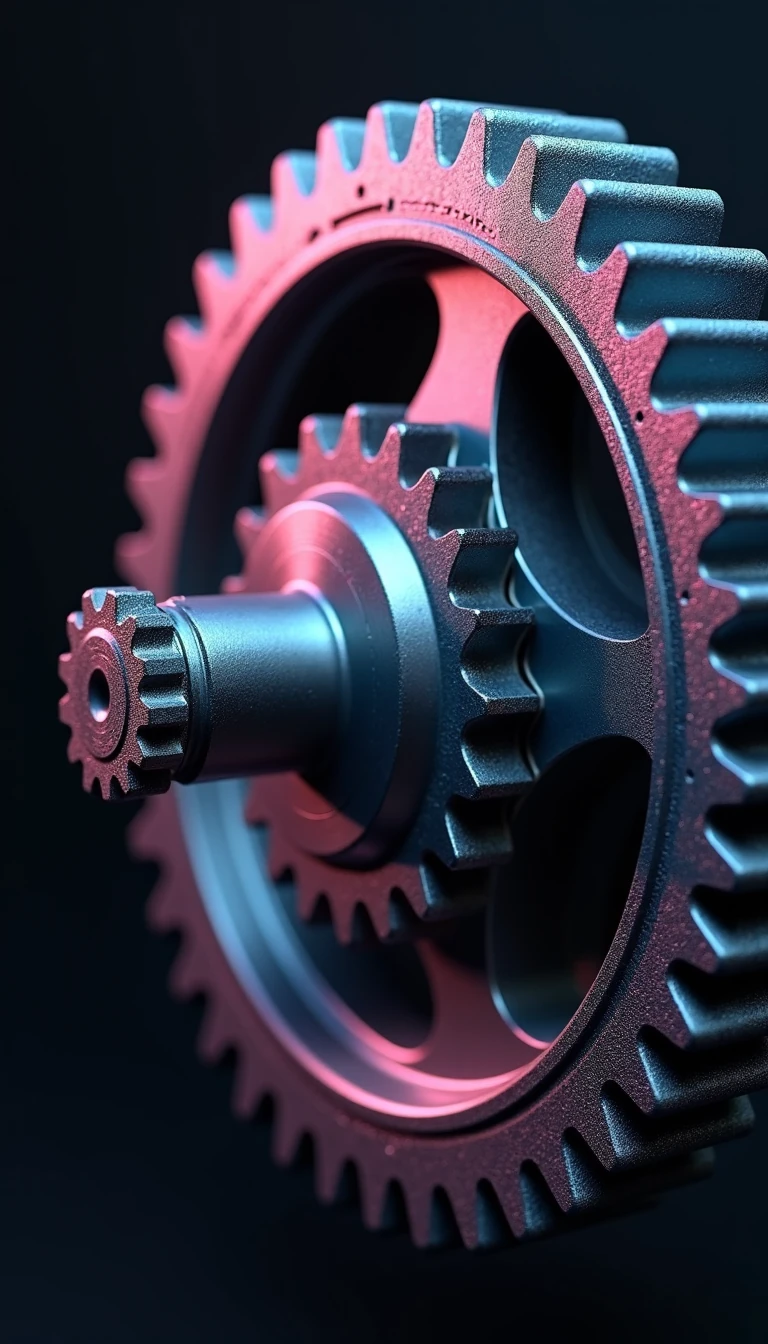 The clever mechanical clutch that lets your bicycle coast and your helicopter land safely.A freewheel is a simple device that allows a driven shaft to rotate faster than its driver. By automatically disengaging when momentum takes over, this elegant mechanism enables e…
 How counting simple letters can dismantle complex-looking secret codesFrequency analysis reveals the hidden structure of language within scrambled text. By tracking how often specific letters and patterns appear, cryptanalysts can bypass simple subs…
 How the Friedmann equations reveal the shape and ultimate fate of our entire universeIn 1922, Alexander Friedmann derived a set of equations from Einstein’s general relativity that describe how the universe expands. By modeling space as a perfect fluid, these equa…
 How a University of Chicago meteorologist turned tornado wreckage into a global scientific standardBefore Ted Fujita, there was no consistent way to measure the ferocity of a tornado. By analyzing the debris left in the wake of storms, he created a scale that transformed meteor…
 How a synthesizer-heavy sound from the 1970s defined the West Coast hip-hop eraEmerging in the early 1990s, G-funk transformed gangsta rap with slow, hypnotic grooves and melodic synthesizers. By blending Parliament-Funkadelic samples with live instrumentati…
 How a 19th-century linguist created a perfectly phonemic alphabet for the BalkansLjudevit Gaj designed a Latin script that maps every sound in Serbo-Croatian to a single character. By blending Czech, Polish, and Hungarian influences, he created a system that m…
- How a simple board of pegs reveals the hidden order of chaotic systemsThe Galton board is a deceptively simple device that transforms chaotic, random bead drops into a perfect bell curve. Invented to visualize the central limit theorem, this machine…
 The ancient city of Gamla holds the Roman Empire's largest collection of siege weaponry.Perched on a ridge shaped like a camel's hump, Gamla was a Jewish stronghold during the Great Revolt against Rome. After a brutal siege in 67 CE, the town was abandoned forever. T…
 The simple bar chart that conquered global project management for over a centuryBefore software, project managers used paper blocks to track complex schedules. Today, the Gantt chart remains a staple of industry, despite critics arguing it flattens reality an…
 How Johannes Kepler’s 17th-century invention keeps modern industry moving with simple meshing gearsInvented around 1600, the gear pump remains a cornerstone of hydraulic power and chemical processing. By using the precise meshing of gears to create constant displacement, this e…
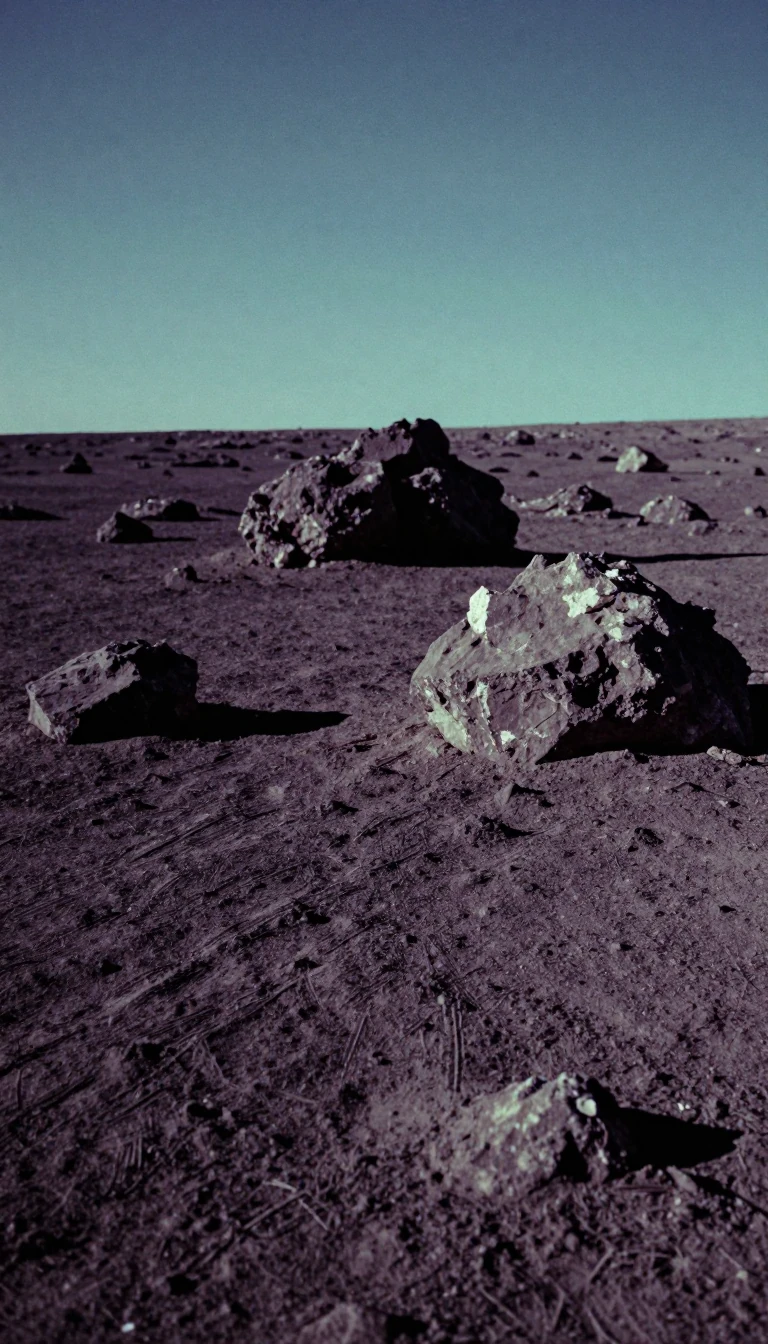 Did Apollo 15 astronauts actually discover the Moon's oldest piece of primordial crust?On August 1, 1971, Apollo 15 commander David R. Scott radioed Mission Control with a breakthrough: he believed he had found the primordial lunar crust. Known as the Genesis Rock, …
- How many holes does your coffee mug have? The surprising math of genusIn mathematics, genus is a way to measure the topological complexity of an object. While it sounds abstract, it essentially counts the number of holes in a surface. A sphere has z…
 Why the word ghoti is a brilliant trap for English spelling and pronunciationGhoti is a creative respelling of the word fish, designed to expose the chaotic inconsistencies of English orthography. While it looks like it should sound like goatee, the word r…
 How a polymer-framed pistol designed by an outsider became a global standard.Gaston Glock had zero experience in firearms when he designed the Glock 17. By leveraging his expertise in synthetic polymers and assembling a team of top military experts, he cre…
 Glosa is a language where words never change, regardless of their grammatical function.Imagine a language without plurals, verb tenses, or gendered pronouns. Glosa, an international auxiliary language derived from Latin and Greek roots, achieves this by keeping ever…
 A hidden giant in the Andes: The mystery of the Gocta CataractsFor centuries, locals in Peru kept the massive Gocta waterfall a secret, fearing a mermaid spirit guarding its waters. It was not until 2002 that an expedition brought this natura…
 Google Wave: The ambitious communication platform that tried to replace email and failedIn 2009, Google introduced Wave, a radical attempt to merge email, instant messaging, and wikis into one real-time collaborative space. It promised a future where documents were l…
 Before the gramophone, inventors tried to photograph the human voice onto lampblack-coated glass.Long before vinyl records, sound recording was a scientific pursuit of visual transcription. Early pioneers like Édouard-Léon Scott de Martinville sought to capture speech by scra…
 How a 1979 speech defined the geopolitical vocabulary of the Iranian RevolutionIn November 1979, Ayatollah Ruhollah Khomeini introduced a rhetorical framework that would define Iranian foreign policy for decades. By labeling the United States the Great Satan…
 How a life-saving cockpit alarm stopped hundreds of fatal plane crashes every yearControlled flight into terrain—when a perfectly functional plane is flown into the ground—was once a leading cause of aviation fatalities. The invention of the Ground Proximity Wa…
 Grunerite: The Iron-Rich Mineral Behind the Infamous Brown Asbestos of South AfricaGrunerite is an iron-rich silicate mineral that hides in plain sight within metamorphic rocks. While it is a fascinating subject for geologists studying complex mineral series, it…
 Can a single number truly capture the lifetime impact of a scientific career?The h-index was designed to solve a simple problem: how to measure both productivity and influence in one metric. By balancing the number of papers published against how often the…
 Why did the crew of the Civil War submarine Hunley die at their stations?When the Confederate submarine Hunley sank the USS Housatonic in 1864, it became the first combat submarine to destroy a warship. Yet, the vessel vanished with its crew. Decades l…
 The mathematical structure that maximizes volume and powers modern error correctionNamed after Jacques Hadamard, these square matrices consist entirely of 1s and -1s with perfectly orthogonal rows. Beyond their aesthetic symmetry, they represent the absolute lim…
 Why the ubiquitous three-line menu icon was originally designed as a road signThe three-line icon hiding your mobile menus is older than the modern smartphone. Designed in 1981 for the Xerox Star, it was meant to be a simple, memorable visual shorthand for …
- How mathematicians measure the minimum number of errors required to transform one string into another.In information theory, the Hamming distance quantifies the difference between two equal-length strings by counting positions where symbols mismatch. Named after Richard Hamming, t…
 The controversial military protocol that prioritized preventing soldier abductions over the lives of captives.For decades, the Israel Defense Forces utilized a secretive procedure known as the Hannibal Directive. Designed to thwart the capture of Israeli soldiers, the protocol authorized …
 The simple carbon fiber collar that ended a generation of racing fatalitiesFor decades, race car drivers died from basilar skull fractures, their bodies held by seat belts while their heads kept moving. The HANS device, a U-shaped carbon fiber collar, ch…
 Why your cells have a built-in expiration date and stop dividing after sixty cyclesFor decades, science believed human cells were immortal. Leonard Hayflick shattered this dogma in 1965, proving that normal cells possess an internal counter. After forty to sixty…
- This ancient red giant star is nearly as old as the universe itselfLocated 9,900 light-years away, HE 1523-0901 is a relic of the early cosmos. By analyzing the radioactive decay of uranium and thorium, astronomers have dated this metal-poor star…
 The Heckelphone: A Rare Orchestral Giant That Bridges Oboes and BassoonsStanding over four feet tall, the heckelphone is a rare, heavy double-reed instrument designed to add a penetrating, broad voice to the orchestral middle register. Though it debut…
- The Heimlich maneuver is a life-saving intervention, but its history is deeply controversial.The Heimlich maneuver is a standard first-aid procedure for choking, yet its origins and promotion are shrouded in debate. While it effectively uses abdominal pressure to clear ai…
 The botanical secret behind your morning orange is a mythic golden appleYou might call it a citrus fruit, but botanists classify the orange as a hesperidium. This modified berry features a leathery rind and juice-filled vesicles, a structure named aft…
 How a simple shopping cart solution became the web's most controversial tracking toolCookies were invented in 1994 to solve a mundane technical problem: how to help a web server remember items in a virtual shopping cart. Today, these small data packets are the bac…
 Why Microsoft programmers prefixed their variables with cryptic codes like lAccountNum and szNameHungarian notation is a naming convention where variable names start with lowercase mnemonics indicating their purpose or data type. Invented by Charles Simonyi at Xerox PARC, the…
- The fifteenth-century Korean fire cart that rained hundreds of rockets on invading samurai armiesLong before modern rocket artillery, Korea developed the hwacha. This mobile wooden platform could launch up to 200 rocket-powered arrows in a single volley. By turning dense infa…