 Intellect Plus
Inventions
983 cards. Each one is a 40-second story with a five-minute read behind it. Page 8 of 17.
 Matroids: The hidden mathematical structure unifying linear algebra and graph theoryMatroids are elegant structures that abstract the concept of linear independence. By stripping away the specific details of vector spaces and graphs, they reveal the underlying ru…
 The 1990 cryptographic algorithm that still secures passwords on modern Windows systemsDeveloped by Ronald Rivest in 1990, the MD4 hash function was designed to produce 128-bit message digests. Despite being officially declared obsolete in 2011, this algorithm remai…
 How a failed alchemist’s quest for gold accidentally birthed Europe’s most coveted luxury porcelain.In 1708, Johann Friedrich Böttger was a prisoner tasked with turning base metals into gold for the King of Poland. He failed at alchemy, but his secret experiments with kaolin cla…
- How Mendeleev used Sanskrit to name elements that had not been discovered yetWhen Dmitri Mendeleev published his periodic table in 1869, he left deliberate gaps for elements he knew must exist. To name these placeholders, he borrowed Sanskrit digits—eka, d…
 Before calculus, mathematicians calculated complex areas by systematically exhausting the space within a shape.Long before modern calculus, ancient scholars solved the geometry of circles and spheres by inscribing polygons within them. By increasing the number of sides, they squeezed the u…
 How a simple screw transforms tiny, invisible gaps into readable, precise mechanical measurements.A micrometer is a masterpiece of mechanical amplification. By using a precisely calibrated screw, it turns minuscule axial movements into large, readable rotations. This clever de…
 Why the Internet is stuck on version 1.0 of its most vital email standardMultipurpose Internet Mail Extensions, or MIME, transformed email from simple text into a rich medium for images, audio, and attachments. Yet, despite its foundational role in mod…
 How a tiny motherboard standard transformed computing from industrial kiosks to vintage toastersDeveloped in 2001, the 170 mm by 170 mm Mini-ITX form factor was originally a niche solution for low-power, fanless systems. Today, this compact standard powers everything from se…
 The Minkowski inequality proves that the shortest distance between two points is a straight line.Named after German mathematician Hermann Minkowski, this fundamental principle establishes the triangle inequality for normed vector spaces. It provides a rigorous mathematical fr…
 Before streaming giants dominated, Miro promised a decentralized future for internet televisionLaunched in 2005 as Democracy Player, Miro was an ambitious open-source project designed to unify the fragmented world of online video. By automating downloads from RSS channels a…
 How a mechanical engineer turned circus toys into a revolution in modern artAlexander Calder, a trained engineer, transformed the art world by applying physics to sculpture. By evolving his miniature circus performances into delicate, air-activated wire a…
 How a delicate Japanese dumpling became a global frozen dessert sensationMochi ice cream is a sophisticated fusion of pounded sticky rice and creamy filling. While it seems simple, perfecting this treat required over a decade of research and developmen…
 How 20th-century biologists reconciled Darwin’s natural selection with the precision of Mendelian genetics.The modern synthesis transformed biology from a collection of competing theories into a unified, mathematical science. By bridging the gap between Darwinian evolution and Mendelia…
 Could our understanding of gravity be wrong at the edge of the galaxy?Modified Newtonian dynamics, or MOND, suggests that Newton's laws of motion are incomplete. While they work perfectly in high-acceleration environments like our Solar System, MOND…
 Why a rare neurological condition can mask a person's true emotional depthMoebius syndrome is a rare congenital condition that leaves individuals unable to smile, frown, or move their eyes laterally. Because human connection relies heavily on facial mim…
 Why a 1905 industrial alloy still protects the world's most extreme machinesCreated over a century ago, Monel is a nickel-copper alloy prized for its near-invincibility against corrosive environments. From the depths of the ocean to the intense heat of ro…
 The Moodswinger is a twelve-string electric zither that defies traditional guitar design principlesDesigned by Yuri Landman, the Moodswinger is an electric twelve-string zither featuring a unique third bridge. By dividing strings into two segments, it produces complex, bell-lik…
 Why your digital devices rely on the elegant logic of the Moore machineIn the world of computing, a Moore machine is a finite-state system where output depends strictly on your current state, not your immediate input. This elegant design, introduced …
- The involuntary survival mechanism that helps newborns signal for help when they feel fallingThe Moro reflex is an automatic, protective response present at birth that triggers when a baby feels a sudden loss of support. Named after German pediatrician Ernst Moro, this re…
- Can a rigid shape navigate a tight corner? Geometry finally has a definitive answer.The moving sofa problem asks for the largest two-dimensional shape that can slide through an L-shaped hallway of unit width. While it sounds like a simple furniture-moving dilemma…
 Why the Multilayer Perceptron is the foundational engine of modern deep learningDespite its name, the multilayer perceptron is not actually a perceptron. It is a sophisticated, dense neural network capable of solving complex, non-linear problems. As the bedro…
 Why modern networks use labels instead of addresses to move your data packetsMultiprotocol Label Switching, or MPLS, revolutionized telecommunications by directing data through networks using simple labels rather than complex address lookups. Originally de…
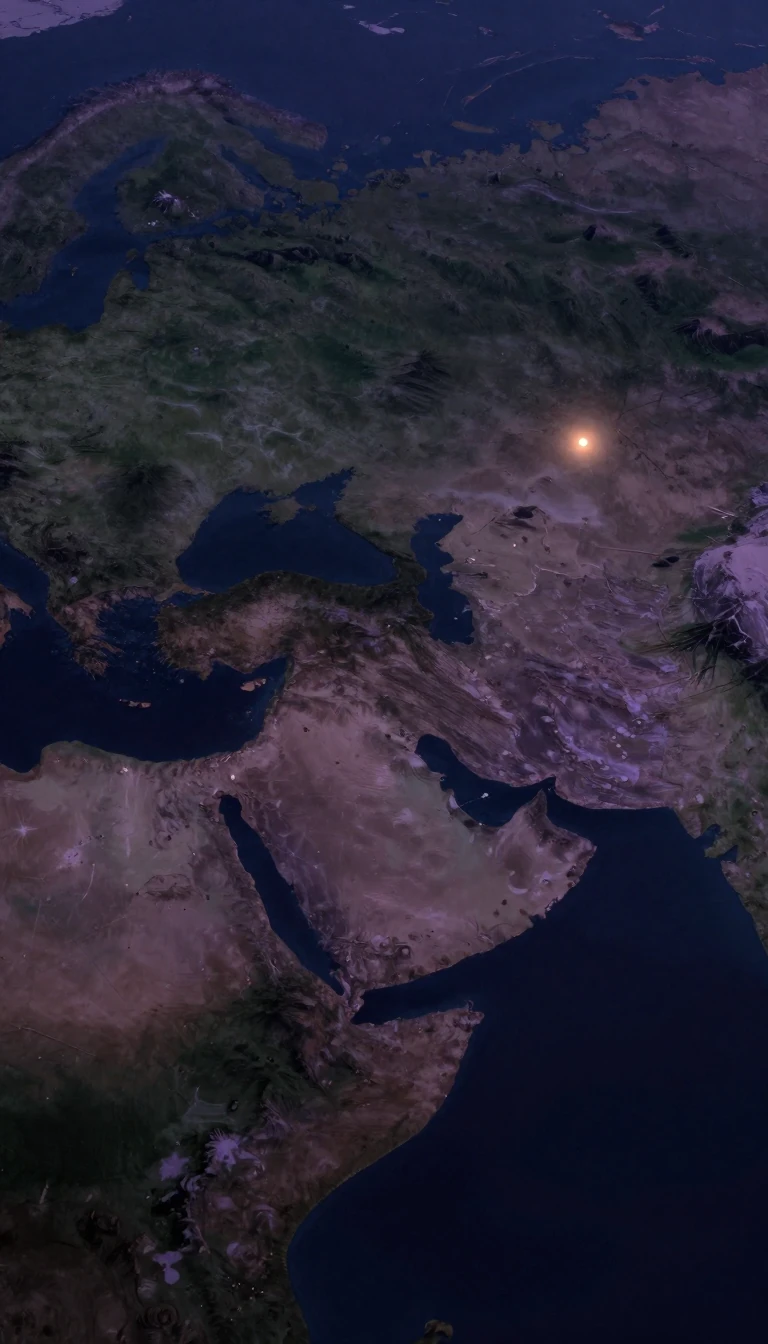 Did modern humans evolve globally or just replace everyone else from an African base?The multiregional hypothesis suggests humans evolved as a single, continuous species across the globe for two million years. While the African replacement model remains the domina…
 Why nations cannot simultaneously control their exchange rate, capital flows, and monetary policyThe Mundell-Fleming model reveals a rigid economic constraint known as the impossible trinity. It dictates that a country can only achieve two of three goals: a fixed exchange rat…
 The Muratorian Fragment: An Ancient List That Helped Define the New Testament CanonDiscovered in 1740, this damaged Latin manuscript offers a rare glimpse into the early Christian struggle to identify which sacred writings were truly authoritative. It remains a …
 Why the iconic three-flavor ice cream block has nothing to do with NaplesNeapolitan ice cream is a global staple, yet its name is a historical misnomer. Despite the Italian association, the treat originated in Prussia. It was never intended to be a sim…
 How Neo-Dada artists turned trash into treasure to mock the commercial art worldIn the 1950s and 60s, Neo-Dada artists rejected the emotional intensity of Abstract Expressionism. Instead, they embraced playfulness and appropriation, transforming everyday obje…
- Can scientific optical theory transform a simple canvas into a masterpiece of light?Neo-Impressionism rejected the spontaneous, fleeting nature of Impressionism in favor of rigorous, calculated science. By applying tiny, contrasting dots of color, these painters …
 Beyond the sign: how a simple neon bulb powered early computing and televisionWhile neon signs define city skylines, the miniature neon lamp is a hidden workhorse of 20th-century technology. Far more than a simple indicator light, these gas-filled capsules …
- Can a military force win by turning its entire battlefield into a single computer network?Network-centric warfare aims to replace traditional combat with a hyper-connected system where sensors, commanders, and shooters share real-time data. By flattening hierarchies an…
 Before the relational database, the network model mapped the world as a complex graphIn the 1970s, the network model revolutionized data management by allowing records to have multiple parents. Unlike rigid hierarchical trees, this graph-based approach mirrored re…
 A massive spiral galaxy sits forty million light-years away in the constellation VirgoDiscovered in 1784 by William Herschel, NGC 4517 is a striking spiral galaxy that anchors a distant corner of the cosmos. Located within the Virgo II Groups, this celestial struct…
 Every triangle hides a secret circle passing through nine distinct, mathematically significant points.Geometry reveals a hidden symmetry in every triangle: a single circle that connects nine specific locations, including side midpoints and altitude feet. Known by many names, this …
 The volatile yellow oil that blinded two of history's greatest scientistsNitrogen trichloride is a pungent, yellow, oily liquid that is as dangerous as it is common. While it once bleached flour, it is now best known as the source of the sharp smell in…
 Could a single ancient tongue be the ancestor of most northern Eurasian languages?The Nostratic hypothesis suggests that major language families, including Indo-European and Uralic, share a common origin. First proposed in 1903, this controversial theory attemp…
 The Roman concept of numen: divine power or just a simple nod?In ancient Rome, numen was not a god, but a mysterious, abstract force. Derived from the Latin for a nod, it represented the expression of divine will or power. It was a flexible,…
 Can a simple five-letter label accurately summarize the complex nutritional value of your food?The Nutri-Score system assigns food a letter from A to E, using a color-coded scale to simplify nutritional choices. Developed in France, this algorithm weighs beneficial ingredie…
- The division sign on your keyboard is actually an ancient tool for skewering textYou know it as the division symbol, but the obelus has a much sharper history. Originating in Ancient Greece as a mark for editorial skepticism, this symbol was designed to skewer…
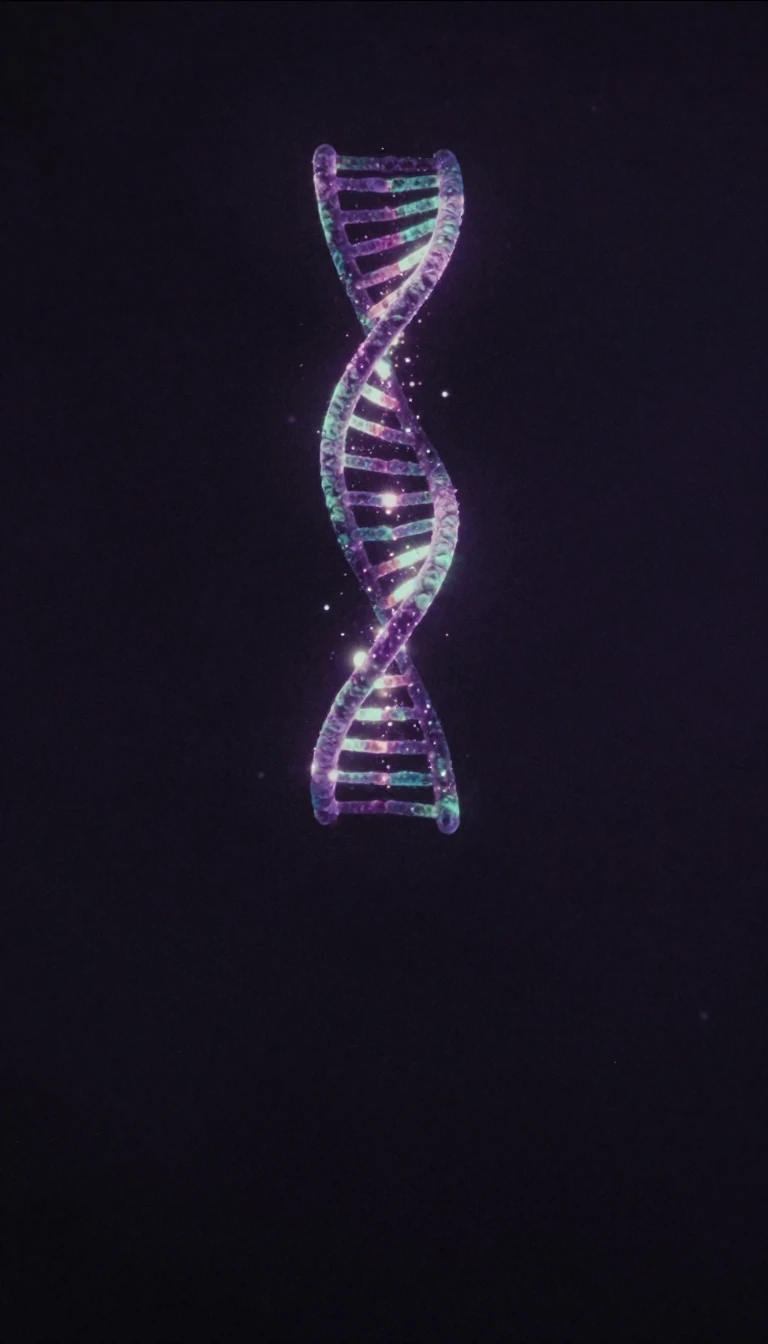 Why your cells must build DNA in tiny, fragmented, and discontinuous piecesDNA replication is a high-speed feat, but it hits a structural wall. Because enzymes only work in one direction, one strand of your DNA is built continuously, while the other is f…
 Does a rise in unemployment always signal a predictable drop in national economic output?Proposed in 1962, Okun's law suggests a consistent link between jobless rates and GDP growth. While it remains a staple for economic forecasting, its reliability fluctuates signif…
 How a stolen recipe became the world's most ubiquitous and adaptable holiday saladInvented in 1860s Moscow by Lucien Olivier, this salad evolved from a gourmet dish of grouse and crayfish into a global staple. After a sous-chef stole the secret dressing recipe,…
 Can a machine capture the soul of a cello through electronic radio waves?Invented in 1928, the ondes Martenot is an early electronic instrument designed to replicate the expressive nuance of a cello. By manipulating a metal ring or a lateral-vibrato ke…
 Why the open society is a fragile, ongoing experiment in human critical thinkingCoined by Henri Bergson and defined by Karl Popper, the open society is not a static political system but a state of mind. It rejects the rigid, tribal certainties of closed socie…
- Why languages break rules: Optimality theory explains how we balance conflicting linguistic demands.Language is not a rigid set of rules, but a constant negotiation. Optimality theory suggests that every language is a unique ranking of universal constraints. When these demands c…
- How scientists use light to flip the switches of living brain cellsOptogenetics allows researchers to control specific cells in living animals with incredible precision. By using light-sensitive proteins derived from algae and bacteria, scientist…
 The Russian aristocrat who engineered a horse breed to conquer the world's racetracksCount Alexei Orlov spent his fortune creating the Orlov Trotter, a horse designed for both elegance and raw speed. By crossing Arabian stallions with European mares, he produced a…
 Why early 20th-century painters tried to turn the canvas into a musical instrumentIn 1912, a group of artists led by Robert and Sonia Delaunay broke away from the muted tones of Cubism. They sought to create a new visual language, using bold, prismatic color an…
- How a century-old chemical reaction feeds the world and fuels modern industryThe Ostwald process is the silent engine behind global agriculture. By converting ammonia into nitric acid, it provides the essential raw material for the vast majority of synthet…
 Why some libertarians abandoned avant-garde culture to embrace tradition and right-wing populismEmerging in the post-Cold War era, paleolibertarianism sought to bridge the gap between free-market economics and cultural conservatism. By rejecting the social avant-garde and Be…
- Your pancreas hides a tiny, vital organ that regulates your body's energy supplyScattered throughout your pancreas are roughly one million microscopic clusters of cells known as the islets of Langerhans. These tiny patches act as the body's metabolic command …
- Before genes, Darwin proposed that our entire bodies sent particles to our offspring.In 1868, Charles Darwin introduced pangenesis, a bold theory suggesting that every cell in an organism sheds tiny hereditary particles called gemmules. These particles supposedly …
 How 13.4 million leaked documents exposed the hidden architecture of global offshore financeThe Paradise Papers revealed how the world's wealthiest individuals and corporations utilize offshore jurisdictions to manage assets, minimize tax liabilities, and obscure ownersh…
- Why solving a few problems can fix almost everything in your business processesThe Pareto chart is a simple yet powerful tool that separates the vital few from the trivial many. By visualizing data in descending order, it reveals exactly which defects or iss…
- The parking meter was born from a legal battle over public street rights.Invented in 1935 to manage traffic in Oklahoma City, the parking meter transformed urban space into a commodity. While early mechanical models relied on simple coin slots and spri…
 That bright red cheek rash in children is often a sign of Parvovirus B19.Known as fifth disease, this common viral infection is frequently mild, yet it behaves differently depending on your age and health status. While children often develop a distinct…
 Before the digital age, a teenage mathematician built the world's first mechanical calculator.In 1642, eighteen-year-old Blaise Pascal sought to ease his father's grueling tax administration work in Rouen. He engineered the Pascaline, a revolutionary device that performed …
- PCI-X was the high-speed server standard that lost the war to serial connectivity.Before modern serial buses dominated, engineers built PCI-X to push parallel computing to its absolute physical limits. Designed to supercharge servers, it promised massive bandwi…
 How a Swan-Shaped Ice Sculpture Inspired a Culinary Classic at the Savoy HotelIn 1892, French chef Auguste Escoffier crafted a dessert to honor soprano Nellie Melba. Originally served in a silver dish atop an ice swan, the dish evolved from a simple pairing…
- Why the standard metric for birth control effectiveness is fundamentally flawed and misleadingFor over eighty years, the Pearl Index has been the go-to metric for measuring contraceptive failure. While its simplicity makes it popular in clinical trials, it relies on a flaw…
 How electricity can move heat to create cooling without any moving partsThe Peltier effect allows for the direct conversion of electricity into temperature differences. By running a current through a junction of two different conductors, heat is absor…