 Intellect Plus
Inventions
983 cards. Each one is a 40-second story with a five-minute read behind it. Page 7 of 17.
 Why this massive celestial bird is actually a complex collection of cosmic cloudsSpanning the border of Monoceros and Canis Major, the nebula known as IC 2177 is a striking sight. While often called the Seagull Nebula, this moniker is technically a misnomer. T…
- The Retina Nebula: Why a Dying Star Looks Like a Perfect Geometric DonutIC 4406, known as the Retina Nebula, is a dying star that reveals a stunning, symmetrical structure. From our vantage point on Earth, we see this celestial object edge-on, transfo…
 The Jellyfish Nebula is a cosmic wreckage site shaped by a dense molecular cloudKnown as the Jellyfish Nebula, IC 443 is a supernova remnant located 5,000 light years away. This celestial structure is not merely an expanding shell of gas; it is a complex labo…
 How a failed ice block business gave us the modern ice resurfacerBefore 1949, smoothing an ice rink required manual labor from three or four workers. Frank Zamboni, a refrigeration expert, transformed this grueling process by inventing a vehicl…
 Can two distinct objects truly share every single property in the entire universe?The identity of indiscernibles poses a radical question: if two things are truly identical in every possible property, are they actually just one thing? This metaphysical principl…
 How a failed attempt to save Volapük accidentally birthed a new international languageIn the late 19th century, the International Academy of the Universal Language sought to perfect Volapük. Instead, they radically overhauled its grammar and vocabulary until it bec…
 Every social interaction is a performance where you are both the actor and director.We constantly curate how others perceive us, a process known as impression management. Whether through the clothes we wear, the photos we share, or the way we speak, we are active…
 How scholars reconstructed a lost language family without a single written recordFor centuries, linguists suspected that languages as diverse as Sanskrit and English shared a common ancestor. By systematically stripping away loanwords and analyzing grammatical…
 How an Indonesian instant noodle brand became a global cultural phenomenonIndomie is more than a quick meal; it is a massive industrial success story. Produced by the billions annually, this Indonesian staple has transcended its origins to become a hous…
 Before the transformer, there was the induction coil, a spark-throwing marvel of Victorian engineering.Invented in 1836, the induction coil was the world's first transformer. By rapidly interrupting a low-voltage current, it forced magnetic fields to collapse, generating thousands …
 Informalism: Two distinct movements sharing a name but worlds apart in their goals.The term informalism describes two radically different intellectual traditions. In philosophy, it is a 20th-century movement prioritizing ordinary language and common sense over r…
 Why communication across cultures is more than just learning a new languageIntercultural communication explores how social groups, religions, and ethnicities shape the way we encode and interpret messages. It is not merely about translation; it is a comp…
- Can a language built on scientific roots solve the global problem of human communication?During World War II, biologist Lancelot Hogben designed Interglossa, an auxiliary language intended to bridge international divides. By stripping away complex grammar and utilizin…
 Can a constructed language survive when its creator is silenced by war and history?Created in 1922 by Edgar de Wahl, Interlingue—originally called Occidental—sought to bridge the gap between grammatical regularity and naturalistic vocabulary. Despite early succe…
 Why aviation relies on a hypothetical, dry, and perfectly still atmosphere to stay safe.To ensure planes fly predictably, engineers use the International Standard Atmosphere—a static, idealized model of Earth's air. It ignores wind, humidity, and weather, providing a…
 Is mathematics a discovery of objective truth or a human mental construction?Intuitionism challenges the idea that mathematical truths exist independently of us. Instead, it argues that math is a product of our own mental activity. To an intuitionist, a st…
 Invar is the metal that refuses to change size when the temperature shifts.Most metals expand when heated and contract when cooled, but Invar is different. This nickel-iron alloy remains remarkably stable across temperature fluctuations, a property that …
 Iodoform is a pungent yellow crystal that once defined the scent of modern medicine.Before modern antiseptics took over, the distinct, hospital-like smell of iodoform was a ubiquitous sign of medical care. This bright yellow, dense compound remains a curious reli…
 How physicists use oscillating electric fields to suspend atoms in thin airTo trap an ion, you cannot simply rely on static electricity; Earnshaw's theorem forbids it. Instead, scientists use ingenious devices called ion traps. By rapidly switching elect…
 The digital evolution of surveillance: How IP cameras transformed from niche tools to household staples.In 1996, the first IP camera couldn't even stream video, offering only single static images. Today, these devices are ubiquitous, powered by cloud infrastructure and artificial in…
 Can you see the hidden numbers? The science behind the Ishihara color testSince 1917, the Ishihara test has been the gold standard for identifying red-green color deficiencies. By using plates of randomized colored dots, it forces the eye to distinguish…
- Why the fishbone diagram is the ultimate tool for solving complex industrial problemsNamed for its resemblance to a fish skeleton, the Ishikawa diagram is a visual powerhouse for root-cause analysis. By mapping potential factors as ribs branching from a central sp…
 Why Japan’s Paleolithic Inhabitants Were Thousands of Years Ahead of Their TimeJapan’s ancient history is far more than a footnote in Asian migration. With over 10,000 well-dated sites, the archipelago reveals a sophisticated society that mastered unique tec…
- How a fraudulent conspiracy theory fueled the ideological justification for the HolocaustJewish Bolshevism was an antisemitic myth claiming that a secret Jewish cabal orchestrated the Russian Revolution to destroy Western civilization. Far from a fringe belief, this c…
 How a 1925 philosophical prediction was twisted into a modern political conspiracy theoryThe Kalergi Plan is a far-right conspiracy theory that alleges a secret plot to replace white Europeans through mass immigration. While it claims to be based on the writings of po…
 How a 19th-century discovery lets us shutter light at ten billion times per second.In the late 1800s, physicist John Kerr discovered that applying an electric field to certain liquids could force light to change its behavior. This phenomenon, now known as the Ke…
 How rotating black holes drag the very fabric of space along with themGeneral relativity predicts that massive, spinning objects do not just sit in space; they warp it. The Kerr metric describes this phenomenon, where a rotating black hole forces ne…
 Why a simple chocolate egg became a global contraband item and collector obsessionSince 1974, Ferrero has sold 30 billion Kinder Surprise eggs. While they are a beloved treat in Europe, they remain strictly illegal to import into the United States. This chocola…
 Why the most sophisticated engineering often relies on the simplest possible designThe KISS principle, or Keep It Simple, Stupid, is a design philosophy that prioritizes simplicity to ensure reliability. Popularized by legendary Lockheed engineer Kelly Johnson, …
 The Polish Konik: A hardy horse breed caught between conservation and ethical controversyThe Konik, a small horse breed from Poland, was once thought to be a living remnant of the extinct wild tarpan. While genetic science has debunked this myth, the breed remains a f…
 Is the legendary Kusanagi sword a divine relic or a lost artifact of history?The Kusanagi-no-Tsurugi is one of Japan's three Imperial Regalia, symbolizing valor. While folklore claims it was pulled from a serpent's tail, historical accounts suggest a more …
 Was Ukraine’s most iconic dessert born from a kitchen disaster or deliberate culinary design?The Kyiv cake is a symbol of its namesake city, famous for its layers of meringue and hazelnut. While popular lore suggests it was the accidental result of forgotten ingredients, …
 How a tiny virus became the master key to understanding modern genetic engineeringDiscovered by accident in 1951, the lambda bacteriophage transformed biology. By acting as a simple, manageable model for complex genetic decisions, this virus allowed researchers…
 Why pilots and national governments rely on a 250-year-old geometric trick for mappingTo flatten the curved Earth onto a page, cartographers use the Lambert conformal conic projection. By conceptually wrapping a cone around the globe, this method minimizes distorti…
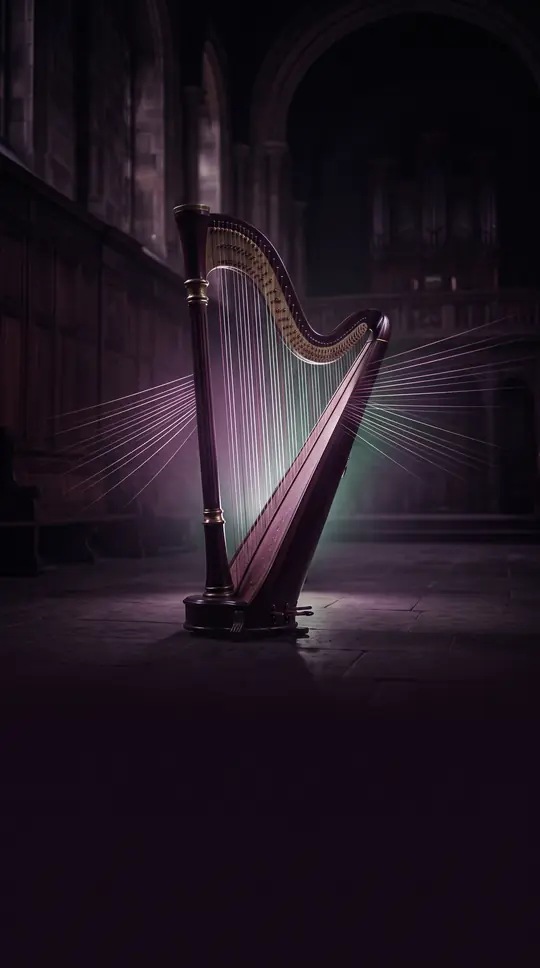 The laser harp: A musical instrument played by blocking beams of lightA laser harp is an electronic interface that produces sound when a performer interrupts projected light beams. Popularized by Jean-Michel Jarre, these instruments range from frame…
 The secret machine that taught millions of Americans when to laugh at televisionFor decades, the sound of television laughter was not a spontaneous reaction, but a carefully engineered performance. Pioneered by sound engineer Charley Douglass, the mysterious …
 The mesmerizing motion of a lava lamp is actually a complex fluid physics experimentInvented in 1963 by Edward Craven Walker, the lava lamp is more than a psychedelic relic. Beneath its glowing exterior lies a delicate balance of density, heat, and surface tensio…
 When a child's hip bone dies and reforms, the shape of their future matters.Legg-Calve-Perthes disease is a rare, mysterious condition where blood supply to the femoral head is temporarily cut off, causing the bone to weaken and collapse. While the body e…
 How a clever dictionary trick became the backbone of early digital image compressionBefore modern streaming, the Lempel-Ziv-Welch algorithm revolutionized data storage by building an adaptive dictionary on the fly. By replacing repeated sequences with shorter cod…
 How computers measure the gap between two words using simple mathEver wonder how your phone knows you meant to type a different word? The Levenshtein distance is the secret engine behind spell checkers and search engines. By calculating the min…
 The world's most important interest rate was built on a foundation of estimates.For decades, the London Inter-Bank Offered Rate (Libor) served as the global benchmark for over $350 trillion in financial products. Yet, it was never a hard market price. Instead…
- The limaçon is a geometric shape that mimics the graceful, spiraling path of a snail.Known as the Pascal's Snail, the limaçon is a fascinating curve generated by rolling one circle around another. Depending on the placement of a fixed point, this shape can morph f…
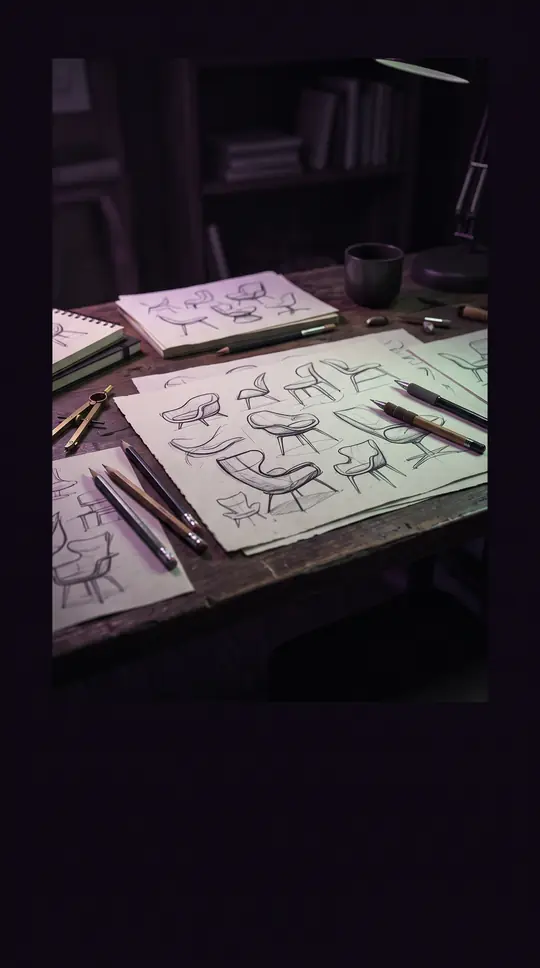 Why your code breaks when you swap a parent class for its childThe Liskov substitution principle dictates that a subclass must be fully interchangeable with its parent without disrupting program logic. If your software fails when a child obje…
 How shock waves turn painful kidney stones into dust without a single incisionKidney stones can be agonizing, but modern medicine offers a way to shatter them without surgery. Extracorporeal shock wave lithotripsy uses focused energy to pulverize stones int…
 The viral claim of a room-temperature superconductor that turned out to be an insulator.In July 2023, researchers sparked global excitement by announcing a material capable of room-temperature superconductivity. The discovery promised to revolutionize energy transmis…
 The accidental dance move that defined funk: how Don Campbell invented lockingIn the late 1960s, a dancer named Don Campbell struggled to perform a move called the funky chicken. He froze mid-motion, creating an unintended pause that captivated audiences. T…
- Do you control your life, or does fate? The psychology of your personal locus.Locus of control defines whether you believe your life outcomes result from your own actions or from external forces like luck, fate, or powerful others. Developed by Julian B. Ro…
 How a 1960s robot turtle taught a generation to think like a computerDesigned in 1967, Logo was more than a coding language; it was a psychological tool. By controlling an on-screen cursor or a physical floor robot, students learned to reason throu…
 How the brain encodes memories by strengthening connections between existing neuronsFor decades, scientists struggled to explain how we learn without constantly growing new brain cells. The answer lies in long-term potentiation, a process where repeated neural ac…
 The remote Luitpold Coast holds secrets of Antarctic exploration and rare wildlife coloniesTucked away in the frozen expanse of Coats Land, the Luitpold Coast is a testament to early twentieth-century exploration and modern scientific monitoring. From its discovery by G…
 Why it is impossible to prove any absolute truth without hitting a dead end.Ever wonder how we know what we know? The Münchhausen trilemma suggests that every attempt to provide a rock-solid justification for a claim inevitably fails. Whether you rely on …
 The Macintosh 128K was a revolutionary, fanless, and surprisingly divisive desktop computer.Launched in 1984, the Macintosh 128K introduced the world to the graphical user interface, a mouse, and a compact, all-in-one design. While it captured the public imagination as a…
 The small sponge cake that became a global symbol of involuntary memoryThe madeleine is more than a scallop-shaped sponge cake. While its origins remain shrouded in 18th-century folklore, its true legacy was cemented by Marcel Proust. He transformed …
 Why teams of horses could not pull apart two simple brass hemispheresIn 1654, the Mayor of Magdeburg staged a dramatic spectacle to prove the crushing weight of the air we breathe. By creating a vacuum between two sealed brass bowls, he rendered th…
 The glowing vacuum tube that helped mid-century listeners find their favorite radio stationsBefore digital screens, the magic eye tube offered a mesmerizing, glowing green interface for tuning radios. Invented in 1932, this miniature cathode ray tube replaced clunky need…
- The contested origins of the Mai Tai, a mid-century tropical cocktail iconThe Mai Tai is a staple of Tiki culture, yet its true creator remains a subject of debate. While Victor J. Bergeron claimed to invent the drink in 1944, his rival Donn Beach argue…
 How a wartime train ride led to a revolution in telescope designIn 1941, Soviet optician Dmitri Maksutov conceived a breakthrough in optical engineering while fleeing Leningrad. By replacing complex corrector plates with a simple, spherical me…
 The Manchester Baby: How a 1948 experiment birthed the modern digital ageOn June 21, 1948, a machine nicknamed The Baby performed its first program at the University of Manchester. It was not built to be a practical engine, but rather a testbed for new…
 The Austro-Hungarian straight-pull rifle that defined a generation of rapid-fire combatDesigned by Ferdinand Ritter von Mannlicher, the M1895 rifle replaced the traditional four-step bolt action with a revolutionary two-step straight-pull system. This innovation all…
- The Arctic waterway that hosted the world's most powerful nuclear explosionsHidden within the remote Novaya Zemlya archipelago lies the Matochkin Strait, a narrow passage connecting the Barents and Kara Seas. Beyond its icy, treacherous waters, this regio…