 Intellect Plus
Cards starting with H
40,576 cards. Page 483 of 677.
 How do the houses we inhabit shape our identities in Latin American literature?This episode explores how domestic spaces serve as powerful reflections of the self within Latin American literature. By examining iconic works, the video highlights the deep conn…
 How do the largest animals in history survive on prey the size of paper clips?Blue whales are the biggest creatures to ever exist, yet they sustain themselves on tiny krill. Scientists are now using high-tech sensors and cameras to decode the biomechanical …
 How do the largest creatures in our oceans compare to human scale?This video explores the immense physical proportions of marine life, providing a visual comparison between sea creatures and humans to illustrate just how massive these animals ca…
 How do the most violent explosions in the universe create their blinding light?Gamma-ray bursts release immense energy in seconds, yet their light defies simple explanation. To avoid being blocked by their own density, these bursts must travel at nearly the …
 How do the rooms we inhabit shape the human experience?This TED Radio Hour explores how our homes, buildings, and environments provide meaning, influence the music we create, and even assist in the healing process.
 How do the world's largest airports actually compare in physical size and scale?This video examines the massive infrastructure behind the world's largest airports. It provides a visual breakdown of their physical footprints, helping viewers grasp the sheer sc…
 How do the world's largest invertebrates survive in the lightless, crushing deep ocean?The giant squid is a creature of legend, yet it remains one of Earth's most elusive mysteries. Despite its massive size, this deep-sea inhabitant was rarely seen alive until the 2…
 How do the world's most advanced racing machines actually work?This video serves as an introduction to a technical series exploring the complex engineering behind Formula One. It examines the sophisticated technologies that allow these cars t…
 How do the world's most famous M1 Garand clones actually compare?General George S. Patton once called the M1 Garand the finest battle implement ever created. This video examines how that legendary design influenced and was replicated by other n…
 How do the world's most massive engineering feats actually stack up against each other?This video explores the immense scale of the world's largest dams. It provides a visual comparison of these colossal structures, offering context on the engineering required to ma…
 How do theologians define the nature of a God who is beyond human comprehension?Christian theology is the systematic study of the divine, drawing on scripture and tradition to navigate complex questions about God's nature. From the distinction between general…
 How do thermal properties and hysteresis influence the power of a rubber band slingshot?Destin Sandlin explores the mechanics of slingshots alongside Jörg Sprave, an expert in creative destruction. This video examines the physics behind rubber band performance, speci…
 How do these massive constrictors see in the dark without using their eyes?Pythons are not just masters of constriction; they are equipped with specialized heat-sensing pits that allow them to perceive the thermal shadows of prey in total darkness. These…
 How do these tiny, dependent archaea identify and latch onto their specific hosts?Nanobdellati are ultrasmall archaea that cannot survive alone. To thrive, they must attach to specific host cells and siphon vital nutrients. Recent research into their unique gly…
 How do thousands of fireflies coordinate their light displays in perfect unison?This video investigates the biological phenomenon of synchronous fireflies. It explores the mechanisms behind how these insects achieve collective flashing patterns, offering a lo…
- How do tiny autonomous robots navigate complex mazes at breakneck speeds?This video explores the All-Japan Micromouse Competition, a high-stakes event where small, self-navigating robots race to solve intricate mazes. It offers a rare look at the preci…
 How do top space institutions adapt to an increasingly crowded and commercialized orbit?As space becomes more competitive, leaders from NASA's Jet Propulsion Laboratory and The Aerospace Corporation discuss the future of the space economy. This conversation explores …
 How do traditional rotor blades enable a tonne of metal to achieve controlled flight?Helicopters rely on sophisticated engineering to defy gravity and navigate the skies. By examining the construction of traditional rotor blades, we uncover the fundamental aerodyn…
 How Do Trains Keep Current Flowing Across Miles of Wires?The continuous flow of power to electric trains relies on a complex, engineered system overhead. This infrastructure must manage not only the current but also the mechanical stres…
 How do transformer models actually process information? A breakdown of the attention mechanism.This video demystifies the core architecture of modern large language models. By visualizing self-attention, multiple heads, and cross-attention, it offers a clear look at the mat…
 How do transformer models actually store information within their multilayer perceptron layers?This video investigates the internal mechanisms of transformer models, specifically focusing on how multilayer perceptrons might function as storage for factual information. It pr…
 How do translators shape the emotional landscape of a classic Victorian novel?Charles Dickens's David Copperfield is a masterpiece of growth and change, but how does its emotional core survive the journey into another language? Recent computational analysis…
 How do trees pull water 100 meters against the force of gravity?Trees defy gravity by generating immense negative pressure to transport water to their highest branches. This video explores the physics behind this process, revealing how trees m…
 How do turtles survive the harsh transition from frozen landscapes to sandy shores?This compilation explores the remarkable resilience of turtles and tortoises across diverse environments. From the challenges faced by tiny hatchlings to the endurance of ancient …
 How do underground caverns emerge from the relentless action of flowing water?ESA instructor Jo de Waele explains the geological origins of caves to astronauts preparing for the CAVES training program. This lecture details the fundamental processes of spele…
 How do urban dwellers navigate the complexities of modern romance?In the bustling streets of South Korea, six individuals share their raw dating experiences through a unique interview format. This South Korean series explores the intersection of…
 How do vampire bats survive on a diet consisting entirely of blood?Vampire bats are a biological anomaly, thriving on a liquid diet that would be lethal to most other mammals. This video follows researchers from the jungles of Brazil to a genomic…
 How do vectors and scalars help us map motion in two dimensions?This video explores the fundamental distinction between vectors and scalars. By understanding these concepts, you can begin to calculate and predict complex movement, such as the …
 How do venomous creatures survive their own deadly chemical weapons?From the corrosive abdomen of the bombardier beetle to the blood-clotting fangs of snakes, many species carry lethal toxins. For decades, scientists believed these animals survive…
 How do verbs know which words belong to them? Meet the theta role.Every sentence is a puzzle of participants. To make sense of who does what, linguists use theta roles: formal devices that dictate how many and what type of arguments a verb requi…
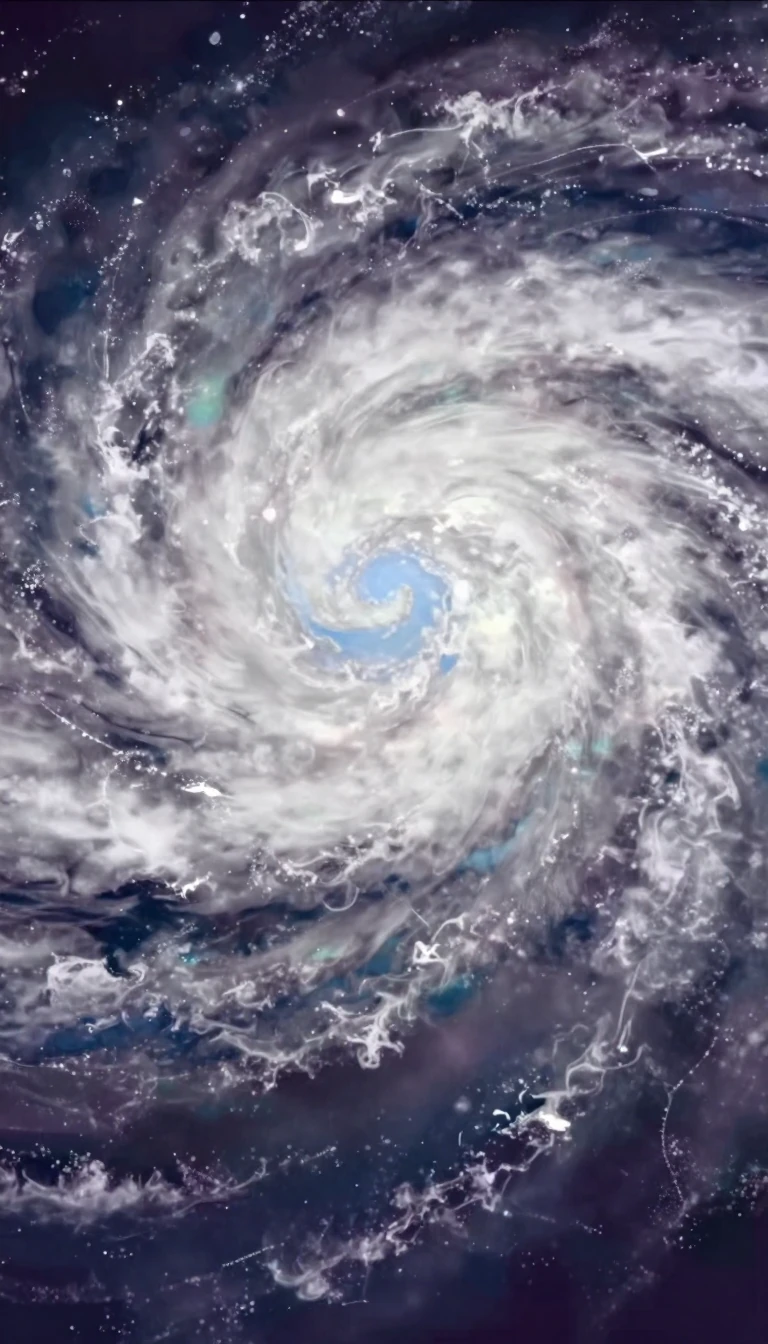 How do warm oceans transform into the most powerful storms on our planet?Tropical cyclogenesis is the complex process where organized low-pressure systems intensify over warm oceans. Driven by sea-surface temperatures, atmospheric moisture, and pre-exi…
 How do we accurately measure athletes performing under intense competition pressure?This video explores the challenges of measuring athletes in the field rather than in controlled settings. Professor Steve Haake examines how motion capture technologies are being …
 How do we actually catch an asteroid before it hits us?NASA recently hosted a public workshop to stress-test 96 different ideas for managing near-Earth asteroids. This video explores the collaborative efforts between experts, private …
 How do we actually create the social order we inhabit every day?Most sociologists look for grand, invisible structures to explain society. But Harold Garfinkel looked closer. He proposed that social order isn't a set of rules imposed from abov…
 How do we actually define the 'Rise of the West'?History is rarely a neutral record; it is a narrative constructed through specific methodologies. This video explores how different academic frameworks interpret the West's global…
 How do we actually detect the ripples in space-time known as gravitational waves?Steve Mould explores the mechanics behind detecting gravitational waves. This video provides a clear look at the phenomenon of space curving, offering a deeper understanding of ho…
 How do we actually know that words refer to the same things?Language is often defined as a system of arbitrary symbols used for social cooperation. But if every word is just a convention, how do we bridge the gap between a sound and the ac…
 How do we actually measure the size of a nation on a map?Defining the size of a country seems straightforward, but it is a complex exercise in geography and politics. Beyond simple landmass, measurements must account for inland water bo…
 How do we actually track who owns or rents homes across England's local districts?Tracking housing tenure is more complex than simply counting doors. To build a reliable picture of ownership and renting, statisticians use sophisticated small-area estimation tec…
 How do we balance the industrial scale of global meat production with animal welfare?Every year, an estimated 80 billion land animals are slaughtered for food. While modern regulations aim to minimize pain through stunning technologies, the process remains a compl…
 How do we become ourselves? A philosopher argues we are built by social games.George Herbert Mead, a foundational figure in pragmatism, proposed that the human mind and self are not internal substances but products of social interaction. By analyzing how ch…
 How do we bridge the gap between Earth and the vast, silent cosmos?Communicating from space requires ingenuity, whether speaking to a festival in Stockholm or sending a message to the stars. While ESA astronauts answer questions from children on …
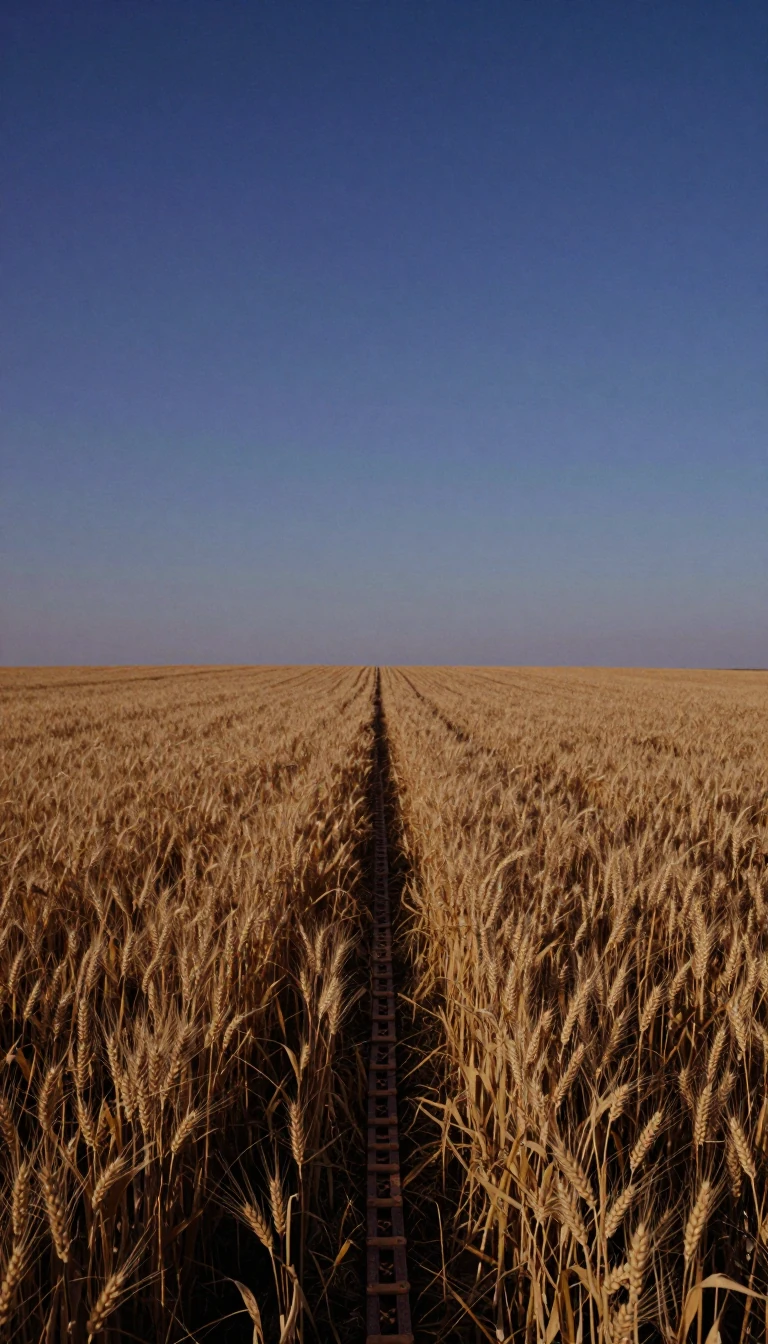 How do we bridge the gap between laboratory breakthroughs and the actual farm field?Agricultural extension is the vital link that translates complex scientific research into practical, everyday applications for farmers. By providing non-formal education and relia…
 How do we build the molecules that define our modern world?Organic reactions are the invisible architects of modern life, transforming raw materials into everything from life-saving pharmaceuticals to the plastics in your pocket. While th…
 How do we calculate the exact depth of the ocean's deepest point?Matt Parker investigates the mathematics behind measuring extreme ocean depths using pressure data. This video explores the technical challenges of calculating how deep a submersi…
 How do we calculate the likelihood of unpredictable sequences of events?Explore the fundamental mathematical frameworks used to predict the future. This video introduces the essential rules of probability, demonstrating how specific patterns help us q…
 How do we clean up the millions of tiny objects orbiting Earth?Sixty years of space exploration have left behind a growing cloud of orbital junk. While large objects are monitored, millions of tiny fragments are moving through low Earth orbit…
- How do we comprehend the vast range of sizes in our observable cosmos?Take a journey through the scales of existence, from the smallest subatomic particles to the largest structures in the universe. This tour provides a new perspective on the relati…
 How do we compress information while ensuring it can still be decoded perfectly?This lecture introduces the mathematical foundations of compression codes. By exploring how to store information efficiently, we examine the constraints necessary for reliable dec…
- How do we count the infinite sea of prime numbers as they grow?The prime-counting function, denoted as π(x), tracks the number of primes up to any given value. While simple in concept, its growth rate has fascinated mathematicians for centuri…
 How do we cultivate the next generation of global changemakers?True activism requires more than just passion; it demands a specific set of tools and a structured way of thinking. From the classrooms of Ritsumeikan University to global platfor…
 How do we date a planet when we cannot touch its rocks?Without physical samples for radiometric dating, planetary scientists rely on crater counting to reconstruct the history of Mars. By analyzing the density of impact scars across t…
 How do we date the Earth's oldest rocks using the chemistry of ancient volcanoes?Rubidium-strontium dating is a powerful geological clock that tracks the radioactive decay of rubidium-87 into strontium-87. By measuring these isotopes in rock samples, scientist…
 How do we decide what is 'fair' when resources are scarce?Distributive justice isn't just about who gets what; it is a fundamental debate over the moral architecture of society. From rewarding hard work to prioritizing the vulnerable, di…
 How do we decide what is right? The core of normative ethics explained.Normative ethics is the branch of philosophy that defines the rules for how we should live. It moves beyond abstract questions about the nature of morality to establish concrete c…
 How do we decide which needs to satisfy when resources are strictly limited?The great economic problem is the fundamental challenge of arranging finite resources to satisfy unlimited human desires. Whether through central planning or the price system, eve…
- How do we decode meaning beyond the literal words spoken?Language is rarely just about the dictionary definitions. This video explores the hidden mechanics of communication, examining how we navigate subtext and the unstated rules that …
 How do we decode the hidden language of ancient Hebrew manuscripts?Beyond the sacred text lies a complex world of physical artistry. To truly understand these books, scholars must master the intricate sciences of codicology, palaeography, and ill…
 How do we define an ongoing war when the world is constantly in flux?Tracking global conflict is not just about counting casualties; it is a rigorous exercise in classification. By setting specific thresholds for fatalities and military involvement…
- How do we define the character of a neighborhood using census data?Beyond simple zoning, residential areas are complex ecosystems defined by demographic, economic, and social patterns. By applying advanced clustering techniques to census data, re…