 Intellect Plus
Cards starting with H
40,576 cards. Page 668 of 677.
 How Walker Evans turned the Great Depression into a permanent American visual identityWalker Evans did not just document the Great Depression; he defined how we remember it. By capturing the stark, magisterial beauty of rural poverty, he transformed sharecroppers i…
 How Walmart turned private labels into a global retail empireWalmart does not just sell products; it curates an entire ecosystem of house brands. From budget-friendly grocery staples to luxury bedding, the retail giant uses private labels t…
 How Walt Disney Imagineers are completely reinventing the classic Epcot park layoutThis video follows the creative process of the Walt Disney Imagineering team as they undertake a long-term project to overhaul the Epcot park map. It highlights the transition fro…
 How Walt Disney turned a collection of short films into a cinematic masterpieceThe Many Adventures of Winnie the Pooh is more than a simple cartoon; it is a landmark in animation history. As the final film to feature Walt Disney's personal touch, this 1977 c…
 How Walt Disney’s Florida Expansion Was Officially Announced in 1965Discover the precise moment Florida’s transformation into a global entertainment hub began. This video recounts the 1965 press conference where Walt and Roy Disney joined Governor…
 How Wang Nan redefined dominance in the high-speed world of professional table tennisBorn in Fushun in 1978, Wang Nan emerged as a titan of table tennis, holding the world number one ranking for nearly four years. Despite facing intense public scrutiny and rumors …
 How Wang Qishan Built a Career as the Chinese Communist Party's Ultimate Problem SolverWang Qishan is a rare figure in Chinese politics, rising to prominence not just through connections, but by establishing a reputation as a master fixer. As a former Politburo Stan…
 How Wang Yibo became one of China's most influential commercial and cultural iconsFrom a childhood medical diagnosis that forced him to relearn how to dance, Wang Yibo has ascended to become a powerhouse of Chinese entertainment. Today, he balances a prolific a…
 How war threatens the ancient sandstone sanctuaries of EthiopiaExplore the enduring legacy of the Tigray rock-hewn churches. This documentary uses intimate testimonies and evocative imagery to show how these remote sites of devotion are facin…
 How warfare weaponizes human senses to inflict psychological terror across historyWarfare extends beyond physical combat into the deliberate manipulation of sight and sound. This video examines the terrifying tools used throughout history to break morale, from …
 How Warner Bros. Animation rose from the ashes of its own golden ageAfter closing its doors in 1969, Warner Bros. Animation spent decades reinventing itself. From reviving Looney Tunes for television to absorbing legendary studios like Hanna-Barbe…
 How Warner Bros. Discovery navigated a turbulent path from mega-merger to final acquisitionFormed in 2022 through a massive merger, Warner Bros. Discovery spent years restructuring, cutting costs, and battling debt. Despite ambitious streaming goals and high-profile con…
 How Warner Bros. lost the rights to the cinematic world of Lego construction toysThe Lego Movie franchise began as a critical and commercial triumph, spawning spin-offs and a shared universe. Yet, after box office underperformance, the studio behind the origin…
 How Warner Bros. reimagined Looney Tunes by ditching the anvil and embracing new villainsWhen Warner Bros. Animation rebooted its classic franchise in 2015, the goal was to return to the slapstick roots of the original shorts. Producers intentionally avoided tired cli…
 How Warner Bros. transitioned from a Hollywood studio to a global theme park developerWarner Bros. Discovery Global Experiences manages a complex portfolio of theme parks and licensed intellectual property. From the short-lived Jungle Habitat in 1972 to modern inte…
 How Warren Ellis transformed modern comics through transhumanist themes and widescreen storytellingWarren Ellis is a prolific writer who redefined the comic book medium by blending transhumanist philosophy with cinematic, high-stakes narratives. From the dystopian journalism of…
 How Warsaw held off the German Wehrmacht for nearly a month in 1939When German forces invaded Poland in September 1939, they expected a swift collapse of the capital. Instead, Warsaw mounted a desperate, improvised defense that repelled elite Pan…
 How wartime blackouts in Los Angeles helped an astronomer double the size of the universeDuring the darkness of World War II, Walter Baade utilized the reduced light pollution over Los Angeles to peer deeper into space than ever before. By resolving individual stars w…
 How wartime rationing shaped the cookies of 1942This video explores a historical recipe for 1942 canteen cookies, recreating a taste of the era. You will see how ingredients like orange peel and specific spices were combined to…
 How wartime scarcity transformed the silhouette of global fashionWhen World War II stripped away luxuries like silk and lace, fashion didn't disappear. Instead, it pivoted toward a structured, 'mannish' aesthetic. From the rise of American read…
 How was macaroni and cheese prepared in 1845?Step back into the 19th century to explore a vintage recipe for macaroni and cheese. This video demonstrates the precise techniques and specific spices used to create this classic…
 How Was the Metre Originally Defined?How revolutionary France tried to take the metre from the shape of the Earth, why a platinum bar became the working standard instead, and how fixed constants of nature define unit…
 How waste pickers act as a frontline defense against methane emissionsThis video explores the vital, yet often overlooked, work of waste pickers. It examines how these individuals manage recyclables, compostables, and trash to mitigate the environme…
 How watching a parent fade can redefine your understanding of lifeBeth Malone shares the intimate journey of caring for her father as he faced frontotemporal lobe dementia. This talk explores how witnessing a loved one's cognitive decline shifts…
 How watching nature can improve your mental and physical wellbeingThis video offers a journey through diverse habitats, from vast deserts to the Argentine Wetlands. It showcases fifty years of BBC Earth's natural history, featuring rare and dram…
 How watching nature can improve your mental and physical wellbeingThis video offers a restorative journey through diverse ecosystems, from the Iberá Wetlands to the Atlantic Rainforest, demonstrating how observing the natural world can enhance y…
 How watchtowers evolved from simple wooden posts into massive stone fortressesExplore the architectural transformation of watchtowers, which served as a settlement's primary defense against approaching enemies for centuries.
 How water adds to molecules through acid-catalyzed reactionsOrganic chemistry is often compared to building with molecular Legos. This video breaks down the specific mechanism of how water adds to carbon-based structures when catalyzed by …
 How water behaves when gravity ceases to pull it downWatch Kevin Fong experience the unearthly sensation of microgravity aboard a parabolic flight. This video explores how liquids behave in weightless environments, providing a glimp…
 How water moves beneath our feet: a physical model of geotechnical flowEngineers often rely on theoretical calculations to predict how groundwater behaves around structures. This demonstration model brings those invisible dynamics to life, showing ex…
 How water reshapes the earth beneath our feet through the process of leachingBeneath the surface, soil is constantly in motion. As water travels through the earth, it strips away soluble materials, carrying them from the topsoil into deeper layers. This in…
 How water shapes the power dynamics of our modern global societiesThis symposium examines water as a critical force in contemporary life. By analyzing access rights, quality-related health outcomes, and governance, it highlights how water manage…
 How water striders use surface tension to turn calm ponds into lethal hunting groundsWater striders appear to glide effortlessly across lakes and streams, but they are actually predatory hunters. This video explores the biology and physics that allow these insects…
 How water-scarce nations teach the world to conserve a vital resourceWith nearly one in three people facing a water crisis, global conservation is no longer optional. This talk shares practical lessons from water-poor regions to help address a rapi…
 How waves and resonance shape everything from musical instruments to noise-canceling vacuum cleanersProfessor Jon Chapman explores the physics of waves and resonance. By examining everyday objects like guitars, whistles, and vacuum cleaners, he demonstrates how these principles …
 How waves behave when they hit a boundary between two worldsThis session explores the physics of standing waves, specifically focusing on what happens at the intersection of two different media. It is essential for understanding how physic…
 How waves navigate barriers, from light filters to quantum tunneling particlesWhether you are looking at light passing through a filter, signals traveling along a wire, or particles attempting to cross a quantum barrier, the transmission coefficient is the …
 How waves of migration reshaped the Maghreb's identityBeyond simple conquest, the Maghreb was transformed by centuries of movement. From 7th-century armies to 11th-century Bedouin tribes fleeing drought, these migrations didn't just …
 How Wayde van Niekerk shattered the 400-metre world record from the disadvantageous lane eightIn the 2016 Olympic final, South African sprinter Wayde van Niekerk did the impossible. Running from the outside lane, he obliterated the 400-metre world record, clocking 43.03 se…
 How we calculated the universe's age at 13.75 billion yearsProfessor Carolin Crawford explains how modern cosmology moved from simple observation to a massive paradigm shift involving dark energy.
 How we construct a shared reality from private thoughtsWe live in a world of shared meanings, yet we experience it through a private stream of consciousness. Austrian philosopher Alfred Schutz explored how humans navigate this paradox…
 How we define success shapes the future of climate change adaptationA review of climate adaptation research found that how we define 'effectiveness' varies significantly depending on one's perspective. Researchers identified that different discipl…
 How we engineer the perfect atomic structures that power our modern digital worldFrom the silicon chips in your smartphone to the night-vision goggles used by soldiers, our technology relies on precisely grown crystals. Scientists have mastered techniques to m…
 How we extract meaning from invisible waves traveling through the air around usDemodulation is the essential process of recovering information from a carrier wave. Whether it is sound, video, or digital data, a demodulator acts as the bridge between raw radi…
 How we learned to measure and manipulate the quantum worldNobel Laureate Serge Haroche discusses the experimental breakthroughs that allowed scientists to move from observing quantum mechanics to actively controlling individual systems. …
 How we learned to rewrite the very code of lifeFrom the massive Human Genome Project to the precision of CRISPR, the last quarter-century has seen a monumental shift in biology. We have moved from merely reading the genetic bl…
 How we map the heavens: the ancient geometry behind our view of the starsSpherical astronomy is the oldest branch of science, turning the chaotic night sky into a precise map. By projecting Earth's own dimensions onto the heavens, we track galaxies, st…
 How we map the invisible: the math of moving air pollutionPredicting where a toxic cloud will travel is not mere guesswork but a complex mathematical simulation of fluid dynamics. By solving equations that govern atmospheric turbulence, …
 How we map the surfaces of stars too small to seeNeutron stars are far too distant and compact for any telescope to resolve their physical features. This video explains how scientists use X-ray timing and relativistic raytracing…
 How we measure the earth's pulse using the simple physics of inertiaA seismometer is a master of stillness. By keeping a mass suspended while the ground shifts beneath it, these devices detect vibrations as small as atomic spacing. From monitoring…
 How we measure the weight of a message through entropyThis lecture explores the fundamental physics of communication, tracing how we moved from Morse code to Claude Shannon's mathematical definition of information. It explains why en…
 How we moved from practical navigation to direct orbital observationFor centuries, humans inferred the Earth's shape through mathematics and sea voyages. It took the dawn of the space age to finally provide the visual proof we see today: a complet…
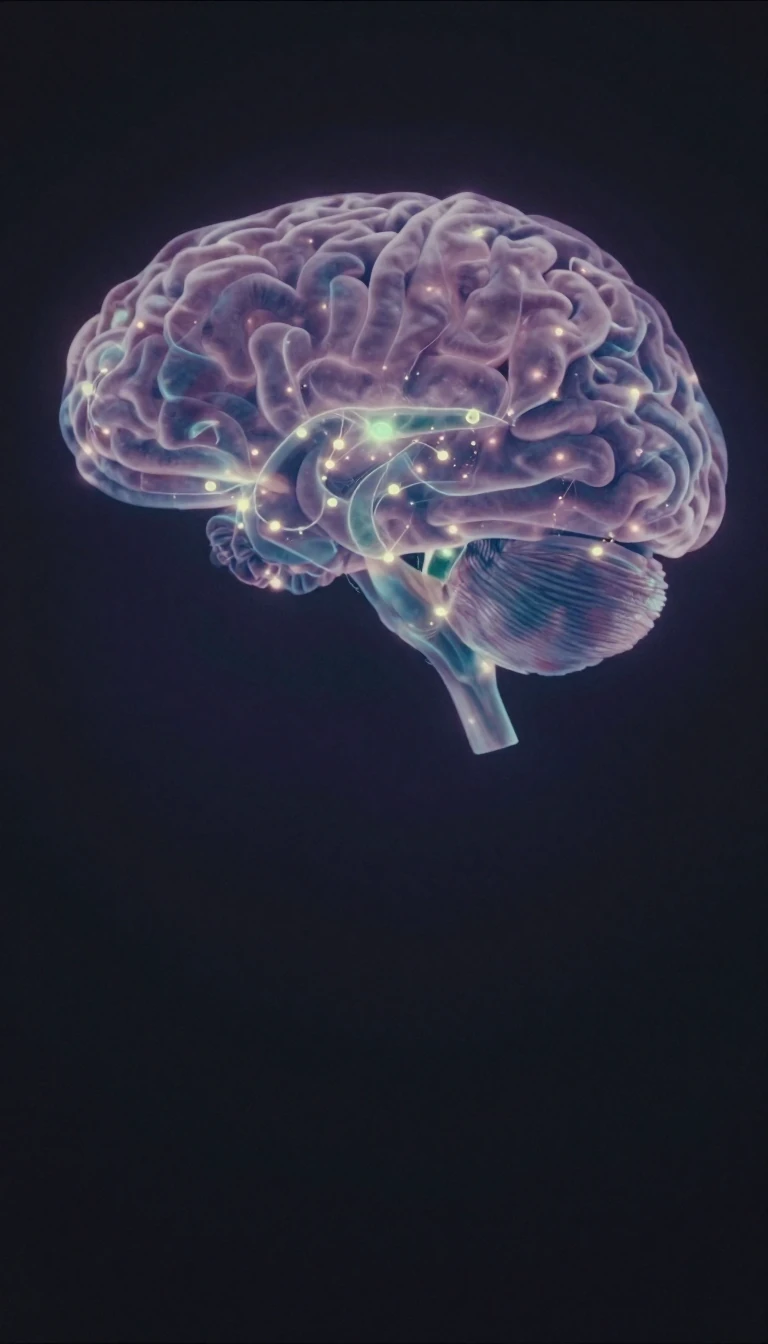 How we read the invisible architecture of the human mindWe cannot see thoughts, yet we navigate the world by assuming others have them. This cognitive superpower, known as Theory of Mind, allows us to predict behavior by inferring hidd…
 How we scrub the world's hidden water supply using biology, chemistry, and physicsGroundwater provides up to 40 percent of the world's drinking water, yet it remains vulnerable to industrial spills and urban runoff. Remediation is the complex process of cleanin…
 How we study the universe when we can't reach itHumanity can reach the Moon and the edge of our solar system, but the rest of the universe remains physically inaccessible. This video explains the methods astronomers use to stud…
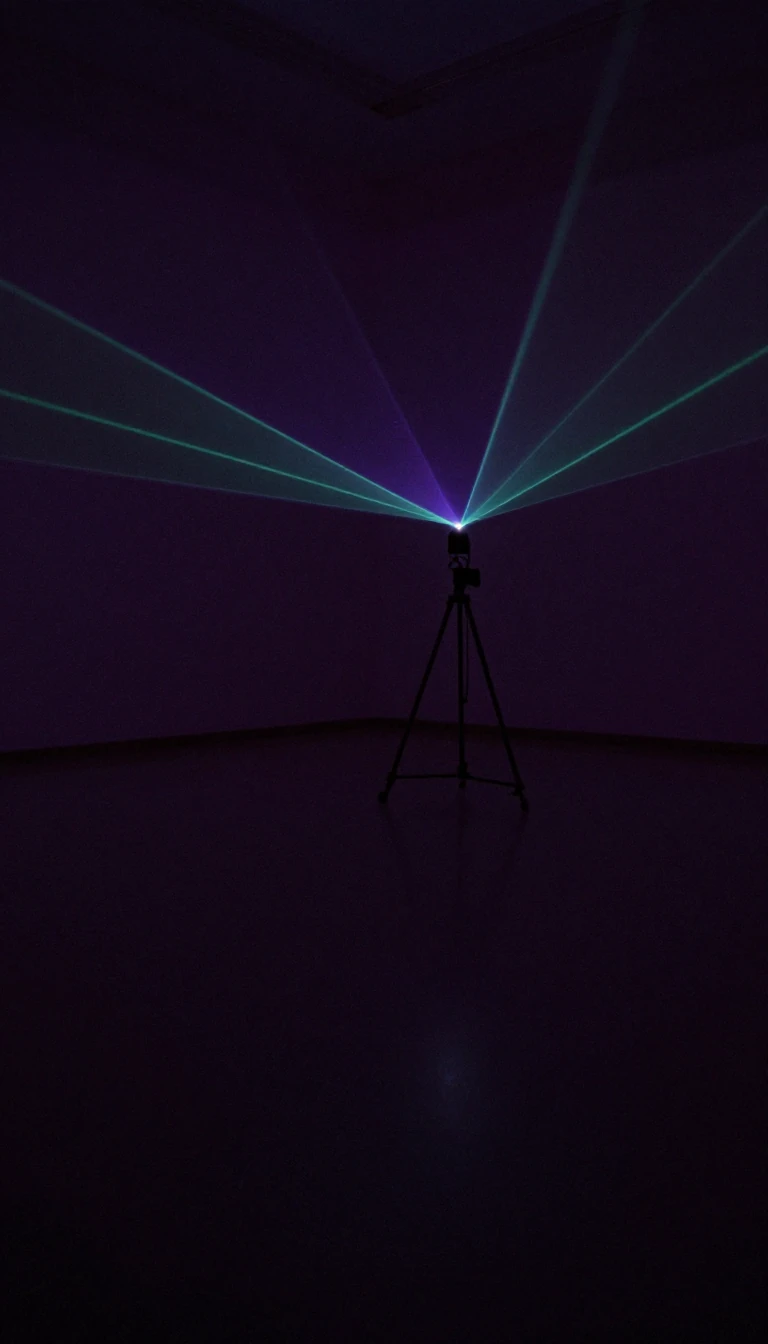 How we turn raw Earth observations into intelligent spatial dataBeyond simple maps lies a complex intersection of computer science and geography. Geoinformatics provides the digital architecture needed to process everything from satellite imag…
 How we turned invisible chemical structures into the vibrant 3D models we see todayBefore computers, scientists built molecules out of wood. Today, molecular graphics allow us to visualize complex proteins and atomic interactions in three dimensions. From early …
 How weak compactness solves complex non-linear problems in advanced mathematicsThis lecture explores the application of weak compactness in reflexive Banach spaces. It demonstrates how these mathematical structures allow for the identification of minimisers …
 How weak Van der Waals forces allow geckos to scale vertical walls with easePhysisorption is a subtle dance of atoms where electronic structures remain largely unchanged. Driven by weak Van der Waals forces, this phenomenon is responsible for everything f…
 How wealth disparities shape the messy, fragile dynamics of long-term adult friendshipsNicole Holofcener’s 2006 comedy-drama explores the friction between four friends in Los Angeles. While one struggles to make ends meet as a house cleaner, her peers navigate the c…