 Intellect Plus
Cards starting with T
45,693 cards. Page 696 of 762.
 The universal hiss: why the voiceless alveolar fricative is the world's most common soundYou use it to demand silence, catch attention, or simply say the word sea. The voiceless alveolar fricative is a linguistic powerhouse, appearing in languages across the globe. Ye…
 The universal human drama of being rescued from a dire situationEvery major religion shares a common structural logic: humanity is in trouble. Soteriology is the study of how we get out. Whether through divine intervention, rigorous self-disci…
 The universal language of danger: decoding the biohazard symbol and its four levelsThat iconic, three-looped symbol was not born from nature, but from a 1966 design project at Dow Chemical. Today, it serves as a critical global shorthand for biological threats, …
 The universal language of sports is a color-coded traffic systemHow do you communicate a complex disciplinary decision to thousands of screaming fans and dozens of international players instantly? You use a color-coded system inspired by traff…
 The Universal Spider rebelled against his father, then outwitted BurgundyEnemies called Louis XI the Universal Spider for the web of plots he seemed always to be weaving. As a prince he rebelled against his own father and spent years sheltering with Fr…
 The universe began as an infinitely hot and dense single pointAbout 13.8 billion years ago, the entire known universe emerged from a single, infinitesimal singularity. This explosive expansion, known as the Big Bang, set the stage for everyt…
 The universe began in an extremely hot, incredibly small stateWe can use the laws of physics to rewind the clock toward the dawn of time. While the exact moment of the Big Bang remains a mystery, the evidence for a rapid, expanding beginning…
 The universe behaves as both a particle and a waveHow did we discover that the fundamental building blocks of reality defy our everyday logic? This video traces the historical progression of scientific discoveries that led to the…
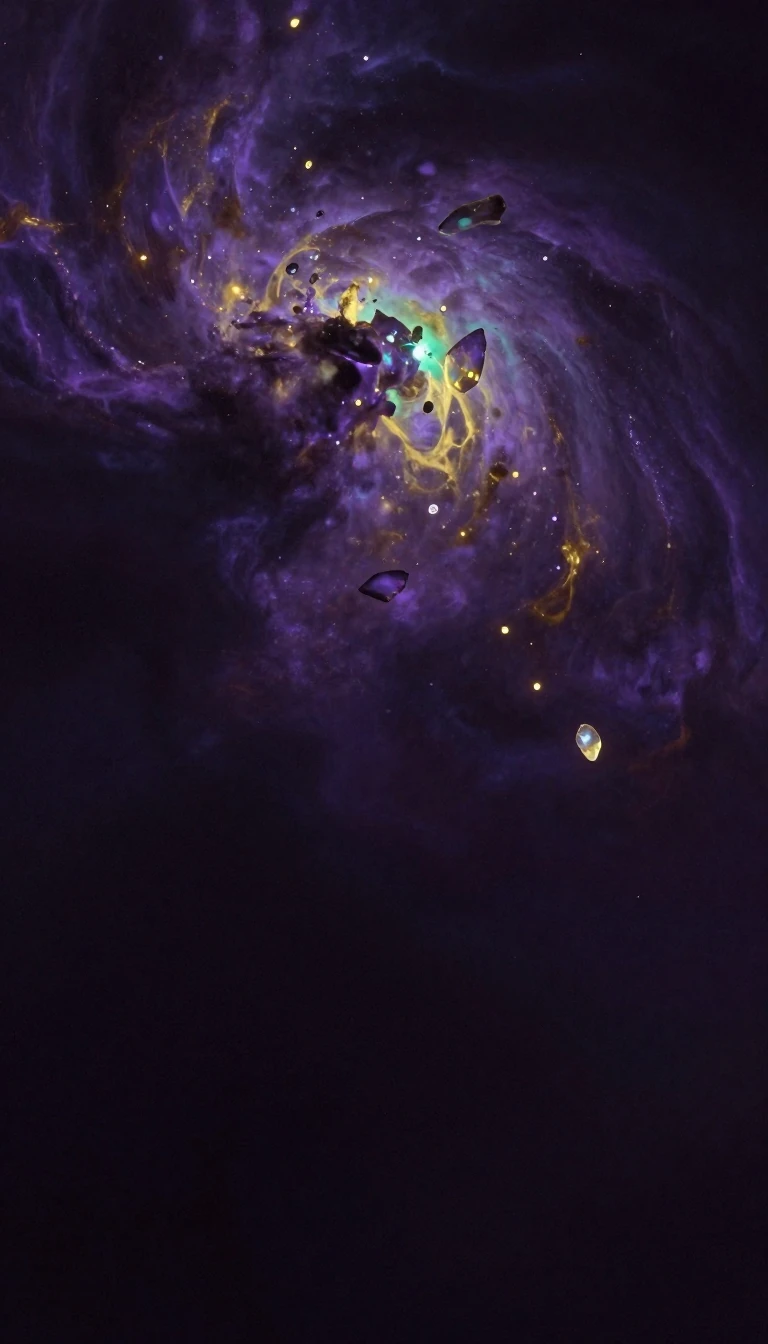 The universe creates half of all heavy elements through rapid, violent neutron bombardment.The r-process is a cosmic assembly line that builds elements heavier than iron. By cramming neutrons into nuclei faster than they can decay, it produces gold, uranium, and thorium…
 The universe has a low-frequency hum, and we finally heard itFor decades, physicists theorized a persistent echo of gravitational waves permeating the cosmos. Now, using a galaxy-sized antenna of cosmic clocks, astronomers have detected the…
 The universe has been evolving for 13.7 billion yearsFrom the initial expansion of the Big Bang to the formation of heavy elements and planets, our cosmos is a story of constant transformation. We are currently living in a 13.7-bill…
 The universe is 95 percent invisible to our current sensesEvery atom, star, and human being is merely a tiny fraction of reality. While we see the light of the cosmos, the vast majority of the universe is composed of two mysterious, invi…
 The universe is a paradox that should not scientifically existAccording to the Standard Model of particle physics, the Big Bang should have produced equal amounts of matter and antimatter. If they had annihilated each other completely, the c…
 The universe is a repeating cycle of decay and rebirthIn Hindu cosmology, time is not a linear path but a deteriorating loop. From the four yugas of human history to the infinite kalpas of the gods, the universe is caught in a rhythm…
 The universe is absurd, and the answer to everything is just 42When the Earth is demolished to make way for a hyperspatial bypass, a hapless Englishman finds himself adrift in a cosmos defined by randomness. From hyperintelligent mice to depr…
 The universe is actually dark and colorless until your brain intervenesWe perceive a vibrant world of hues, but the electromagnetic spectrum contains much more than our eyes can capture. Without specific biological receptors to process certain wavele…
 The universe is destined for a cold, lonely endExplore the ultimate fate of our cosmos. This video traces the timeline of universal evolution to reveal why the final chapters of existence are far less poetic than we might imag…
 The universe is destined to end, but will it be matter or dark energy?The ultimate fate of our universe hinges on a cosmic struggle between all existing matter and the dark energy permeating empty space. This video explores three distinct theoretica…
 The universe is destined to end, but you have billions of years to prepare.Everything we know, from the smallest atom to the largest galaxy, is headed toward a final conclusion. While the prospect of the universe ending might sound alarming, scientists a…
 The universe is expanding, but our measurements simply do not add upAstronomers are facing a growing crisis in cosmology. Two different ways of measuring the universe's expansion rate are yielding conflicting results. This discrepancy, known as th…
 The universe is far larger when you look down than when you look up.This video explores the vast, hidden scales of reality that exist right in front of us. While we often focus on the billions of galaxies above, there are entire worlds within worl…
 The universe is far more violent than its serene appearance suggestsThis video uses stunning visuals from NASA satellites to reveal the intense activity occurring throughout our cosmos. It explores how the universe is teeming with extreme and viol…
 The universe is full of worlds that don't fit our mapsWe often define planets by where they sit in a solar system, but the universe works differently. From rogue wanderers ejected into the void to shrunken stars turned into heavy sph…
 The universe is hiding anomalies that defy our current laws of physicsFrom high-energy particles erupting beneath Antarctic ice to stars moving at impossible speeds, space is filled with riddles. Are these mere flukes of nature, or do they point tow…
 The universe is mostly composed of things we cannot seeAncient Greek philosophers believed the cosmos was built from just four elements: earth, fire, wind, and water. Modern science has revealed a much more complex reality. Everything…
 The universe is mostly made of things we cannot seeWe can only account for a tiny fraction of the cosmos. This talk explores why our current understanding of physics hits a wall when trying to identify the missing 96 percent of ev…
 The universe is noisy, even if we cannot hear itWe often think of space as a silent vacuum, but it is actually filled with acoustic activity. While humans can't hear these cosmic vibrations directly, sound waves are fundamental…
 The universe is not made of solids or liquids, but of plasmaWe are taught that matter exists in four states: solid, liquid, gas, and plasma. Yet, that list is incomplete. In reality, 99.9% of the observable universe is made of plasma, an e…
 The universe is not random; it is a web of interconnected fatesIn the world of Dirk Gently, nothing happens by accident. From CIA experiments to time-traveling inventors, every thread is linked. Explore the chaotic, interconnected logic of a …
 The universe is not static: why astronomers are obsessed with things that go bumpFor centuries, we viewed the night sky as a permanent, unchanging backdrop. Today, time-domain astronomy reveals a violent, dynamic cosmos. By tracking everything from fleeting ga…
 The universe is shouting that we might be the lucky onesThe cosmos is vast enough to house trillions of planets, yet we hear nothing but silence. This contradiction is known as the Fermi Paradox. While some see this as a mystery to be …
- The universe is teeming with planets, yet it remains eerily silent.We are the first humans to know for certain that the stars beyond our Sun are crowded with planets. Yet, despite the sheer scale of the cosmos, we have found zero evidence of life…
 The Universe left behind a fossil from its first momentsProfessor Joseph Silk explores how we can observe the earliest stages of the universe. This lecture uses the Cosmic Microwave Background to reveal what happened just after the Big…
 The universe left behind a ghostly glow from its birthEvery direction you look into the night sky, there is a faint radiation pervading the space between galaxies. It is not visible to the human eye, but it serves as a primary fossil…
- The universe measures flat, yet it could still loop back on itselfDraw a giant triangle across space and add up its angles. Measurements so far say they total 180 degrees, meaning space is flat to within a fraction of a percent. That settles the…
 The universe might be a single, unified quantum objectWe usually think of the universe as a collection of separate parts—atoms, stars, and people. But new perspectives in quantum mechanics suggest we might be looking at it backward. …
 The universe should not exist because of a cosmic imbalanceAccording to the laws of physics, the Big Bang should have produced equal parts matter and antimatter. If that were true, they would have annihilated each other completely, leavin…
- The universe was crafted from the remains of a fallen giantLong before the Earth existed, a cosmic void held only fire and ice. From their collision, a primordial being emerged, whose very flesh and bone would eventually be carved into th…
 The universe was once a hot, ionized soup before atoms finally formedAbout 378,000 years after the Big Bang, the universe cooled enough for electrons and protons to bind into neutral hydrogen. This transition, known as recombination, is a misnomer—…
 The universe was once an orange, opaque fog of light and matterLong before the night sky turned black, the early universe was a brilliant, glowing orange. For hundreds of thousands of years, light could not travel freely, trapped in a dense, …
 The universe was once as small as a grapefruitImagine the entire observable universe compressed into a single piece of fruit. This isn't science fiction; it is the physical reality of our cosmic origin. By tracing the expansi…
- The universe was once thought to be eternal, unchanging, and constantly creating new matter.Before the Big Bang theory became the standard, the steady-state model offered a radical alternative: an expanding universe that never had a beginning and never will have an end. …
- The universe was once thought to be static, but it is actually expanding.For three thousand years, scientists assumed the universe was unchanging. It took a massive paradigm shift in the twentieth century to realize that space itself is stretching, dri…
 The universe's brightest fireworks are not for human touristsGamma-ray bursts represent some of the most violent and luminous events in the cosmos. While they offer a spectacular light show across the entire electromagnetic spectrum, NASA w…
 The universe's earliest moments serve as a laboratory for subatomic secretsHow do we understand the building blocks of reality? This lecture explores the elementary particles that compose our world and how the conditions of the early universe allow us to…
 The universe's largest telescope was designed to fold like origamiTo see the first galaxies ever formed, NASA had to build a telescope as large as a tennis court. But because no rocket could carry such a massive structure, engineers had to desig…
 The universe's most energetic particles travel at nearly light speedWhat happens when particles from deep space reach extreme velocities? This lecture by Katherine Blundell explores the origins of cosmic rays and what these high-energy travelers m…
 The universe's most energetic particles travel at nearly light speedExplore the physics of cosmic rays—highly energetic particles that originate from extreme acceleration sites across the universe. This lecture by Katherine Blundell examines where…
- The universe's most explosive energy transfer happens in our own backyardSpace is filled with invisible magnetic fields that can snap and reconnect with violent force. This process, known as magnetic reconnection, releases massive amounts of energy, ac…
 The universe's most transformative changes occurred in just the first few minutesBefore galaxies existed, the cosmos was a searing, opaque soup of particles. In a cosmic blink of an eye, a period of rapid expansion smoothed the universe, setting the stage for …
 The universe's two most powerful ways to unlock atomic energyMost of our modern energy comes from burning carbon, but nuclear reactions offer a vastly more potent alternative. By splitting or joining atoms, we can release millions of times …
 The universe’s first baby picture reveals the seeds of everythingLong before stars or galaxies existed, the cosmos was a hot, dense soup. NASA’s COBE satellite captured the oldest light in existence, uncovering tiny temperature fluctuations tha…
 The university band that traded military discipline for rock and roll chaosMost marching bands are defined by rigid formations and uniform decorum. The Stanford Band, however, famously threw out the rulebook in 1963. By ceding control to the students, th…
 The university born from a violent dispute between scholars and townspeopleIn 1209, a group of scholars fled Oxford after a local woman's death led to the hanging of two academics. Seeking refuge from the violence of Oxford's townsfolk, they settled in C…
 The university built on a one-dollar land grantIn 1960, a massive agricultural estate was sold to the University of California for just one dollar. This transaction laid the foundation for a research powerhouse that would even…
 The university designed to be free from the weight of traditionIn the 1960s, a bold plan sought to create a university that wasn't bound by the past. While others were constrained by established norms, this institution was intentionally engin…
 The University of California began as a merger that wasn't really oneIn the 1860s California had two half-colleges: a private liberal arts school with buildings and students but no money, and a state college with federal money but existing only on …
 The University of Coimbra: A Medieval Powerhouse That Shaped a Nation's IdentityFounded in 1290, the University of Coimbra is one of the world's oldest continuously operating universities. Beyond its UNESCO-listed architecture, it serves as a living laborator…
- The University of Houston once pioneered air-conditioned learning in the United StatesBefore it became a major research hub, the University of Houston was a modest junior college operating out of churches and high schools. Its transformation into a permanent campus…
 The University of Iowa pioneered creative writing and coeducation in American higher education.Founded in 1847, the University of Iowa is a research powerhouse that redefined the academic landscape. It was the first public university to admit men and women equally and the f…