 Intellect Plus
Cards starting with W
29,907 cards. Page 246 of 499.
 Why drawing a patient's story can save their healthcare experienceSam Hester explores the rise of graphic medicine, a movement using comics to bridge the communication gap between patients and providers. By visualizing personal medical journeys,…
 Why DreamWorks' lowest-grossing film became a unique experiment in remote animation productionSpirit Untamed, a 2021 reboot of the Spirit franchise, stands out as a financial outlier for DreamWorks Animation. Produced entirely remotely during the COVID-19 pandemic, the fil…
 Why drinking vinegar was a popular way to preserve fruit in the pastMax Miller explores the history of the shrub, a colonial-era drink made by combining fruit, sugar, and vinegar. This video explains how this preservation method turned acidic pant…
 Why drivers fear the high-speed, four-apex turn known as the DiabolicaDesigned by Hermann Tilke, Istanbul Park is an anti-clockwise marvel that challenges the world's best drivers. Its crown jewel, Turn 8, is a sweeping, four-apex corner that pushes…
 Why droughts don't always lead to famineWhile droughts are natural weather events, famines are often the result of human activity. This video explores why food distribution fails, using the late-19th century famines in …
 Why dry cleaning once relied on highly flammable gasoline and keroseneDry cleaning was not always a safe process. This video explores the evolution of garment cleaning, tracing the shift from dangerous, flammable solvents like kerosene and gasoline …
 Why dry roasting transforms the flavor of your favorite nuts, spices, and beansDry roasting is a culinary technique that applies heat to food without oil or water. By stirring ingredients in a pan or specialized roaster, you trigger chemical changes in prote…
 Why drying wood is a high-stakes balancing act for global timber industriesWood is never truly static. Even after felling, it constantly exchanges moisture with the air, causing it to shrink, swell, or warp. Mastering the drying process is essential to p…
 Why Ducati rejects standard crankshaft designs for their unique V4 motorcycle enginesMost four-cylinder engines follow predictable patterns, but Ducati takes a distinct path with their V4 motorcycles. This video breaks down the engineering logic behind their uncon…
- Why Ducati's V4 engine outperforms the world's most powerful naturally-aspirated supercars.Ducati's Panigale V4 R engine is a feat of engineering, boasting a power-per-liter ratio that eclipses any street-legal naturally-aspirated production car. This video breaks down …
- Why Ducati's V4 engine uses an unconventional 70-degree crankshaft pin offsetDucati engines are famous for high RPMs, often attributed to short strokes and desmodromic valves. However, the true secret to reaching 16,500 RPM in the Desmosedici Stradale R V4…
 Why Duckburg's most prolific inventor is a cautionary tale about the perils of progressGyro Gearloose is the quintessential eccentric genius, an anthropomorphic chicken whose boundless creativity often outpaces his common sense. While his inventions frequently solve…
 Why ducks stay dry: the hidden engineering of their waterproof feathersDucks and geese remain warm and dry in frigid water thanks to a combination of obsessive grooming and specialized feather structures. By applying wax from a hidden gland and maint…
 Why dung beetles perform a dance before moving their prizeScientists once dismissed the circular movements of dung beetles as a 'happy dance,' but these movements serve a vital purpose: helping the insect navigate using the stars.
 Why Durum Wheat Is the Secret to Perfect Pasta and Resilient Global Food SystemsDurum wheat is more than just the foundation of your favorite pasta. This hardy, tetraploid cereal thrives in arid climates where other crops fail, offering a unique protein struc…
 Why Dustin Hoffman believed his iconic cross-dressing role was never a comedyDustin Hoffman’s performance as Dorothy Michaels in the 1982 hit Tootsie is legendary, but the actor famously resisted the film’s comedic label. His transformation involved rigoro…
 Why Dutch architecture relies on brick and canals to tame a watery landscapeFor centuries, the Dutch have engineered a distinct architectural identity from a landscape defined by shifting sands and peat bogs. Lacking natural stone, they mastered brickwork…
 Why E. E. Cummings wanted you to stop trying to understand his poetryE. E. Cummings is famous for his lowercase i and scrambled syntax, but he viewed his work as a living experience rather than a puzzle to solve. By breaking the rules of grammar, h…
 Why early 20th-century dancers traded their shoes for the raw spirit of movementExpressionist dance emerged as a radical rebellion against the rigid, mechanical constraints of classical ballet. By prioritizing raw emotion, improvisation, and the natural body …
 Why early 20th-century painters tried to turn the canvas into a musical instrumentIn 1912, a group of artists led by Robert and Sonia Delaunay broke away from the muted tones of Cubism. They sought to create a new visual language, using bold, prismatic color an…
 Why early American television was once dismissed as amateurs playing at home moviesBefore television became a cultural juggernaut, it was a technical novelty that struggled to find talent. While audiences were mesmerized by the ability to see live events from af…
 Why early American university libraries were designed to keep students away from booksIn the 19th century, American academic libraries were not built for browsing. They were fortresses for theology and classics, often open for as little as three hours a week. Today…
 Why early anarchists fought over whether workers should own the fruits of their laborCollectivist anarchism once defined the radical left, proposing that workers should own the value they produce. Yet, this vision faced a fierce internal revolt from those who beli…
 Why early aviation relied on engines that spun their own cylinders to stay coolBefore stationary engines mastered reliability, the rotary engine dominated the skies. By rotating the entire crankcase and cylinder assembly around a fixed crankshaft, these mach…
 Why early buccaneers were distinct from the pirates we know todayWhile often used interchangeably with pirates, the original buccaneers were a unique group of seafaring bandits with a distinct identity in the early days of piracy.
 Why early Buddhists avoided depicting the Buddha as a humanFor centuries, you wouldn't find a statue of the Buddha in an early temple. Instead, followers encountered aniconic symbols—objects like wheels and trees that represented his teac…
 Why early childhood structure is the foundation of future successFormer U.S. Secretary of State Colin Powell shares a personal perspective on how to prepare children for life before they even reach primary school.
 Why early Christian hermits fled to the desert to build an alternative societyBeginning in the third century, thousands of Christians retreated into the Egyptian wilderness to escape the comforts of a newly legalized religion. By trading material possession…
 Why early Christians made no art: one historian says they were brokeFor a long time scholars assumed the first Christians shunned images on principle. Art historian Paul Corby Finney offered a blunter explanation: before about 200 they simply lack…
 Why early computing pioneers relied on simple light bulbs to build their machinesDiscover the historical context behind the use of incandescent light bulbs in the earliest computing devices. This video examines the technical origins of computing, detailing the…
 Why early European explorers believed Australia hid a massive, mysterious inland seaFor decades, European explorers were baffled by Australia's geography. Because major rivers flowed westward but failed to reach the coast, many concluded the continent must contai…
 Why early financial education provides children with a significant lifelong advantageMany parents avoid discussing finances with their children, yet early exposure to money concepts offers a substantial head start. This video provides practical strategies to initi…
 Why early London coffeehouses earned the nickname penny universitiesFor about a penny at the door, a seventeenth-century Londoner could sit among merchants and scholars, read the latest news and argue about anything. Coffeehouses ignored rank, so …
 Why early May isn't the time to rush your bean sowingTemperature is the silent gatekeeper of a successful garden. This video explains why waiting for the right soil conditions is essential for germination and how different bean vari…
 Why early photographers fought to make their cameras act like paintbrushesIn the late 19th century, photography was dismissed as a mere scientific record. To prove it was fine art, a movement called Pictorialism emerged. These photographers manipulated …
 Why early scientists believed tiny humans were hiding inside human sperm cellsThis video explores the history of biological misconceptions, specifically the long-held, incorrect theory that miniature humans resided within sperm cells. It serves as a reminde…
 Why earning $129,000 annually might feel like living in poverty todayThis video examines the economic pressures that make a six-figure income feel insufficient for many households. It explores the shifting definition of financial stability and the …
 Why Earth and Mars are making their closest approach in fifteen yearsOn July 31, 2018, Earth and Mars will reach their shortest distance since 2003. This rare celestial alignment offers a unique opportunity to observe the red planet with unpreceden…
 Why Earth does not have a single, precise radius for scientists to measureEarth is not a perfect sphere, making the concept of a single radius a useful fiction. Because our planet bulges at the equator and flattens at the poles, its radius varies depend…
 Why Earth gets more daylight than darkness over a yearIf Earth were an airless world lit by a point of light, day and night would split the year evenly. They don't. The Sun's width and the bending of light by our atmosphere steal sev…
 Why Earth gets more daylight than darkness over a yearMore daytime than nighttime over a year due to the Sun's size and refraction; Sun 31-33 arcminutes; half visible at sunset; about three minutes; refraction about six minutes
- Why Earth is called an andesite planet and what it reveals about our worldAndesite is a volcanic rock that defines the architecture of our planet. Found in abundance along the Andes, this intermediate igneous rock is a hallmark of subduction zones and i…
 Why Earth is not just a vast, endless oceanEarth is a world of continents and mountains rather than a purely watery sphere. This video explores the origins of our planet to explain how land came to exist.
 Why Earth is the only place in the solar system with perfect solar eclipsesTotal solar eclipses are rare celestial coincidences. While other planets experience transits, Earth is unique because our Moon is perfectly sized and positioned to block the Sun’…
 Why Earth is the only planet in our solar system without a mythological nameWhile every other planet in our neighborhood bears the title of a Greek or Roman deity, Earth stands alone. Its name is a simple, thousand-year-old Germanic term for the ground be…
 Why Earth is the only planet in our solar system without a mythological nameEarth is unique among its celestial neighbors, holding the distinction of being the only planet whose name is not derived from Greek or Roman mythology. Instead, our home planet b…
 Why Earth is the only planet in the universe capable of sustaining fireFire is not just a chemical reaction; it is a planetary phenomenon that requires life. This video explains why Earth stands alone in the solar system as the only world where fire …
- Why Earth's closest approach to the Sun actually happens during the Northern Hemisphere winterEarth travels around the Sun in an elliptical path, yet our seasons are not dictated by this distance. While we are physically closer to the Sun in January, the axial tilt of our …
 Why Earth's core is both solid and liquid, defying conventional physical expectations.Exploring the interior of our planet is surprisingly more difficult than observing the distant cosmos. This video examines how seismic data helps scientists map the mysterious, op…
 Why Earth's latitude lines are not actually fixed in placeWe often treat latitude as a permanent coordinate, but the lines defining our tropics and polar circles are in constant motion. Driven by the subtle wobble and tilt of Earth's axi…
 Why Earth's magnetic field requires a constant, energetic supply of liquid metalEarth is not a permanent magnet but a massive, active electromagnet. This video explores how turbulent convection within the planet's outer core generates our magnetic field, corr…
 Why Earth's most devastating catastrophes are actually essential engines for biological evolutionNatural disasters are often viewed as purely destructive forces, but history reveals a more complex reality. While human-scale catastrophes like floods and earthquakes cause immen…
 Why Earth's most stagnant era was actually full of hidden activityFor nearly a billion years, Earth appeared to be stuck in a geological and evolutionary stalemate. This video challenges the idea that this period was truly dull by examining the …
 Why Earth's mountains are puny compared to the rest of the universeMark Miodownik explores the physical limits of scale, explaining why gravity, geology, and erosion prevent mountains from growing indefinitely. This lecture examines why our talle…
- Why Earth's own atmosphere acts as a persistent filter for deep space observationsWhen astronomers peer into the cosmos, they are not just looking through a window; they are looking through a veil. Earth's atmosphere constantly absorbs and emits its own light, …
 Why Earth's polar regions are the canary in the coal mineExplore how NASA uses orbiting satellites to gain a global perspective on our planet's frozen frontiers and the critical role these regions play in monitoring global climate chang…
 Why Earth's unique geology is the foundation for everything we experience todayGeology is far more than just the study of rocks. This introduction examines how the physical structure of our planet shapes human settlement, influences our daily lives, and prov…
 Why Earth’s climate system is a complex web of self-reinforcing and balancing loopsClimate change is not just about emissions; it is driven by feedback loops that either stabilize or accelerate warming. While some processes act as a natural thermostat, others cr…
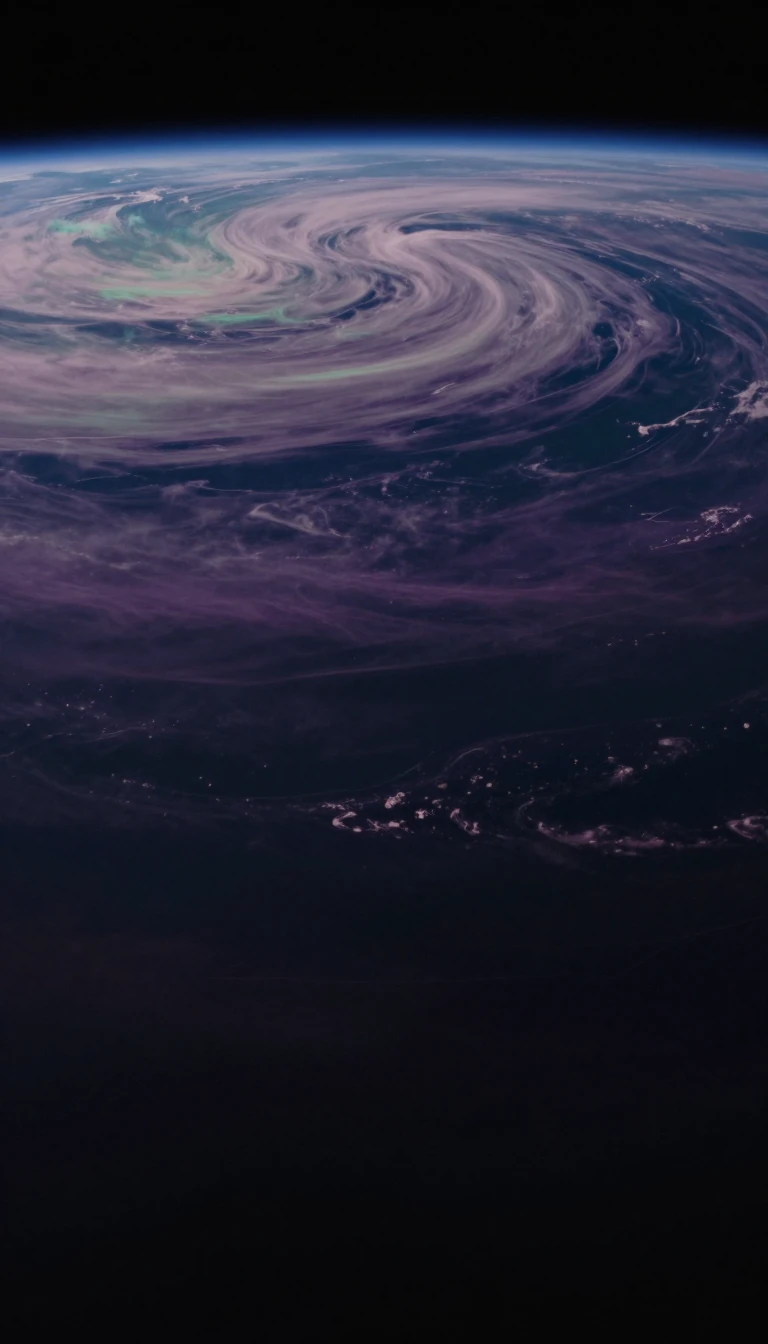 Why Earth’s surface is nearly 60 degrees Fahrenheit warmer than the sun alone allowsEarth would be a frozen, uninhabitable rock if it relied solely on solar heating. Our planet maintains a comfortable average temperature of 57 degrees Fahrenheit because of a comp…
 Why Eartheater is a master of linguistic ambiguity and sonic world-buildingAlexandra Drewchin, known as Eartheater, crafts music that is as layered as her moniker. Inspired by a character from One Hundred Years of Solitude, her name functions as a lingui…