 Intellect Plus
Cards starting with W
29,907 cards. Page 393 of 499.
 Why the most dangerous injuries are often the ones you cannot see immediatelyPhysical trauma is rarely as simple as a visible wound. From internal bleeding that remains masked for days to the delayed onset of systemic infection, the most severe damage ofte…
 Why the most dangerous man in Westeros is also the most unlovedStannis Baratheon is a study in rigid duty. A skilled military commander and the rightful heir to the Iron Throne, he is perpetually overshadowed by his charismatic brothers. Lack…
 Why the most dangerous moment in any battle is the instant of victoryA counterattack is not merely a defensive reaction; it is a calculated strike designed to exploit an enemy's overextension. By catching an opponent off guard at their moment of pe…
 Why the most dangerous moment of an avalanche happens when the snow stops movingAvalanches are often viewed as terrifying, high-speed events, but the true peril lies in the aftermath. When a massive slide finally settles in the runout zone, the debris hardens…
 Why the most dangerous movie stunts are still performed by real peopleCinema has evolved from primitive in-camera tricks to sophisticated computer-generated imagery, yet the stunt performer remains essential. Despite the rise of digital effects, the…
 Why the most dangerous person in your company is often the one you trust mostEmbezzlement is not simple theft; it is a betrayal of delegated authority. Unlike larceny, where a stranger steals your property, embezzlement occurs when someone you have legally…
 Why the most dangerous power tools come with universal safety standardsChainsaws are inherently high-risk, but they aren't just raw power. Landscape contractor Roger Cook breaks down the standard safety mechanisms built into every model to prevent ca…
 Why the most dangerous snake diseases can hide for monthsA newly acquired python might look perfectly healthy, but it could be carrying a silent death sentence. Some of the most devastating reptilian illnesses are viral and capable of l…
 Why the most dangerous software on your computer pretends to be your friendA trojan horse is malware that disguises itself as a legitimate program to gain unauthorized access to your device. Unlike viruses, these digital deceivers do not replicate themse…
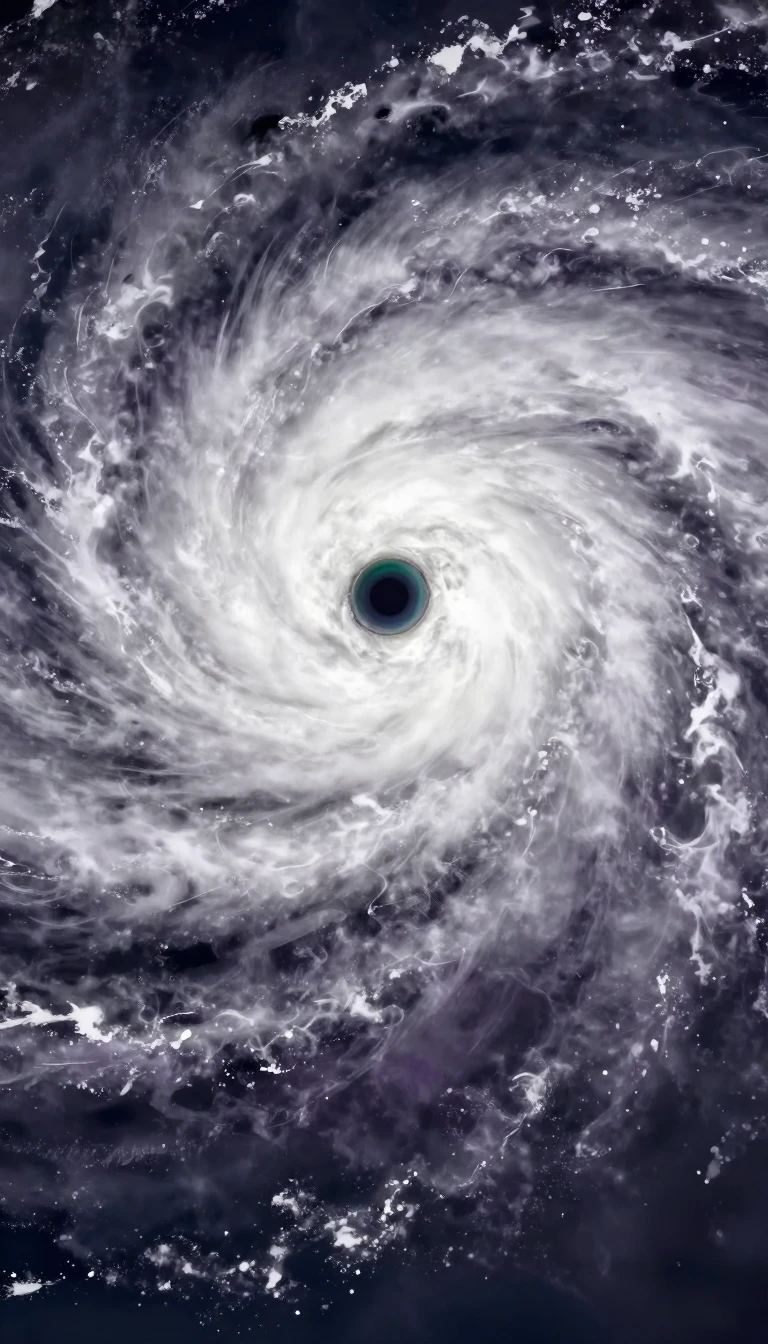 Why the most dangerous tropical cyclone rainfall often happens before the eye arrivesTropical cyclones are not uniform rain machines. While we often focus on the center, the heaviest precipitation frequently occurs in advance of the eye. Predicting these deluges r…
 Why the most dependable British character actor was also a master scene-stealerDenholm Elliott was a fixture of stage and screen, praised by critics as the most reliable character actor of his generation. Yet, beneath his immaculate technique lay a man who s…
 Why the most destructive earthquake vibrations are named after a British mathematicianWhen an earthquake strikes, the shaking you feel most intensely is likely caused by Love waves. Named after A.E.H. Love, who mathematically predicted their existence in 1911, thes…
- Why the most devastating market crashes are often driven by a feedback loop of panicA stock market crash is rarely just about bad news. It is a social phenomenon where external economic shocks collide with crowd psychology. When selling by a few participants trig…
 Why the most devout believers were often the first to doubtWe often imagine atheism as a modern, intellectual rebellion against faith. However, in the seventeenth century, the deepest doubts didn't come from those who rejected religion wi…
 Why the most difficult poetry is actually a democratic toolWe often view dense, complex poetry as an elitist barrier. But Professor Belinda Jack argues that difficulty is not a flaw. Instead, she suggests that the challenge of deep readin…
 Why the most difficult poetry is actually the most democraticT.S. Eliot’s Four Quartets is famously opaque, dense with allusions that defy easy summary. Yet, some scholars argue that this very difficulty is a form of respect. By refusing to…
 Why the most diverse kingfishers in the world rarely ever eat fishDespite their name, tree kingfishers are not specialized anglers. These compact, brightly colored birds prefer hunting invertebrates and small vertebrates from woodland perches. A…
 Why the most divisive Ocean's film is also the director's personal favoriteOcean's Twelve remains the franchise's most polarizing entry, praised by some for its meta-humor and criticized by others for a plot-negating twist. While critics found it smug an…
 Why the most durable French New Wave director was a master of the mundaneÉric Rohmer was a late bloomer who transformed cinema by prioritizing internal monologue over action. By filming the quiet, self-conscious lives of young people, he created a uniq…
 Why the most effective AI strategies often ignore human intuition entirelyRichard S. Sutton, a pioneer of modern reinforcement learning, argues that decades of AI research prove a counterintuitive truth: general methods that leverage massive computation…
 Why the most effective alarm systems are designed to be intentionally painfulThe word alarm originates from the French call to arms, signaling an immediate need for action. While modern devices range from simple clocks to complex industrial monitors, they …
 Why the most effective apologies often cost the offender something tangible or socialAn apology is more than just saying sorry; it is a complex social mechanism designed to restore broken trust. While often seen as a simple expression of regret, the effectiveness …
 Why the most effective boycotts rely on third-party pressure rather than just consumer willpower.A boycott is more than just refusing to buy a product; it is a calculated act of social or economic ostracism. While the term originated in 1880s Ireland, modern research suggests…
 Why the most effective business strategy is a human-AI partnershipWhile many fear AI replacing workers, the real competitive advantage lies in collaboration. By merging machine speed with human judgment, companies can unlock levels of innovation…
 Why the most effective change in democracy happens outside of government institutionsCitizen strategist Jon Alexander argues that meaningful societal progress is driven by ordinary people collaborating in their communities rather than relying on politicians. This …
 Why the most effective classroom lessons might be found inside a video gameEducational gaming has evolved from simple digital drills into sophisticated simulations that teach complex history, physics, and strategy. By allowing students to fail safely and…
 Why the most effective classroom management strategy is actually the simplest word: NoHolding your ground is the cornerstone of classroom management, yet many teachers find it uncomfortable. By mastering the art of the firm but soft refusal, you can reclaim your au…
- Why the most effective classroom tool might be the one you play for funEducational games transform learning into an interactive narrative, leveraging our fundamental drive for problem-solving and social connection. By simulating real-world risks in a…
 Why the most effective climate action is simply having a conversation with someoneClimate scientist Katharine Hayhoe argues that repeating facts is not the best way to discuss climate change. Instead, she explains how connecting through shared values like famil…
 Why the most effective communicators treat every conversation like a complex, real-time danceInterpersonal communication is far more than just exchanging words. It is a dynamic, transactional process that shapes our relationships, professional success, and emotional well-…
 Why the most effective conservation starts with Indigenous stewardshipInstead of imposing top-down policies, conservation champion Adjany Costa argues for a model that empowers those who know the land best to lead environmental protection efforts.
 Why the most effective doctors are those who act like students of their patientsModern medicine is shifting from clinical authority to cultural humility. By adopting the role of a student, doctors can dismantle power imbalances and foster genuine partnerships…
 Why the most effective educational toys are often the ones you build yourselfEducational toys are designed to instruct, but their history reveals a tension between structured learning and the messy, imaginative freedom of childhood. From 18th-century alpha…
 Why the most effective financial advice is often surprisingly simple to implementPersonal finance is not just about complex spreadsheets or market timing. It is a systematic approach to managing resources, balancing risks, and preparing for future life events.…
 Why the most effective fishing lures are designed to deceive, not just attractA fishing lure is a masterclass in biological manipulation. By mimicking the appearance, vibration, and erratic movement of injured prey, these artificial tools exploit a predator…
 Why the most effective health interventions often have nothing to do with medicinePublic health is not just about doctors and hospitals. Laws governing urban planning, seatbelts, and access to justice are silent architects of our well-being. By addressing the s…
 Why the most effective leaders refuse to be serious all the timeModern corporate culture often equates gravity with authority, but research suggests the opposite might be true. This talk explores how humor functions as a strategic tool for lea…
 Why the most effective leadership is a network, not a pyramidTraditional management often concentrates power at the top, but modern success relies on a different model. Gitte Frederiksen explores distributed leadership, a system that unlock…
 Why the most effective life-saving device in your car was once rejected by driversSeat belts are primary restraint systems that cut the risk of fatal or severe crash injuries by approximately 50 percent. Yet, when first offered as a factory option in 1949, cust…
 Why the most effective love spell begins with your own reflectionIn Wiccan practice, casting a spell for another person is often secondary to a more vital ritual. Before seeking external affection, practitioners suggest a symbolic enactment of …
 Why the most effective medical antidotes are not always the safest clinical choiceAn antidote is a substance designed to counteract poisoning, yet its presence does not guarantee a simple recovery. While some treatments neutralize toxins directly, others face b…
 Why the most effective military tactic in history is to simply refuse to fightThe Fabian strategy turns the traditional pursuit of glory on its head. By avoiding decisive battles, burning crops, and using constant, small-scale harassment, a defender can exh…
 Why the most effective military traps exploit human instinct rather than raw explosive powerA booby trap is not merely a bomb; it is a psychological weapon designed to turn human nature against itself. By manipulating instincts like curiosity and self-preservation, these…
 Why the most effective playgrounds for child development might actually be the most dangerousTraditional playgrounds are often predictable, featuring standard slides and swings that offer little novelty. Science suggests that risky play, characterized by thrilling uncerta…
 Why the most effective practical jokes are actually elaborate, long-term narrativesA practical joke is more than a quick gag; it is a physical, often long-running narrative designed to humble a target. While often lighthearted, these tricks can escalate into com…
 Why the most effective racing strategy is often to wait until the very endRacing is more than just moving fast; it is a calculated test of energy management. While the goal is to finish first, the most successful competitors often spend the majority of …
 Why the most effective software developers write their tests before they write any codeTest-driven development flips traditional programming on its head. Instead of building features first and testing them later, developers write failing tests to define requirements…
 Why the most effective teachers are those who dare to dream big for studentsResearch confirms that students typically rise to meet their teacher’s expectations. By fostering high aspirations and dismantling systemic barriers, educators can transform class…
 Why the most effective technology for humanity is often the simplest one availableAppropriate technology challenges the assumption that progress requires high-cost, complex machinery. By prioritizing labor-intensive, locally autonomous, and affordable solutions…
 Why the most effective therapy might be the one that trusts the client mostDeveloped by Carl Rogers in the 1940s, person-centered therapy rejects the traditional authoritarian model of clinical treatment. Instead of diagnosing or directing, the therapist…
- Why the most effective way to prevent a fight is to hold your fireDeterrence is the art of convincing an adversary that attacking is a losing proposition. It relies less on raw military superiority and more on the credible threat of retaliation.…
 Why the most effective way to resolve conflict is to speak like a giraffeIn the 1960s, psychologist Marshall Rosenberg developed a method to transform aggression into empathy. By moving away from judgmental evaluations and toward a specific four-part f…
 Why the most effective way to stop crime is to change the environment itselfTraditional justice focuses on punishing offenders, but modern research suggests that preventing crime is more cost-effective and socially beneficial. By shifting focus from the i…
 Why the most efficient economic outcome might still be deeply unfair to everyone involvedPareto efficiency is a cornerstone of economics, defining a state where no one can be made better off without harming someone else. It sounds like the ultimate goal, but it is a s…
- Why the most efficient journey often involves switching between two or more transport modes.Intermodal passenger transport combines the speed of rail with the flexibility of bikes, buses, or cars. By layering different transit options, commuters can bypass traffic, reduc…
 Why the most efficient path through a network is always defined by its bottleneckIn any system of pipes, roads, or data pathways, the maximum possible throughput is never determined by the total capacity of the entire network. Instead, it is strictly limited b…
 Why the most efficient way to communicate is actually to be unclearWe often view ambiguity as a failure of clarity, but it is actually a hallmark of linguistic efficiency. By avoiding redundant information, languages rely on context and shared me…
 Why the most elegant parties in history were often the most dangerousMasquerade balls were once the height of European fashion, offering guests a chance to hide their identities behind elaborate masks. Yet, beneath the music and dancing, these even…
 Why the most elegant solutions to complex geometry puzzles often require an extra dimensionMathematics often feels like a locked room, but sometimes the key is hidden in a dimension you cannot see. By shifting your perspective into a higher plane, seemingly impossible g…
 Why the most elusive master of Japan's golden age remains a quiet enigmaMikio Naruse directed 89 films, yet he remains less known than contemporaries like Akira Kurosawa. Known for his bleak, intelligent dramas about common people, Naruse was a retice…